Portfolio case study

SubscribeWise: Subscription and banking intelligence dashboard

A fintech subscription and banking intelligence dashboard that connects bank data, account detail retrieval, recurring payment visibility, spending summaries, and lightweight financial operations into one web workspace.

Name changed to respect NDA.

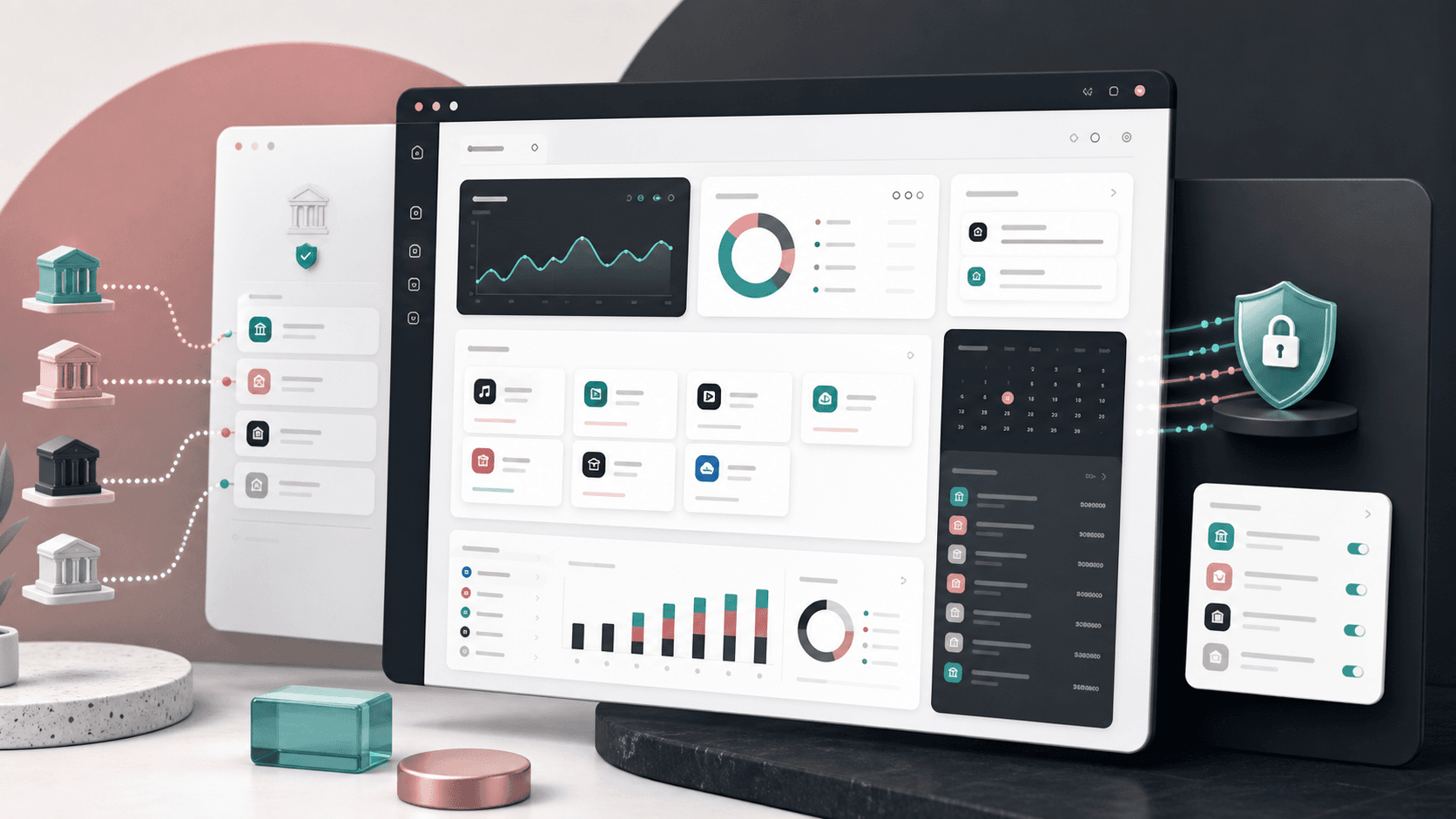
Abstract fintech dashboard visual with bank connection cards, subscription reminders, spending overview panels, and secure API data-flow elements
Project scope

React fintech dashboard, open-banking integration, Express API bridge, account-data workflows, and public-safe case-study positioning

2
connected surfaces
Open banking
account data flow
Recurring
subscription visibility
Web
finance workspace

Timeline

Fintech dashboard and API integration prototype expanded into a portfolio-ready product story

Subscription costs were hard to see before they hit

Consumers and support teams needed a clearer way to connect financial institutions, retrieve account context, identify recurring payments, and summarize upcoming spending without manually stitching bank portals and spreadsheets together.

  • Institution connection needed to feel approachable from a browser experience
  • Account balances and transaction data had to move through a controlled API layer
  • Recurring subscriptions and upcoming payment reminders needed dashboard visibility
  • Spending methods, cards, online payments, and monthly summaries needed one operating view

A connected finance dashboard for subscriptions and spending

SubscribeWise reframes the source evidence as a personal finance workspace with a React dashboard, financial institution connection flow, account-detail retrieval, subscription reminders, spending-method summaries, and a Node/Express bridge for bank-data requests.

  • Institution connection entry points for open-banking authorization and account detail retrieval
  • Dashboard cards for upcoming subscription payments, reminder dates, payment amounts, and reward-style cues
  • Monthly overview and spending-method screens for payment source visibility
  • Express endpoints that coordinate request IDs and account-detail responses behind the web UI

Product surfaces

What the platform brought together

The work spanned core product operations, daily user workflows, data-heavy coordination, and resilient platform management.

Bank connection flow

The public product story starts with a secure institution connection that lets users bring account data into the dashboard.

  • Connection actions for financial institution authorization
  • Request ID handling before account-detail retrieval
  • Account and transaction table views for downstream review

Subscription command center

Recurring services become visible as upcoming payment cards instead of surprise charges buried in transaction history.

  • Subscription amount, billing cadence, and days-until-due cards
  • Calendar-style reminder surfaces for upcoming renewals
  • Reward and set-aside prompts that connect financial planning with user motivation

Spending and payment methods

The dashboard groups recent spending and payment sources so users can understand where money is coming from and where it is going.

  • Monthly overview cards for recent spend
  • Payment-method panels for debit, card, and online payment sources
  • Charge summaries that compare payment sources over a recent window

API integration layer

A lightweight backend keeps account-data calls out of the UI and gives the product a place to normalize banking responses.

  • Node and Express endpoint routing for finance-data requests
  • Banking authorization and account-detail request flows
  • Database service hooks for user and service subscription records

Module depth

Dedicated product blocks for the highest-value workflows

For large platforms, the conversion story depends on showing how each major module solves a specific operating problem, not only listing features.

User value

Recurring Payment Awareness

The dashboard turns scattered subscription charges into a planning surface with due dates, amounts, and upcoming-renewal context.

Source evidence includes dashboard subscription cards, monthly payment labels, due-date panels, and recurring service data retrieval.

  • Upcoming subscription panels
  • Calendar-led reminder blocks
  • Monthly cost visibility for repeat services

Data flow

Open-banking Account Retrieval

A server-side bridge handles institution authorization and account-detail retrieval so the browser can focus on review and presentation.

Source evidence includes React account-detail screens and Express controller endpoints for request IDs and account detail responses.

  • Request ID creation
  • Account detail retrieval
  • Transaction drill-down tables

Operations

Payment Source Visibility

Payment methods and recent charges are organized into a single workspace that helps users compare debit, card, and online sources.

Source evidence includes spending-method UI, payment source panels, charge summary components, and monthly overview screens.

  • Spending methods panel
  • Recent charge summaries
  • Payment-source grouping

Buyer priorities

What mattered most to the people evaluating the platform

Prospective buyers want to know whether the work solved real workflow, adoption, reliability, data, and operations problems. These priorities shaped the product decisions.

Trust and clarity

A finance dashboard has to explain what is connected, what data was retrieved, and what actions the user can take next.

  • Connection actions are separated from account review
  • Account detail tables make retrieved data inspectable
  • Subscription reminders use dates and amounts rather than vague alerts

Retention loop

Subscription products become stickier when users return before renewals, compare charges, and understand payment-method behavior.

  • Upcoming due dates create a natural return reason
  • Monthly summaries help users review financial patterns
  • Payment-source visibility supports better budgeting decisions

System model

How the platform connects roles, workflows, and product surfaces

The product architecture brings every role into the same operating model, with shared data moving cleanly between web, mobile, media, and notification layers.

Finance data flow

Institution connection, request authorization, account retrieval, transaction review, and subscription insight form one loop.

Subscription intelligence roles

The platform supports end users, support operators, finance product teams, and integration maintainers around one data foundation.

Dashboard platform layers

A React workspace, API bridge, finance provider integration, and persistence layer work together to surface spending context.

Technology

The Stack We Used And Why

The stack section is written for buyers who need to understand the product architecture, operational trade-offs, and long-term maintainability of the system.

Frontend dashboard

Used for login, institution connection, subscription cards, overview screens, spending methods, and account-detail tables.

ReactReact RouterRedux-ready architectureCSS modulesBrowser storage

API bridge

Used to coordinate finance-data request IDs, account-detail responses, server-side integration calls, and future normalization.

Node.jsExpressHTTPS API callsREST endpointsSwagger-style API documentation

Data and operations

Used for user-service records, subscription metadata, account data, transaction rows, and integration-ready persistence.

MySQLSequelizeStructured account modelsTransaction tablesService subscription records

Why A React Dashboard

The product needed a browser workspace where users could connect institutions, review accounts, scan subscriptions, and compare payment methods without a heavy mobile release cycle.

  • React components map cleanly to dashboard cards, tabs, forms, and account tables
  • Route-based screens separate login, connection, dashboard, overview, and spending tasks
  • Browser storage supports a lightweight session handoff between connection and review states

Why A Server Bridge

Financial integrations need a backend layer for authorization flows, request IDs, account-detail calls, and response handling.

  • Express endpoints keep banking request logic out of browser components
  • Server-side calls provide a place to normalize provider responses before UI rendering
  • Database hooks leave room for persistent subscription and user-service records

Delivery

How the product came together

The work moved from domain modeling to core platform delivery, mobile adoption, and operational hardening.

1

Map the finance journey

Define how a user moves from login and institution connection into account review, subscription visibility, and payment-source summaries.

2

Build connected dashboard screens

Create React screens for login, subscription dashboard, monthly overview, spending methods, and account-detail tables.

3

Wire the API bridge

Add backend endpoints for request ID creation and account detail retrieval so finance-data calls have a server-side control point.

4

Package the public proof story

Translate the private source evidence into a complete, NDA-safe fintech case study focused on user value and product architecture.

Operational depth

What made the platform usable after launch

The strongest case studies are not only feature lists. They show how the system is operated, monitored, governed, and improved when real users depend on it.

Open-banking flow is separated from dashboard review

Connection and account retrieval are modeled as distinct steps, making the product easier to expand with more providers or consent states.

  • Institution connection actions initiate the data flow
  • Request IDs are handled before account-detail retrieval
  • Account and transaction tables make retrieved data reviewable

Recurring payments become actionable context

Subscription cards, due dates, and spending summaries help users plan before charges happen.

  • Monthly subscription amounts are visible in the dashboard
  • Days-until-due and calendar blocks create renewal awareness
  • Payment-source summaries help explain recent spending behavior

Results

The measurable and observable lift from the work

The strongest improvements are the ones a buyer can connect to daily work: fewer disconnected tools, safer operations, clearer workflows, and more reliable product behavior.

2 layers

Dashboard And API

The source includes a React finance workspace plus a Node/Express backend bridge for account-data requests.

3 views

Money Context

Subscription dashboard, monthly overview, and spending-method screens organize recurring payments and payment sources.

Bank data

Connected Account Retrieval

Institution authorization and account-detail retrieval support account and transaction review workflows.

Outcome

A stronger operating system for fintech subscription intelligence platform

The platform reduced tool fragmentation and gave each role a clearer path from live activity to day-to-day action.

A React web dashboard for login, institution connection, subscription reminders, monthly overview, spending methods, and account detail review

A Node/Express API bridge for request ID creation, account detail retrieval, and financial-data integration control

A public-safe fintech portfolio page that positions the work as a subscription and banking intelligence product without exposing real repository names, private API hosts, test credentials, source screenshots, or provider identifiers

FAQ

Frequently Asked Questions About SubscribeWise

Answers about the fintech subscription intelligence platform scope, platform model, technology choices, operational workflows, and related build patterns.

What Kind Of Fintech Product Does SubscribeWise Represent?

SubscribeWise represents a subscription and banking intelligence dashboard where users connect financial accounts, review account and transaction data, track recurring payments, and understand recent spending methods.

Why Does A Subscription Dashboard Need Bank Data?

Bank data helps the product identify real payment activity, connect subscription reminders to account context, and give users a clearer view of where recurring charges fit into their monthly cash flow.

What Is The Value Of A Backend API Bridge?

A backend bridge keeps provider calls, request IDs, response handling, and future normalization outside the browser, which gives the product more control over security, error handling, and integration changes.

Can This Pattern Support A Modern Consumer Finance App?

Yes. The same pattern can support subscription management, personal finance planning, account aggregation, recurring-payment alerts, support dashboards, and finance-data enrichment workflows.

Related services

Build a similarly ambitious product without starting from a blank page.

We can help scope the web, mobile, AI, media, and operating layers needed for your own platform.

Start a project inquiry