Portfolio case study

CodeCamp Studio: Coding academy enrollment and learning commerce platform

A children and teen coding academy platform that connects course discovery, camp schedules, trial membership enrollment, Stripe payments, CRM handoff, center lookup, content publishing, and lightweight operations workflows.

Name changed to respect NDA.

Coding academy enrollment platform visual with course cards, camp schedule filters, payment checkout, center lookup, CRM handoff, and content publishing panels
Project scope

Web product engineering across Gatsby public pages, Express enrollment APIs, Stripe payments, CRM integration, center lookup, camp discovery, content sourcing, analytics, and production deployment workflows

4
education offer paths
Stripe
paid enrollment workflows
CRM
lead and sales activity handoff
SEO
content-led acquisition foundation

Timeline

Education marketing, enrollment, and operations platform build for coding classes, robotics courses, camps, and membership conversion

The academy needed to turn education interest into enrollment

A coding education business needed more than a static website. Parents and students had to understand course options, find nearby centers, explore camp schedules, pay for trials or camps, download resources, and move into follow-up workflows without fragmenting the journey.

  • Course pages for kids, teens, robotics, camps, and membership offers needed clear SEO-focused positioning
  • Enrollment flows had to connect forms, validation, card tokenization, receipts, and success states
  • CRM records, UTM attribution, sales activities, and lead capture needed to survive payment and API edge cases
  • Location and schedule workflows needed center-by-zip lookup, class availability, camp filtering, and operations visibility

A conversion platform for coding classes and camps

CodeCamp Studio brings the public Gatsby site, Express API routes, Stripe checkout, CRM services, WordPress content, location data, and camp/class workflows into one enrollment-oriented platform for an education provider.

  • Public pages for coding classes, robotics courses, teen programming, camps, membership, ebook capture, policies, and SEO content
  • Express controllers for trial registration, camp registration, callback requests, ebook capture, center lookup, and camp-code lookup
  • Stripe customer and charge flows with receipt emails, transaction metadata, error handling, and post-payment success routes
  • LeadSquared, Zapier, WordPress, Firebase, Google Tag Manager, sitemap, robots, and Gatsby image/content tooling integrated around acquisition and operations

Product surfaces

What the platform brought together

The work spanned core product operations, daily user workflows, data-heavy coordination, and resilient platform management.

Course discovery and SEO pages

Families can compare age-based coding, robotics, programming academy, and camp options through content-rich pages built for search and conversion.

  • Homepage, kids coding, teen programming, robotics, camps, computational-thinking, ebook, and membership pages
  • Gatsby metadata, canonical URLs, sitemap, robots configuration, image optimization, and WordPress-sourced posts and pages
  • Reusable course cards, CTA blocks, testimonial areas, university-partnership content, and responsive layouts

Enrollment and payment workflows

Trial membership and camp registration move from form submission to card processing, receipts, CRM updates, and success tracking.

  • Formik and Yup-backed registration fields with Stripe token creation and product-specific API posts
  • Trial membership charges based on nearby center pricing and camp charges based on CSV-backed camp codes
  • Success routing, transaction payloads for analytics, card-error handling, and operational logs for manual recovery

Lead capture and CRM handoff

Marketing attribution and parent/student details are preserved so admissions and sales teams can follow up without re-entering data.

  • LeadSquared capture, create, update, tag, note, list, and sales-activity service methods
  • UTM source, medium, campaign, and content fields passed through registration and callback workflows
  • Ebook and course-interest capture through API-backed and Zapier-connected forms

Centers, camps, and operations visibility

Location and schedule workflows help families find the right option while giving operators a lightweight view of camp signups.

  • Zipcode lookup against center data with distance-based fallback and center-specific pricing
  • Camp and class APIs for code lookup, date/course filtering, available-seat display, and schedule popups
  • Firebase-backed camp signup table with authenticated access for internal review

Module depth

Dedicated product blocks for the highest-value workflows

For large platforms, the conversion story depends on showing how each major module solves a specific operating problem, not only listing features.

Acquisition

Course Pages Create The Enrollment Context

The public site organizes age bands, course categories, learning outcomes, resources, and calls to action before a parent reaches a form.

Supported by Gatsby pages for home, kids coding, teen programming, robotics, camps, membership, computational thinking, ebook capture, and SEO metadata.

  • Course cards separate robotics, Python, and teen programming offers
  • Resource and policy pages keep trust-building content close to conversion
  • Canonical metadata, sitemap, and WordPress sourcing support content-led discovery

Enrollment

Payment And CRM Handoff Stay In One Flow

Trial and camp registration connect validated forms, card tokenization, revenue records, CRM activity, and success routing.

Supported by Stripe registration controllers, LeadSquared service methods, UTM fields, transaction payloads, and success pages.

  • Stripe handles customer and charge creation
  • LeadSquared records product, revenue, source, and sales-owner context
  • Operational logs preserve recovery paths when downstream services fail

Operations

Location And Schedule Data Reduce Enrollment Friction

Center lookup, camp code lookup, class availability, and filtered schedules help families choose a practical option before paying.

Supported by zipcode center matching, CSV camp data, camp/class API calls, schedule filtering, and Firebase-backed signup review.

  • Zipcode matching selects nearby centers and pricing context
  • Camp and class records surface dates, course filters, and available seats
  • Internal signup views give teams a lightweight operational window

Buyer priorities

What mattered most to the people evaluating the platform

Prospective buyers want to know whether the work solved real workflow, adoption, reliability, data, and operations problems. These priorities shaped the product decisions.

Parent trust and clarity

Education buyers need confidence before paying for classes or camps, especially when comparing age ranges, teaching models, locations, and outcomes.

  • Offer pages explain age bands, curriculum focus, robotics, Python, teen programming, and computational thinking
  • Downloadable resources and content pages create trust before the paid enrollment step
  • Canonical metadata, structured routing, and content sourcing support ongoing search acquisition

Low-friction enrollment

The platform reduces the distance between interest and registration by keeping forms, availability, payment, and confirmation in one path.

  • Trial and camp registration use product-specific forms and endpoints
  • Stripe handles payment while the app owns validation, success states, and CRM handoff
  • Location lookup can adjust pricing and center selection before checkout

Operational follow-through

A paid lead is only useful if follow-up data reaches the right systems and errors are visible enough to recover.

  • LeadSquared activities preserve revenue, product SKU, lead source, and sales-owner context
  • Logging around payment, lead capture, and sales activity failures supports manual remediation
  • Camp signup visibility and schedule APIs give teams more than a marketing-only website

System model

How the platform connects roles, workflows, and product surfaces

The product architecture brings every role into the same operating model, with shared data moving cleanly between web, mobile, media, and notification layers.

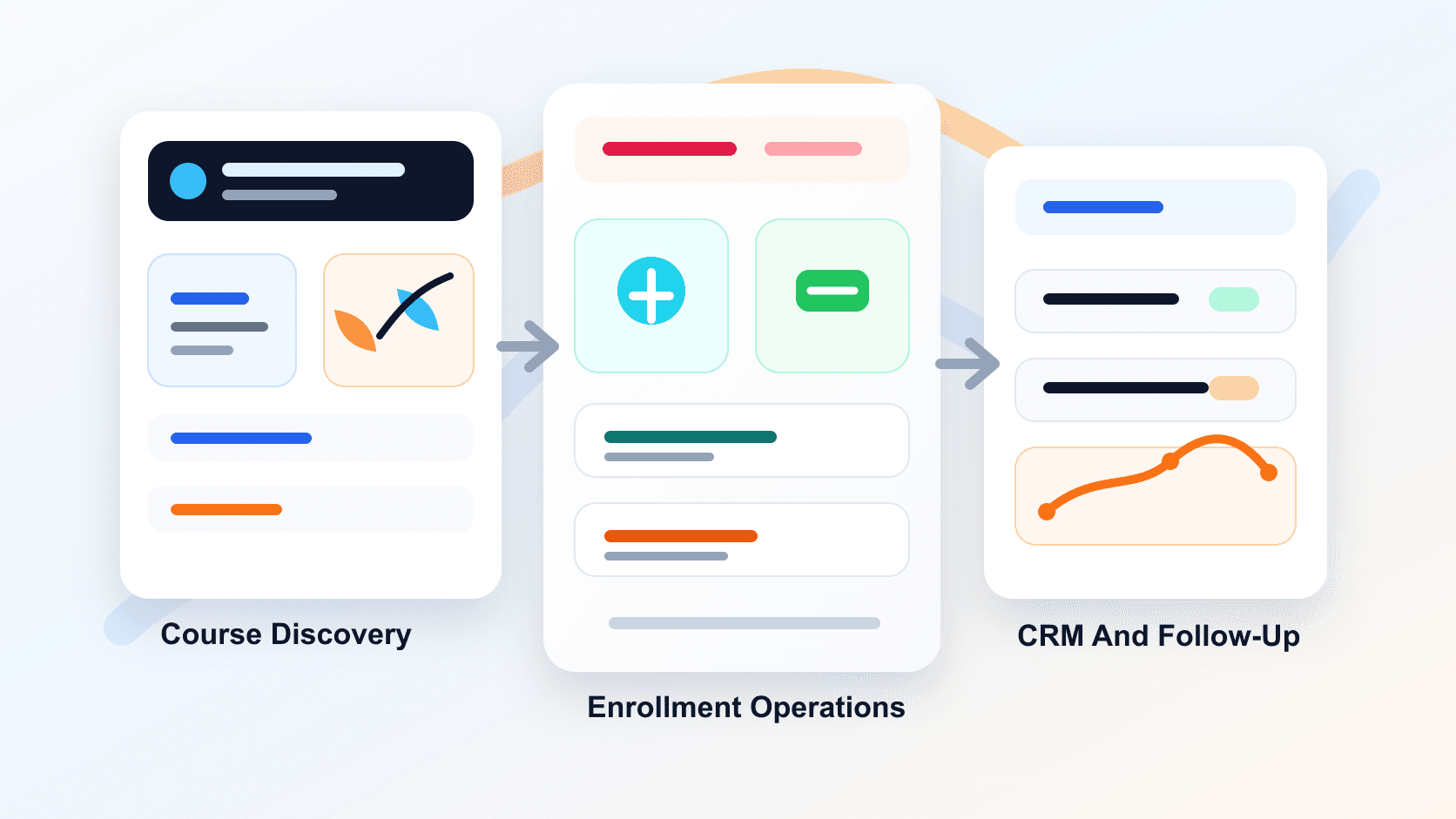
Discovery to enrollment workflow

Families move from course research to center lookup, schedule review, registration, payment, CRM handoff, and follow-up.

Public site and enrollment API

Gatsby pages, Express routes, payment services, CRM services, content sources, and operations data work as one acquisition platform.

Academy roles and controls

Parents, students, admissions teams, center operators, and marketers each get the workflows needed to keep enrollment moving.

Technology

The Stack We Used And Why

The stack section is written for buyers who need to understand the product architecture, operational trade-offs, and long-term maintainability of the system.

Public web experience

Used for SEO-friendly academy pages, course storytelling, responsive layouts, images, blog content, and conversion-focused calls to action.

GatsbyReactSassReact HelmetGatsby ImageWordPress source

Enrollment API layer

Used to keep payment, registration, center lookup, camp lookup, lead capture, and success workflows behind server-owned routes.

ExpressNode.jsExpress Promise RouterCookie sessionsMorganWinston

Payments and CRM

Used to connect parent registration with paid transactions, receipts, attribution, lead records, and sales activities.

StripeLeadSquaredZapier webhooksUTM trackingGoogle Tag Manager

Operations data

Used for center matching, camp codes, class availability, signup visibility, and lightweight internal review workflows.

CSV camp dataZipcode distance lookupFirebaseExternal class APIsStatic JSON center data

Deployment and content

Used to ship the Gatsby/Express application with generated static pages, cached assets, sitemap output, and repeatable production restart scripts.

Gatsby buildForeverShell deploy scriptsStatic asset cachingSitemap and robots plugins

Why Gatsby Plus Express

The academy needed fast public pages and SEO depth, but also server-owned enrollment workflows for payments and CRM handoff.

  • Gatsby supported static marketing, course, policy, and content pages
  • Express kept registration, payment, lead, and lookup workflows out of purely static code
  • Shared routing let public CTAs flow directly into operational endpoints

Why CRM And Payment Integration

Enrollment is both a transaction and a follow-up workflow for an education business.

  • Stripe handled customer and charge creation with receipt support
  • LeadSquared preserved parent, student, source, product, revenue, and sales-owner context
  • Logging made partial failures recoverable when payment succeeded but CRM steps needed attention

Why Location And Schedule Data Matter

Parents choose programs based on location, age fit, availability, and timing, not only curriculum claims.

  • Zip-based center lookup connected families to nearby locations and pricing
  • Camp and class APIs exposed schedule and seat information near the decision point
  • CSV and JSON-backed operational data kept early workflows simple and inspectable

Delivery

How the product came together

The work moved from domain modeling to core platform delivery, mobile adoption, and operational hardening.

1

Map the education funnel

Separate research, course comparison, center selection, trial membership, camps, callbacks, and lead capture into clear product paths.

2

Build public acquisition pages

Create responsive Gatsby pages and content components for courses, camps, robotics, membership, resources, and SEO traffic.

3

Connect enrollment operations

Implement server routes for forms, payments, camp lookups, center lookups, CRM handoff, and success/error states.

4

Prepare for ongoing campaigns

Add analytics, sitemap, WordPress content sourcing, ebook capture, schedule popups, deployment scripts, and internal signup review.

Operational depth

What made the platform usable after launch

The strongest case studies are not only feature lists. They show how the system is operated, monitored, governed, and improved when real users depend on it.

Recoverable payment and CRM flow

The system treats paid registration as a critical workflow with explicit errors, logging, and CRM recovery paths.

  • Separate handling for card errors and internal payment failures
  • Lead capture and sales activity errors logged after successful transactions
  • Receipt, SKU, revenue, source, and center metadata preserved for follow-up

Location-aware enrollment

Parents can be matched to nearby centers before the platform decides pricing and registration context.

  • Zip validation and distance calculations
  • Center-specific name, pricing, and address responses
  • Fallback behavior when no nearby center is available

Content and campaign foundation

The product can support ongoing education marketing instead of depending on one-time static campaign pages.

  • WordPress-sourced posts and pages
  • Gatsby sitemap, robots, manifest, and metadata configuration
  • Ebook capture, course-interest forms, and analytics payloads

Results

The measurable and observable lift from the work

The strongest improvements are the ones a buyer can connect to daily work: fewer disconnected tools, safer operations, clearer workflows, and more reliable product behavior.

4 paths

Offer Coverage

Coding classes, robotics courses, teen programming, and camps were represented as distinct conversion paths.

Paid flow

Enrollment Commerce

Trial and camp registrations connected form data, card payment, receipts, CRM records, and success routes.

Local match

Center Routing

Zipcode matching connected families to nearby centers and location-specific pricing context.

Content led

Search Acquisition

SEO metadata, sitemap support, WordPress content, ebook capture, and course pages supported organic discovery.

Outcome

A stronger operating system for coding academy enrollment and learning commerce platform

The platform reduced tool fragmentation and gave each role a clearer path from live activity to day-to-day action.

A conversion-focused academy website for coding classes, robotics programs, teen programming, camps, membership offers, and resource capture

Server-side enrollment workflows connecting form validation, Stripe payment, CRM lead records, sales activities, analytics, and success states

Center and schedule workflows that help families choose location, class, and camp options before committing

A public-safe education commerce portfolio page that excludes real project names, private repository details, source screenshots, production identifiers, API secrets, and internal operations data

FAQ

Frequently Asked Questions About CodeCamp Studio

Answers about the coding academy enrollment and learning commerce platform scope, platform model, technology choices, operational workflows, and related build patterns.

What Kind Of Education Platform Does CodeCamp Studio Represent?

CodeCamp Studio represents a coding academy enrollment and learning commerce platform with public course pages, camp discovery, trial membership registration, payments, CRM handoff, location matching, and content-led acquisition.

Why Does A Coding Academy Need More Than A Static Website?

Education enrollment depends on trust-building content, age-appropriate offer paths, center and schedule context, payment workflows, lead follow-up, and operations visibility. A custom platform keeps those steps connected.

Can This Pattern Support Other Education Businesses?

Yes. The same pattern can support tutoring centers, STEM camps, test-prep programs, after-school academies, cohort courses, bootcamps, and franchise education brands.

What Should A Buyer Prepare Before Building A Similar Platform?

Useful inputs include course catalog structure, age bands, locations, pricing rules, enrollment forms, payment rules, CRM fields, attribution needs, schedule data, and the follow-up process after registration.

Related services

Build a similarly ambitious product without starting from a blank page.

We can help scope the web, mobile, AI, media, and operating layers needed for your own platform.

Start a project inquiry