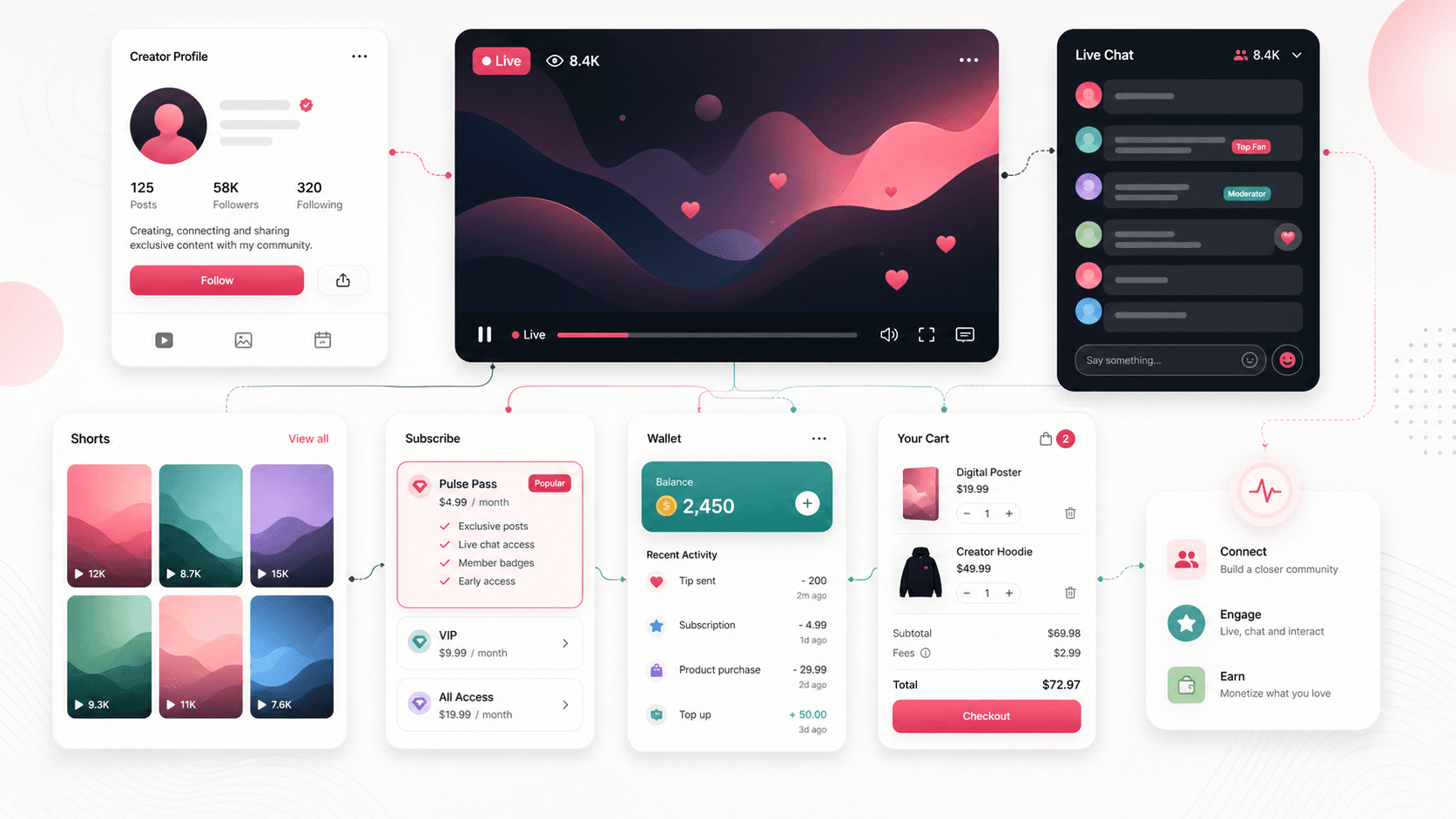
CreatorLoop: Creator fan community commerce platform
A creator fan community platform that brings video publishing, stories, live streaming, creator subscriptions, direct chat, product sales, wallet payments, notifications, and profile workflows into one responsive web experience.
Frontend product engineering for a creator community, commerce, media, chat, and live streaming web app
24+
user-facing routes
6
commerce and media modules
2
real-time communication surfaces
Stripe
payment and wallet readiness
Timeline
Multi-module React frontend build
Creators needed more than a content feed
The product had to support fan discovery, video content, stories, live sessions, paid subscriptions, direct conversation, merchandise-style product sales, wallet activity, and profile management without making users jump across unrelated tools.
Fans needed one place to discover creators, watch videos, join live channels, subscribe, message, and buy products
Commerce, chat, media, and authentication flows had to stay connected to the same user session
The frontend needed to coordinate API-backed state, third-party payments, and real-time streaming libraries
A connected fan platform with creator operations built in
CreatorLoop was implemented as a React and TypeScript web app with route-based product surfaces for fans and creators, API-backed data loading, Agora live video, websocket messaging, Stripe payment handling, and reusable form and table controls.
Home and discovery screens combine recommended creators, live channels, videos, stories, and products
Creator tools cover content publishing, story upload, live session controls, commission rates, and profile updates
Fan workflows include subscriptions, creator profiles, product carts, orders, wallet top-ups, notifications, and chat
Shared service modules keep media, plans, users, products, orders, wallet, and notifications wired to backend APIs
Product surfaces
What the platform brought together
The work spanned core product operations, daily user workflows, data-heavy coordination, and resilient platform management.
Creator discovery and media feed
Fans can browse recommended creators, live channels, published videos, active stories, products, and profile pages from one web experience.
Creator discovery lists and public creator profiles
Video detail, content view, story playback, and view-all listing routes
Home feed sections for recommended creators, live channels, videos, stories, and products
Publishing and live streaming
Creator-facing tools support publishing media, adding stories, starting live sessions, and monitoring live channel state.
Content upload form with video/image file handling and free or paid content selection
Story publishing flow backed by shared media save services
Agora camera, microphone, join, publish, leave, and live viewer controls
Subscriptions, wallet, and commerce
The app connects creator subscriptions, wallet transactions, payment methods, product carts, and order history into the same fan account model.
Subscription and creator-subscribe routes for paid creator access
Stripe card handling for wallet transactions and payment method confirmation
Product listing, product detail, cart, checkout, order success, and my-orders surfaces
Messaging and notifications
Real-time chat and notification screens keep the fan relationship active after discovery or purchase.
Direct message room list, message history, typing state, update, delete, and thread handling
Websocket chat integration with local session-derived chat identity
Notifications and user-action endpoints for story views and engagement events
Buyer priorities
What mattered most to the people evaluating the platform
Prospective buyers want to know whether the work solved real workflow, adoption, reliability, data, and operations problems. These priorities shaped the product decisions.
Fan retention
The product needed enough reasons for fans to return: fresh content, live sessions, direct messages, subscriptions, products, and wallet activity.
Discovery, media, live, chat, and commerce routes sit inside one navigation model
Notifications and live-channel indicators create repeat engagement loops
Subscriptions and wallet flows support deeper creator-fan relationships
Creator monetization
Creator tools had to support publishing, paid access, product sales, live interaction, tips or wallet activity, and commission management.
Publish-content and story flows make creator uploads operational
Product, cart, order, subscription, and wallet screens carry monetization workflows
Commission-rate and wallet pages give creators visibility into commercial settings
Operational cohesion
Media, commerce, chat, and payments use different services, so the frontend needed predictable route, state, and API boundaries.
Shared form controllers and UI components reduce repeated implementation across flows
Session utilities coordinate authentication, API headers, user context, and protected actions
System model
How the platform connects roles, workflows, and product surfaces
The product architecture brings every role into the same operating model, with shared data moving cleanly between web, mobile, media, and notification layers.
Fan engagement loop
Fans move from creator discovery into video, live sessions, subscription, chat, products, wallet activity, and repeat notifications.
Creator and fan workspaces
Creator publishing, live, commission, and wallet workflows sit beside fan subscriptions, orders, chat, and profile management.
Web app integration foundation
React routes, shared context, API services, Agora live video, chat sockets, Stripe, and backend modules work together as one platform.
Technology
The Stack We Used And Why
The stack section is written for buyers who need to understand the product architecture, operational trade-offs, and long-term maintainability of the system.
Frontend app
Used to build route-driven creator and fan workflows across discovery, profiles, media, commerce, subscriptions, wallet, and account screens.
Websocket chat supports room streaming, typing state, direct messages, updates, and deletion events
Live channel discovery links fans from browsing into the streaming experience
Delivery
How the product came together
The work moved from domain modeling to core platform delivery, mobile adoption, and operational hardening.
1
Map fan and creator journeys
Translate the fan-site product into route-level journeys for discovery, media, subscriptions, products, orders, live streaming, chat, wallet, and account management.
2
Build the shared frontend foundation
Set up routing, shared navigation, user context, toast feedback, form controllers, loaders, tables, API helpers, and reusable UI behavior.
3
Connect media and commerce services
Wire backend-backed modules for media feeds, content publishing, products, carts, orders, subscriptions, wallet transactions, users, and notifications.
4
Add real-time engagement
Integrate live video and direct chat so creators and fans can interact beyond static content and transactions.
Operational depth
What made the platform usable after launch
The strongest case studies are not only feature lists. They show how the system is operated, monitored, governed, and improved when real users depend on it.
Commerce and media in one session
The same session powers protected actions across content, cart, subscriptions, wallet, orders, chat, and profile screens.
Auth utilities gate protected fan and creator actions
User context refreshes account state after cart and payment-related actions
API token behavior is centralized in the Axios request interceptor
Creator publishing flow
Creators can upload media, define content access, publish stories, and move into live sessions without switching products.
File upload and media-save flow for published content
Story upload flow with media status handling
Live session controls for camera, microphone, channel join, and stream leave
Real-time relationship layer
Direct chat and live stream interaction give the platform recurring engagement surfaces beyond feed browsing.
Chat rooms, message history, typing events, and message actions
Live channel discovery, viewing, and creator broadcast controls
Notification and engagement endpoints support follow-up behavior
Results
The measurable and observable lift from the work
The strongest improvements are the ones a buyer can connect to daily work: fewer disconnected tools, safer operations, clearer workflows, and more reliable product behavior.
Live video
Creator Interaction
Agora-powered broadcast and viewing flows make live fan engagement part of the web experience.
Subscriptions
Paid Access
Subscription routes, creator subscribe flows, and payment readiness support recurring creator monetization.
Wallet
Commerce Foundation
Wallet transactions, Stripe payment methods, carts, orders, and product pages create a connected commercial path.
Chat
Retention Layer
Direct message rooms and websocket updates help keep creator-fan relationships active after discovery.
Outcome
A stronger operating system for creator fan community commerce platform
The platform reduced tool fragmentation and gave each role a clearer path from live activity to day-to-day action.
A React and TypeScript creator fan community frontend with discovery, content, live streaming, chat, subscriptions, products, wallet, and account workflows
Creator-facing publishing tools for videos/images, stories, live sessions, commission settings, and profile management
Fan-facing monetization paths including creator subscriptions, product carts, order history, wallet transactions, and payment method confirmation
Real-time engagement support through Agora live video and websocket-based direct messaging
FAQ
Frequently Asked Questions About CreatorLoop
Answers about the creator fan community commerce platform scope, platform model, technology choices, operational workflows, and related build patterns.
What Kind Of Platform Does CreatorLoop Represent?
CreatorLoop represents a creator fan community commerce platform with media feeds, creator discovery, live streaming, subscriptions, direct chat, product sales, wallet transactions, notifications, and profile workflows.
Why Does A Creator Platform Need Both Media And Commerce Workflows?
Creator platforms need media to drive engagement and commerce to support monetization. Keeping videos, stories, live sessions, subscriptions, products, wallet, and orders in one product helps fans move naturally from discovery to paid support.
How Did The Frontend Support Live Fan Engagement?
The frontend used Agora RTC for live video publishing and viewing, websocket chat for direct messages, notification screens for follow-up, and route-level surfaces for moving between creator discovery, live channels, chat, and paid actions.
Can This Pattern Support Other Creator Or Membership Products?
Yes. The same architecture can support creator membership sites, coaching communities, media marketplaces, live shopping, paid fan clubs, niche education communities, and subscription-driven content platforms.
Related services
Build a similarly ambitious product without starting from a blank page.
We can help scope the web, mobile, AI, media, and operating layers needed for your own platform.