Portfolio case study

TalentBridge: Bilingual job marketplace and recruitment operations platform

A multi-surface hiring marketplace that connects job seekers, employers, and platform operators through bilingual onboarding, job discovery, media-rich postings, applications, verification, networking, and recruitment operations.

Name changed to respect NDA.

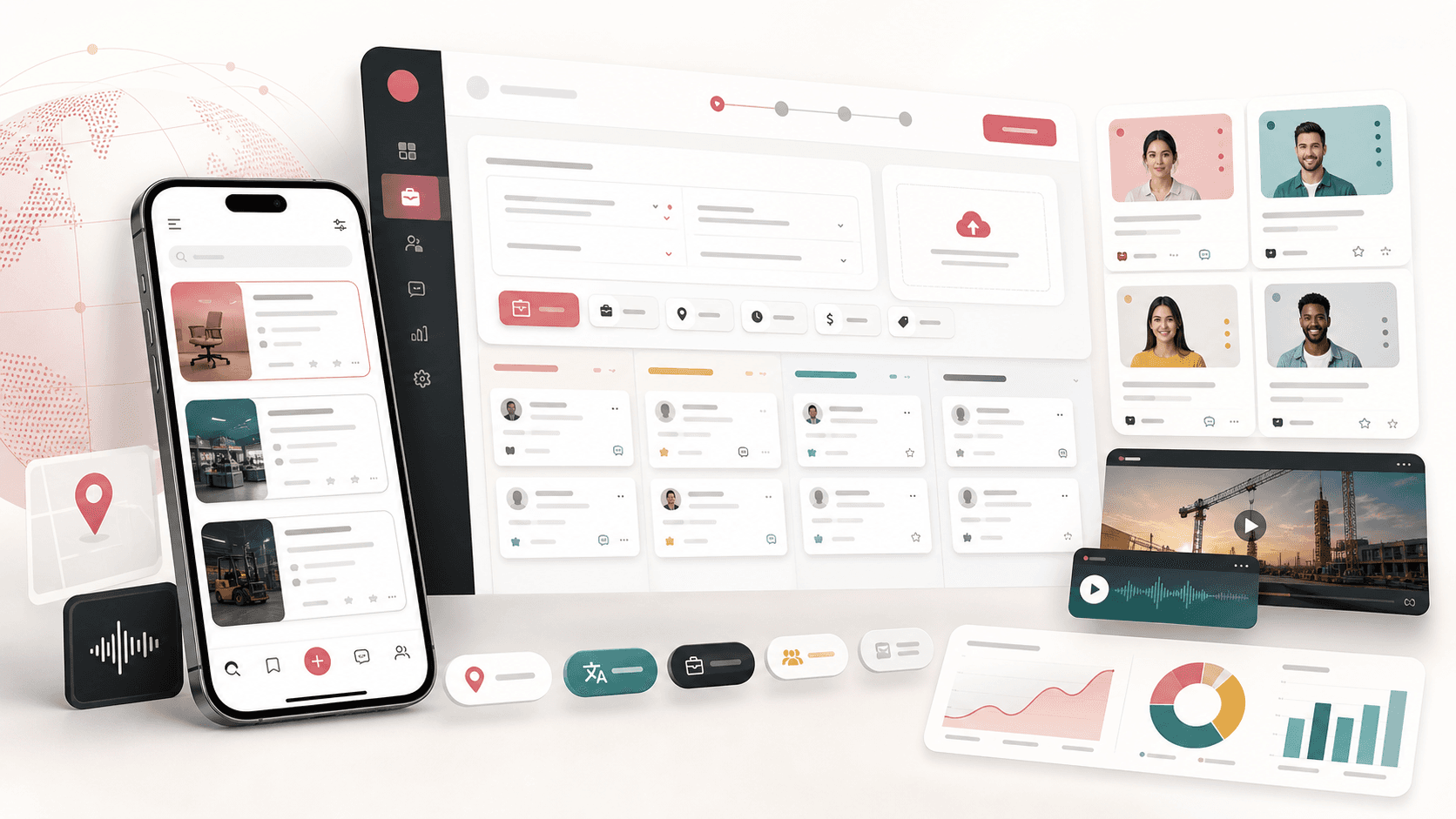
Hiring marketplace visual with mobile job discovery, employer posting tools, candidate profiles, application pipeline, media job brief cards, and analytics widgets
Project scope

Product engineering across web app, Flutter mobile app, .NET API, recruitment workflows, media upload, notifications, and operational reporting

3
connected product surfaces
2
primary marketplace roles
6
media-led job brief sections
3
language experiences

Timeline

Multi-surface hiring marketplace build across web, mobile, and backend services

Hiring workflows needed to work for both employers and job seekers

The product had to support job discovery, employer posting, candidate profiles, applications, trust checks, and community-style engagement without forcing every user through the same workflow.

  • Employers needed structured job creation with salary, shift, location, eligibility, benefits, and opening details
  • Candidates needed mobile-first job search, applications, resumes, saved profiles, and status visibility
  • The platform needed bilingual onboarding and localized reference data for job roles, categories, cities, states, qualifications, and gender options
  • Operators needed verification, user, content, and activity controls to keep the marketplace usable as supply and demand grew

A role-aware recruitment marketplace across web, mobile, and API services

TalentBridge brings employer job creation, candidate discovery, social networking, document verification, media job briefs, and platform analytics into one connected marketplace.

  • Next.js web workflows for onboarding, job search, employer posting, profile setup, posts, comments, network, and applicant review
  • Flutter mobile workflows for candidate and employer home screens, applications, job details, groups, posts, reviews, resumes, and verification
  • A .NET API layer for users, jobs, companies, files, categories, roles, places, groups, posts, comments, reviews, notifications, and admin stats
  • Media upload paths for audio and video job explanations so employers can explain roles beyond static text fields

Product surfaces

What the platform brought together

The work spanned core product operations, daily user workflows, data-heavy coordination, and resilient platform management.

Job marketplace core

Employers can create structured jobs while candidates can discover, filter, inspect, apply, and cancel applications.

  • Job role, category, city, salary, shift, qualification, gender, benefits, openings, and document requirement fields
  • Job search with category, city, salary, status, and pagination support
  • Candidate application, cancellation, applicant listing, and applicant status workflows

Media-led job brief creation

The platform supports richer job posts through audio and video segments tied to the most important candidate questions.

  • Separate media prompts for description, salary and openings, shift and location, education and gender, documents and fees, and benefits
  • Web and mobile job creation paths for text, audio, and video-first postings
  • Object-storage upload workflow for media assets connected back to job records

Candidate and employer profiles

Role-specific profile flows help candidates, employers, and companies present the right information to each other.

  • Phone/OTP onboarding, role selection, profile photo upload, and authenticated session handling
  • Candidate basic profile, resume, selected categories, location, education, and verification data
  • Employer profile and company records for brand, address, contact, and job ownership context

Network and community layer

Posts, groups, followers, comments, reviews, and network screens keep the marketplace from becoming a static job board.

  • Post creation, media upload, feed browsing, comments, likes, and post details
  • Groups, group membership, join/remove flows, follower/following lists, and user connection screens
  • Reviews and feedback questions to support trust and profile quality signals

Operations and trust controls

Administrative and support paths give the platform enough control to manage growth, content, and user quality.

  • Admin statistics for platform activity, user stats, signups per day, and open jobs versus job seekers
  • Document verification, user listing, team member management, and device token handling
  • Reference-data management for categories, roles, qualifications, places, templates, pages, and translations

Module depth

Dedicated product blocks for the highest-value workflows

For large platforms, the conversion story depends on showing how each major module solves a specific operating problem, not only listing features.

Marketplace liquidity

Supply And Demand Matching

The platform connects employer demand with candidate supply through searchable jobs, localized taxonomy, and application state.

Source evidence includes Job, JobSeeker, Place, Category, JobRole, Qualification, Admin, and User API controllers plus matching web/mobile screens.

  • Employers publish jobs with location, salary, eligibility, shifts, and openings
  • Candidates browse jobs, apply from mobile or web, and manage applied-job history
  • Operators can monitor platform activity and job seeker distribution

Candidate clarity

Audio And Video Job Briefs

Media job briefs help explain informal, field, shift, and operational roles where static job descriptions are often not enough.

Source evidence includes media job creation pages, Flutter audio/video screens, file upload services, and S3-backed upload handling.

  • Employers can attach role explanation media across six job-detail sections
  • Mobile screens support audio and video job creation and playback flows
  • Media upload paths link object-storage files to structured job records

Retention loop

Network, Groups, And Posts

Community features give candidates and employers more reasons to return than a one-time job search.

Source evidence includes Group, Post, Comment, Review, Follower, and User repositories plus Flutter post, group, network, and review screens.

  • Users can follow each other, post updates, comment, like, and review profiles
  • Groups support member lists, joining, removal, and group conversations around opportunities
  • Network screens expose connections and candidate/employer activity beyond job cards

Buyer priorities

What mattered most to the people evaluating the platform

Prospective buyers want to know whether the work solved real workflow, adoption, reliability, data, and operations problems. These priorities shaped the product decisions.

Marketplace activation

Hiring products need enough structured supply, searchable demand, and repeat user behavior to become more than a listings table.

  • Role-aware onboarding separates candidate and employer needs early
  • Localized job taxonomy improves search, filters, and form completion
  • Application and applicant status workflows help both sides understand next steps

Trust and verification

Recruitment platforms need controls for identity, profile quality, documents, company context, and user-generated content.

  • Document verification and profile completion workflows support safer matching
  • Reviews, followers, groups, and posts add social proof around users and opportunities
  • Admin stats and user controls help operators identify operational bottlenecks

Mobile-first adoption

Candidates and field employers often rely on mobile interactions, so the marketplace needed mobile access alongside the browser surface.

  • Flutter screens support job feeds, job details, applications, profiles, posts, groups, reviews, and verification
  • Push notification token support prepares the product for re-engagement loops
  • English, Hindi, and Bengali language flows reduce friction for broader job-seeker audiences

System model

How the platform connects roles, workflows, and product surfaces

The product architecture brings every role into the same operating model, with shared data moving cleanly between web, mobile, media, and notification layers.

Three surfaces, one hiring marketplace

The web app, Flutter app, and API layer connect employer posting, candidate discovery, applications, media, and operations.

From job brief to application

Employers create structured or media-led jobs, candidates discover roles, apply, and employers review applicants.

Role-specific marketplace controls

Candidates, employers, and operators each receive different tools while sharing the same platform foundation.

Technology

The Stack We Used And Why

The stack section is written for buyers who need to understand the product architecture, operational trade-offs, and long-term maintainability of the system.

Web app

Used for browser-based onboarding, job search, employer posting, profile setup, applicant review, network, and content workflows.

Next.jsReactTypeScriptMaterial UIReact Hook FormSass

Mobile app

Used for candidate and employer workflows that benefit from mobile-first browsing, media capture, notifications, and everyday access.

FlutterDartProviderGetXDioShared Preferences

Backend API

Used for marketplace data, user roles, job workflows, media records, social features, admin reporting, and authentication.

ASP.NET CoreC#MongoDBJWTSwaggerNLog

Media and notifications

Used to support file uploads, job media, profile images, verification assets, and mobile re-engagement.

AWS S3Firebase AdminCorePushTwilioImage PickerVideo Player

Localization and operations

Used to support multiple languages, reference data, admin stats, and ongoing marketplace management.

React IntlFlutter localizationMongoDB repositoriesMiniProfilerDocker-ready API deployment

Why Web And Mobile Surfaces

Hiring workflows span office-based employer operations and mobile-heavy candidate behavior, so the product needed both.

  • The web app gave employers and operators richer forms, lists, and applicant workflows
  • Flutter kept candidate discovery, applications, groups, posts, and profile tasks accessible on phones
  • A shared API kept marketplace data consistent across both experiences

Why Media Was Built Into Jobs

For many job categories, candidates need practical context that plain descriptions do not capture well.

  • Audio and video sections let employers explain pay, shifts, documents, benefits, and role details more clearly
  • Structured media slots keep rich content tied to searchable job records
  • Playback and upload flows make media part of the hiring workflow instead of an external attachment

Why Localization Matters

A hiring marketplace serving varied job seekers needs language, location, and taxonomy choices to be part of the core model.

  • English, Hindi, and Bengali strings support broader onboarding and discovery
  • State, city, category, role, qualification, and gender data make filters and forms operationally useful
  • Translation-aware reference data prepares the platform for regional expansion

Delivery

How the product came together

The work moved from domain modeling to core platform delivery, mobile adoption, and operational hardening.

1

Define the marketplace roles

Separate candidate, employer, company, and operator needs before building shared workflows.

2

Build the hiring transaction

Create the job, discovery, detail, application, applicant review, and status-update paths.

3

Add media and mobile use

Extend the core marketplace with audio/video briefs, mobile screens, uploads, and notification readiness.

4

Operationalize trust and growth

Add admin statistics, reference data, document verification, social features, and multilingual support.

Operational depth

What made the platform usable after launch

The strongest case studies are not only feature lists. They show how the system is operated, monitored, governed, and improved when real users depend on it.

Reference data as a platform asset

Roles, categories, qualifications, locations, genders, and translations are managed as reusable platform data rather than hard-coded form options.

  • Admin-accessible category, role, qualification, country, state, and city endpoints
  • Translation models for app templates, categories, roles, locations, and qualifications
  • Consistent query and pagination patterns across marketplace resources

Applicant status management

Employers can review applicants and move them through shortlist, reject, and hired-style status outcomes.

  • Applicant listing by job and status
  • Status update endpoint for employer-side hiring decisions
  • Candidate applied-job history and cancellation workflow

Operational reporting

Platform stats help operators understand marketplace health and adoption signals.

  • User statistics and signup trends
  • Open jobs versus job seeker reporting
  • Platform activity endpoints for admin dashboards

Results

The measurable and observable lift from the work

The strongest improvements are the ones a buyer can connect to daily work: fewer disconnected tools, safer operations, clearer workflows, and more reliable product behavior.

Role aware

Marketplace UX

Candidates, employers, and operators each received workflows shaped around their hiring responsibilities.

Media rich

Job Posting

Audio and video job sections gave employers a way to explain practical details that static text often misses.

Localized

Candidate Access

Language and location support made the marketplace more usable across regional job-seeker audiences.

Outcome

A stronger operating system for hiring marketplace and recruitment operations platform

The platform reduced tool fragmentation and gave each role a clearer path from live activity to day-to-day action.

A web and mobile hiring marketplace where candidates can search jobs, apply, manage profiles, upload resumes, follow users, join groups, and interact with posts

An employer workflow for structured job creation, media-rich job briefs, applicant review, applicant status updates, company context, and profile management

A backend API layer covering users, jobs, applicants, companies, files, locations, categories, roles, qualifications, posts, groups, comments, reviews, notifications, and admin reporting

A public-safe recruitment platform case study that connects buyer value to marketplace activation, trust, media-led job clarity, localization, and mobile adoption

FAQ

Frequently Asked Questions About TalentBridge

Answers about the hiring marketplace and recruitment operations platform scope, platform model, technology choices, operational workflows, and related build patterns.

What Kind Of Hiring Platform Does This Case Study Represent?

It represents a job marketplace where employers publish structured and media-rich roles, candidates discover and apply for jobs, and operators manage trust, content, and marketplace activity.

Why Add Audio Or Video To Job Posts?

Audio and video help employers explain shift expectations, salary context, benefits, documents, fees, and workplace details in a format that can be easier for candidates to understand than long text.

Can This Pattern Support Staffing Agencies Or Blue-Collar Recruitment?

Yes. The same pattern fits staffing agencies, local hiring marketplaces, field workforce platforms, gig-work networks, and regional recruitment products that need mobile access, verification, and localized job taxonomy.

What Should A Buyer Prepare Before Building A Similar Product?

Useful inputs include candidate and employer roles, job taxonomy, location hierarchy, application statuses, verification rules, media requirements, language priorities, notification strategy, and admin reporting needs.

Related services

Build a similarly ambitious product without starting from a blank page.

We can help scope the web, mobile, AI, media, and operating layers needed for your own platform.

Start a project inquiry