
Quick Answer: AI Personalization For Salon Apps
AI and machine learning can make a salon app feel more personal by using client preferences, booking history, service outcomes, product purchases, stylist availability, and feedback to recommend the right services, staff, time slots, retail products, and retention offers. The strongest salon AI features do not replace the stylist; they help the salon make faster, more relevant decisions with better context.
For salon owners and beauty marketplace teams, the practical path is to start with clean client profiles, consent-aware data collection, booking rules, and staff review workflows. Advanced AI development services should come after the core app can already capture reliable service, scheduling, preference, and outcome data.
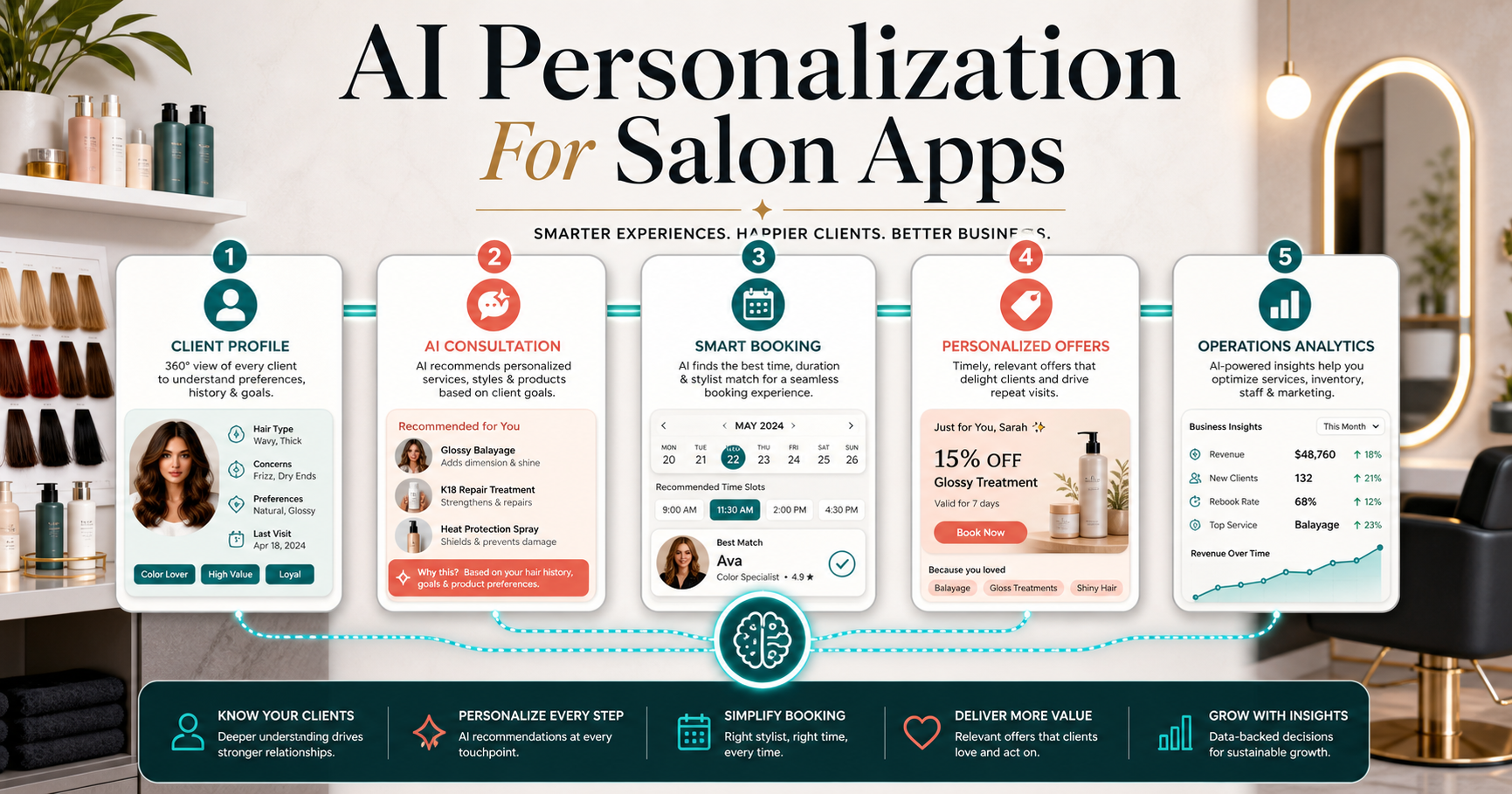
Why AI Personalization Matters In Salon Apps
Salon appointments are personal decisions. Clients choose services based on hair type, skin tone, budget, preferred stylist, past results, allergies, timing, occasion, and trust. A generic app can show a service list, but a personalized salon app can guide the client toward a confident booking.
Personalization also helps the salon operate with less guesswork. The app can identify repeat-service patterns, likely rebooking windows, slow appointment slots, inventory demand, loyalty behavior, and customers who may need follow-up. A mobile app development company building this kind of product should plan both the client experience and the staff workflow from the start.
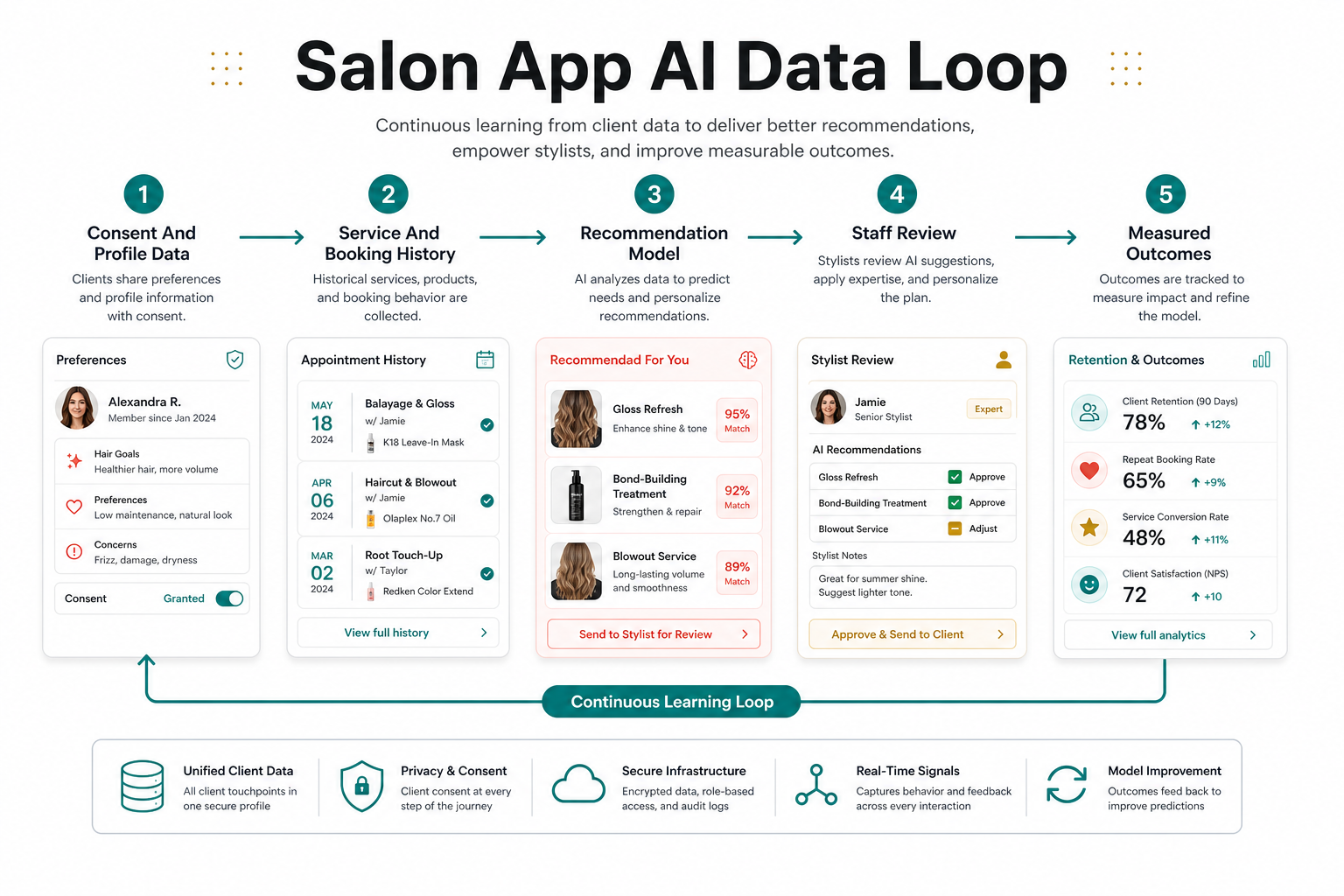
Start With The Salon AI Data Loop
Before adding machine learning features, define the data loop. A salon app can collect profile preferences, service categories, stylist choices, booking frequency, product purchases, photo consultation notes, reviews, cancellations, no-shows, and retention events. That data should be structured enough to support recommendations without exposing sensitive details to people who do not need them.
The loop should include human review. Stylists and salon managers know context that a model may miss, such as damaged hair, skin sensitivity, event deadlines, or a client who prefers a specific communication style. AI should suggest; the salon should stay accountable for the final recommendation.
High-Value AI Features For Salon Apps
The best AI features solve specific salon problems. They make booking easier, reduce staff workload, improve service fit, and encourage repeat visits without making the app feel intrusive.
Virtual Consultations And Look Preview
Virtual consultations let clients upload photos, answer preference questions, and preview styles, colors, makeup looks, nail designs, or treatment options. AI can help classify hair type, skin tone, style inspiration, and service complexity, but the app should make it clear when a stylist review is still required.
For teams comparing broader beauty app features, this consultation layer can become the bridge between inspiration, service selection, staff preparation, and retail recommendations.
Personalized Service And Product Recommendations
Machine learning can recommend services, add-ons, maintenance packages, and products based on past appointments, preferred stylist, budget, season, event type, and service outcomes. A client who books color treatments may need care products and a follow-up appointment. A client who frequently cancels evening slots may need different reminder timing or availability suggestions.
The app should avoid overpromising. Recommendations need explainable reasons such as "based on your last color service" or "popular with clients booking bridal makeup" instead of vague personalization claims.
Smart Booking And Stylist Matching
AI can improve booking by matching the service, expected duration, stylist skill, room or chair availability, client preference, and travel timing. The goal is not just to fill a slot; it is to reduce wrong-fit bookings that create delays and poor outcomes.
The same booking discipline appears in healthcare scheduling. NextPage's guide to building an appointment booking app is useful when a salon product needs availability rules, reminders, profile data, and appointment-status flows. For marketplace-style scheduling, the Schedulink appointment marketplace case study shows how provider availability, booking, and admin oversight can work together.
Inventory Demand And Retail Recommendations
Salon apps can use service bookings, product usage, seasonality, and purchase history to predict stock needs. This helps reduce stockouts for popular products and avoids tying up cash in slow-moving inventory. Retail recommendations should stay connected to real service outcomes: aftercare kits, replenishment reminders, and stylist-approved products are more credible than generic upsells.
Retention Marketing And Loyalty
AI-assisted campaigns can segment clients by visit frequency, service type, spend, missed rebooking window, preferred channel, and offer sensitivity. A good salon app can suggest follow-up messages, reminders, loyalty rewards, and win-back campaigns while letting staff approve tone and timing.
Where AI Improves Salon Operations
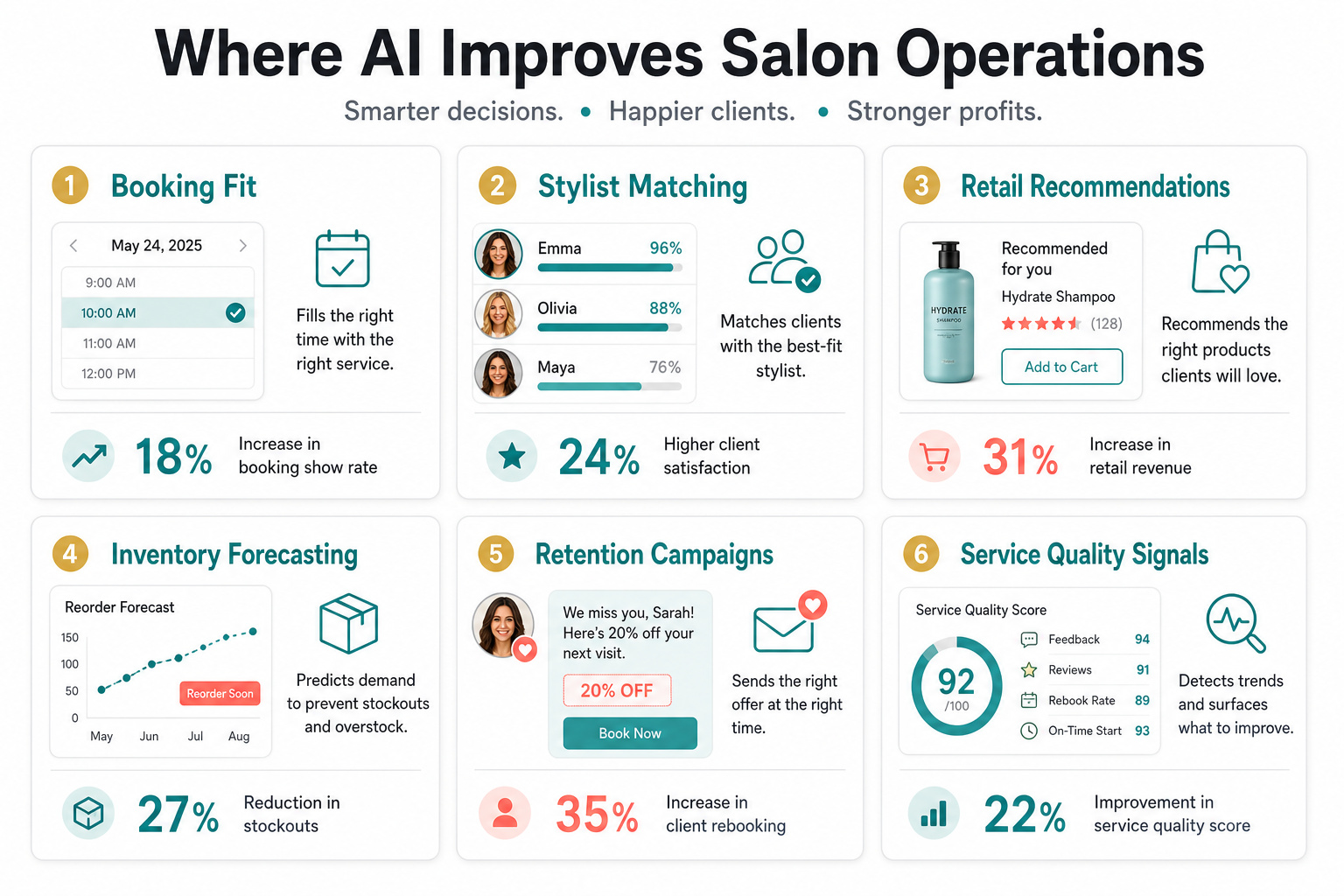
| AI Use Case | Salon Benefit | Implementation Requirement |
|---|---|---|
| Service recommendations | More confident bookings and better add-on fit | Clean service taxonomy, preference data, and outcome feedback |
| Stylist matching | Fewer wrong-fit appointments | Staff skills, availability, service duration, and client preferences |
| Smart reminders | Lower no-show rate and better rebooking | Booking history, reminder preferences, and cancellation patterns |
| Inventory forecasting | Better stock planning and retail timing | Product usage, purchases, service volume, and seasonality |
| Retention campaigns | More repeat visits without generic blasts | Consent, segmentation, offer rules, and staff approval |
Privacy, Consent, And Trust Guardrails
Salon data can be sensitive. Photos, skin concerns, hair history, payment details, location, preferences, and communication patterns should be protected with clear consent, role-based access, secure storage, deletion paths, and practical retention rules.
Facial recognition and image analysis need extra caution. If the product uses face scans or beauty previews, explain what is stored, why it is needed, who can see it, and how the client can remove it. Avoid using biometric features when a simpler photo-consultation workflow would be enough.
Implementation Roadmap For AI Salon Apps
A salon app should not launch with every AI feature at once. Start with the data and workflow foundations that make personalization reliable.
| Stage | Priority | What To Build |
|---|---|---|
| Foundation | Clean booking data | Profiles, service taxonomy, stylist skills, availability, booking rules, reminders |
| Personalization | Useful recommendations | Preference capture, service suggestions, add-ons, product recommendations, rebooking prompts |
| Operations | Staff and inventory support | Demand signals, inventory forecasting, staff dashboards, exception handling |
| Automation | Approved campaigns | Retention segments, triggered offers, loyalty rules, staff-reviewed messages |
| Advanced AI | Validated intelligence | Virtual consultation, image analysis, model monitoring, consent controls, quality review |
If the first release scope is unclear, the Custom Software Cost Estimator can help frame budget and timeline assumptions for user roles, integrations, AI features, admin tools, and analytics.
Metrics That Show AI Is Working
Personalization should improve measurable outcomes. Track booking conversion, repeat booking rate, no-show rate, rebooking window, average order value, add-on attach rate, retail conversion, stylist utilization, campaign conversion, recommendation acceptance, client satisfaction, and support volume.
Watch for negative signals too. If recommendations are ignored, reminders are muted, campaign opt-outs rise, or staff overrides increase, the model or rules may be too aggressive. The app should make it easy to adjust recommendations and suppress irrelevant prompts.
Common Mistakes To Avoid
- Starting with AI before data quality: weak service categories, duplicate profiles, and inconsistent booking states create poor recommendations.
- Removing staff judgment: stylists need context and override controls for client-specific decisions.
- Overusing facial recognition: image-based features need explicit value, clear consent, and strong privacy controls.
- Sending generic automated campaigns: personalization should reduce noise, not create more irrelevant notifications.
- Ignoring operations: recommendations must fit real staff availability, inventory, room capacity, and service durations.
Final Takeaway
AI and machine learning can make salon apps more useful when they are grounded in real service data, client consent, staff review, and measurable outcomes. The best salon AI features help clients choose confidently and help salons operate with clearer demand, better timing, and more relevant follow-up.
Start with the booking, profile, and operations foundations. Then add recommendations, consultation intelligence, inventory forecasting, and retention automation where they make the salon experience easier to trust and easier to run.