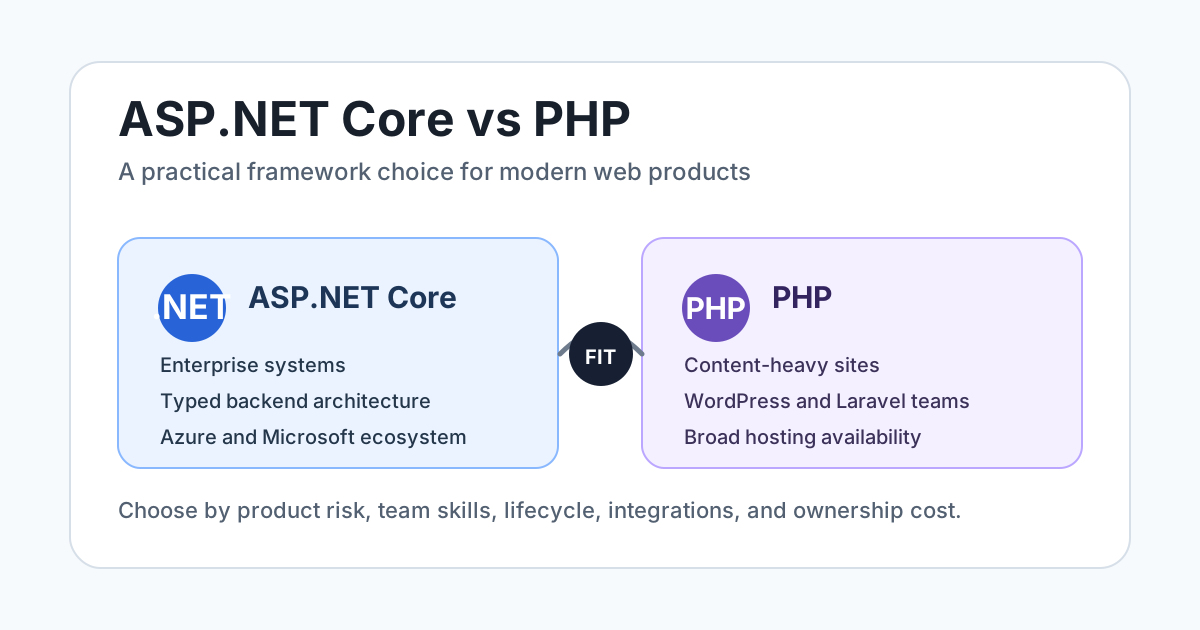

ASP.NET Core vs PHP is not a simple question of which language is better. Both can power reliable web products, APIs, dashboards, marketplaces, and internal systems. The better question is which ecosystem fits your product risk, team skills, integrations, hosting model, security needs, and long-term maintenance plan.
The older version of this post made a one-sided case for ASP.NET. This updated guide keeps the useful ASP.NET arguments, but adds the context product owners actually need in 2026: when ASP.NET Core is the stronger choice, when PHP is still practical, and when a modernization plan matters more than a framework debate.
Quick Answer: Should You Choose ASP.NET Core or PHP?
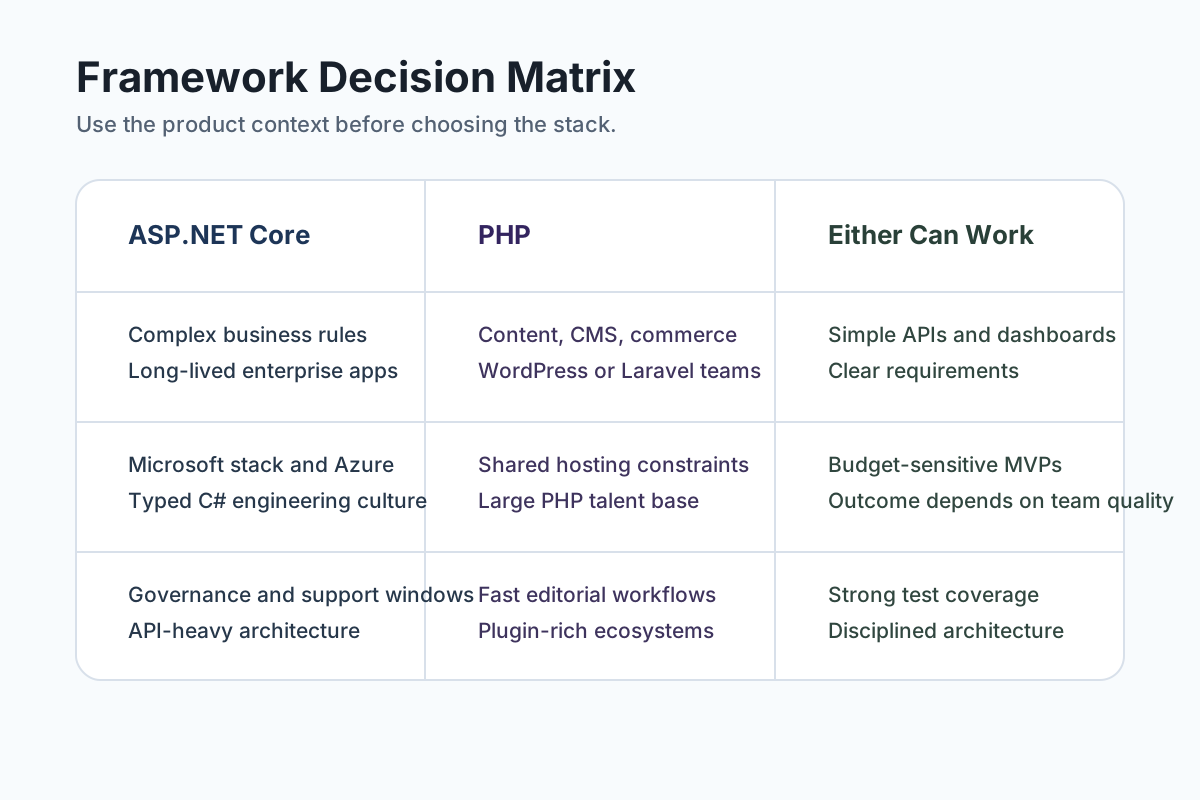
Choose ASP.NET Core when you need a typed, enterprise-friendly backend, strong Microsoft ecosystem alignment, long-lived APIs, complex business rules, Azure integration, or a team that already works well in C# and .NET. Choose PHP when the product is content-heavy, WordPress or Laravel is already central to the business, hosting constraints matter, or your team can move faster in the PHP ecosystem.
For many companies, the correct decision is not a full rewrite. It may be a staged legacy software modernization plan that keeps stable PHP or ASP.NET systems running while rebuilding the riskiest workflows first.
What Changed Since the Old ASP.NET vs PHP Debate?
The old ASP.NET vs PHP debate often compared classic ASP.NET and older PHP versions. That framing is stale. Today, the practical comparison is ASP.NET Core on modern .NET against current PHP releases and mature frameworks such as Laravel, Symfony, and WordPress-based architectures. If you need a deeper runtime distinction first, NextPage also covers .NET Vs .NET Core.
ASP.NET Core is cross-platform, open source, and designed for web apps and services with C#. Microsoft lists .NET 10 LTS, .NET 9 STS, and .NET 8 LTS as supported .NET versions in May 2026. PHP also has a public support lifecycle: PHP 8.2, 8.3, 8.4, and 8.5 are listed as currently supported, with different active and security support dates.
That means both ecosystems can be modern when maintained properly. The risk usually comes from outdated runtimes, weak architecture, missing tests, poor hosting practices, and unpatched dependencies.
Where ASP.NET Core Is Stronger
ASP.NET Core is often the better fit for enterprise web application development because it combines C#, strong typing, mature tooling, first-party documentation, and a consistent platform for APIs, web apps, background jobs, authentication, and cloud deployment. It is especially useful when the application has complex business logic, strict reliability requirements, or a long roadmap.
- Typed architecture: C# and .NET help larger teams model business rules, refactor safely, and maintain clearer contracts between layers.
- Enterprise integration: ASP.NET Core fits well with Microsoft identity, SQL Server, Azure services, internal enterprise systems, and regulated operations.
- Performance profile: ASP.NET Core has a strong performance story for APIs and server-side web workloads when the system is designed and hosted well.
- Security primitives: Built-in authentication, authorization, request validation patterns, and mature security guidance reduce the amount teams need to invent.
- Long-term maintenance: Official release channels, LTS options, and predictable patching make planning easier for organizations with governance requirements.
If your product roadmap includes multi-role workflows, internal operations, complex data models, or API-heavy integrations, ASP.NET Core is usually a serious candidate for custom software development.
Where PHP Still Makes Sense
PHP remains practical for a large class of projects. The ecosystem is broad, deployment options are familiar, and many businesses already depend on PHP through WordPress, WooCommerce, Laravel, or custom legacy applications. Replacing PHP only because another framework looks more enterprise-ready can waste budget and introduce delivery risk.
PHP can be the right choice when the product is content-led, editorial workflows matter, the team has strong Laravel or WordPress expertise, existing infrastructure is stable, or the first release needs to move quickly within a known ecosystem. A well-maintained PHP application can be more valuable than a rushed rewrite in a stack the team cannot operate.
The real checkpoint is support status and code health. If a PHP product is on an unsupported runtime, depends on abandoned plugins, or lacks deployment discipline, the issue is not simply PHP. It is unmanaged technical debt.
Performance, Security, and Scalability Comparison
Performance comparisons are easy to oversimplify. ASP.NET Core has strong benchmark results and is a good fit for high-throughput APIs, but production performance also depends on database design, caching, async work, hosting, observability, and frontend delivery. PHP can perform well for content and business apps when paired with modern runtime versions, caching, queues, CDN configuration, and disciplined database access.
| Decision area | ASP.NET Core advantage | PHP advantage | What to evaluate |
|---|---|---|---|
| Performance | Strong API and compiled-runtime profile | Efficient for content-heavy apps with caching | Measure real endpoints, not only benchmarks |
| Security | Mature identity and enterprise patterns | Large ecosystem with proven frameworks | Runtime support, dependency hygiene, auth design |
| Scalability | Good for complex services and cloud workloads | Good for editorial and commerce platforms | Data model, queues, cache, deployment model |
| Hiring | Strong C# enterprise talent pool | Large PHP, WordPress, and Laravel talent pool | Your region, seniority needs, and handoff risk |
Team And Product Fit Matter More Than Language Preference
A framework that looks better on paper can still fail if the team cannot ship, test, deploy, and maintain it. Before choosing ASP.NET Core or PHP, map the product into concrete workflows: user roles, permissions, integrations, reporting, payments, content operations, admin tooling, data retention, and expected growth.
For a startup MVP, speed and learning may matter more than a perfect long-term architecture. For an internal enterprise platform, governance, identity, auditability, and maintainability may matter more than the fastest first release. For a content or commerce system, editorial tooling and plugin risk may matter more than raw API throughput.
If you are still estimating scope, the custom software cost estimator can help frame the delivery effort before a full architecture decision.
Modernization Path For Existing PHP Or ASP.NET Apps
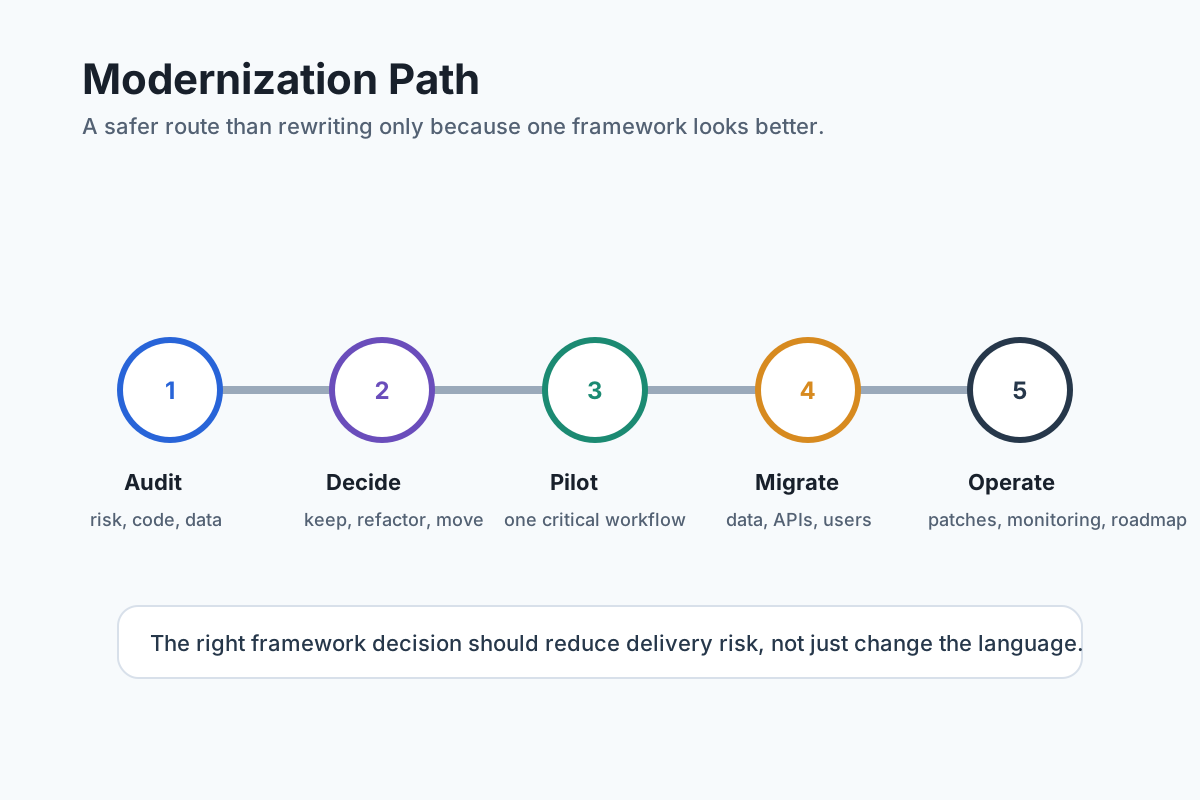
Existing applications need a different decision process than new builds. If the current system already supports revenue, operations, or customer workflows, the first goal is risk reduction. Audit the runtime, dependencies, database, deployment process, security exposure, and the workflows that create the most user or operational pain.
Then choose a modernization path. Some products only need dependency upgrades and better hosting. Others need selected modules rebuilt as APIs or new frontends. A full rewrite should be reserved for cases where the architecture blocks the business and a staged migration plan can protect continuity.
When NextPage Would Recommend ASP.NET Core
NextPage would lean toward ASP.NET Core for a web product with heavy business rules, complex dashboards, integration with Microsoft identity or Azure, high API reliability expectations, or a multi-year enterprise roadmap. It is also a strong fit when backend maintainability and typed domain modeling are more important than plugin availability.
For example, a field operations platform like the FieldIQ portfolio case study needs reliable workflows, role-aware interfaces, and operational clarity. A fleet or logistics system like the RouteLedger portfolio case study has similar pressure around data integrity, integrations, and long-term maintainability. Those are the kinds of product conditions where ASP.NET Core deserves serious consideration.
When NextPage Would Keep Or Modernize PHP
NextPage would keep or modernize PHP when the business value lives in an existing content platform, commerce flow, plugin ecosystem, or Laravel application that already works. In that case, the best investment may be upgrading the runtime, reducing plugin risk, hardening deployments, improving observability, and rebuilding only the parts that limit growth.
PHP modernization can also pair well with new frontend or service layers. A team might keep WordPress for marketing content while building critical product workflows as a separate web app development project. That approach avoids forcing one framework to carry every responsibility.
Practical Selection Checklist
- Choose ASP.NET Core if your roadmap needs complex APIs, typed domain models, Microsoft ecosystem integration, or enterprise governance.
- Choose PHP if your product depends on WordPress, Laravel, content operations, broad hosting availability, or an existing PHP team.
- Do not rewrite a working application until you have audited runtime support, business risk, test coverage, and migration cost.
- Compare total cost of ownership: build speed, hosting, hiring, maintenance, upgrades, monitoring, and security patching.
- Validate with one high-value workflow before committing to a full migration or rebuild.
Final Takeaway
ASP.NET Core is often the stronger choice for enterprise-grade, API-heavy, and long-lived custom software. PHP remains a sensible choice for content-driven platforms, existing Laravel or WordPress systems, and teams that can operate it well. The right answer depends less on language preference and more on product risk, team capability, support lifecycle, and the operating model after launch.
If the decision affects a real product roadmap, start with an architecture and modernization audit. The best framework is the one your team can ship, secure, measure, and improve over time.