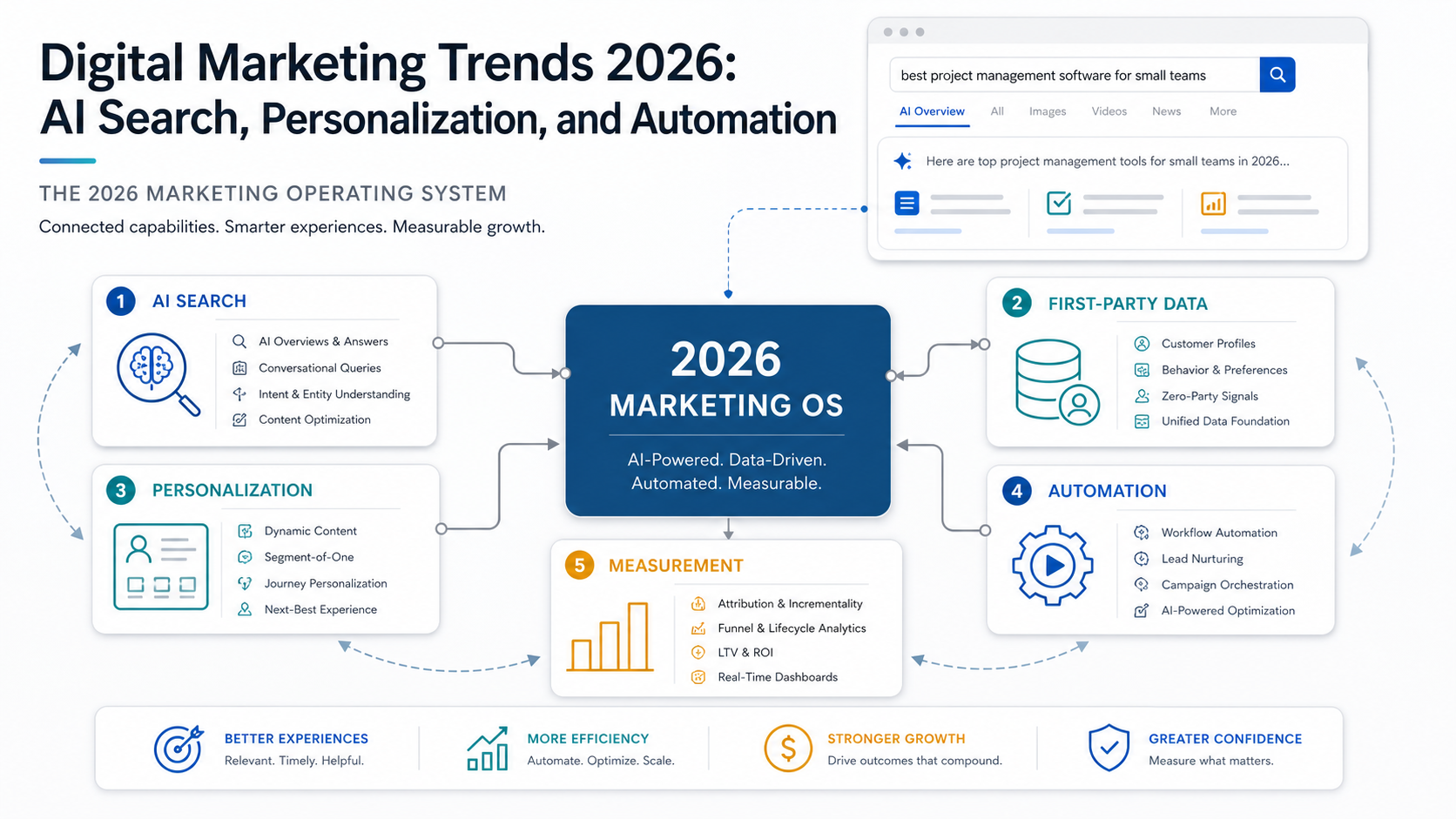

Digital marketing in 2026 is less about chasing one new channel and more about building a connected operating system. Search is becoming conversational, buyers expect relevant journeys across channels, and AI is changing how campaigns are planned, produced, measured, and improved.
The practical takeaway: brands that own their data, publish useful content, and automate follow-up with clear measurement will outperform teams that only add AI tools on top of fragmented workflows.
Quick Answer: The Most Important Digital Marketing Trends for 2026
The biggest digital marketing trends for 2026 are AI search visibility, first-party data, privacy-safe personalization, short-form video, messaging-based customer journeys, marketing automation, immersive commerce, and outcome-based measurement. For small and midsize businesses, the priority is not to try everything. Start by making your website and content answer-ready for AI search, then connect customer data to campaigns, and finally automate repeatable follow-up.
If your current website cannot explain who you serve, what you do, and why buyers should trust you, AI channels will have less useful information to cite. A practical digital transformation roadmap helps sequence the content, data, automation, and analytics work instead of treating marketing as isolated campaigns.
The 2026 Digital Marketing Trend Map
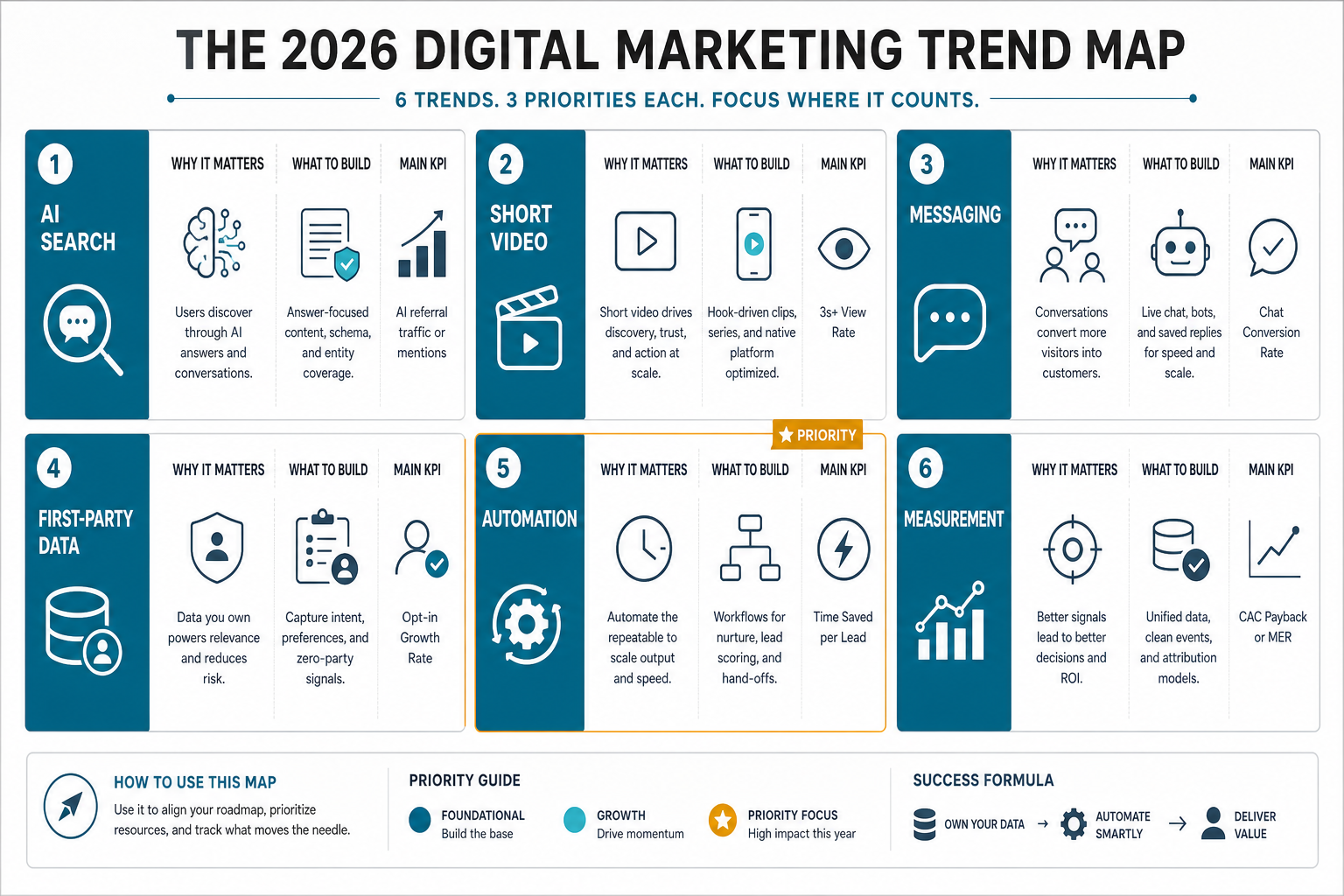
Most teams should organize the year around six connected priorities:
- AI Search: Make brand, service, and expertise signals easy for search engines and answer engines to understand.
- Short Video and Creator-Led Content: Turn customer questions, proof points, and product education into fast, reusable media.
- Messaging Journeys: Use chat, WhatsApp, email, and in-app messages for timely assistance instead of generic blasts.
- First-Party Data: Capture consented behavior, preferences, and purchase signals that improve relevance.
- Automation: Automate lead routing, nurturing, reporting, and repetitive campaign operations with human review where judgment matters.
- Measurement: Track revenue, retention, pipeline quality, and customer lifetime value instead of relying only on clicks.
1. AI Search Visibility Becomes a Core Marketing Channel
Search behavior is moving from short keyword queries to longer, more contextual questions. Buyers now ask AI systems to compare options, summarize vendors, build shortlists, and explain trade-offs before they ever click a traditional result.
That makes answer readiness a content and technical priority. Your pages need clear positioning, service definitions, comparison context, examples, FAQs, schema, and consistent entity signals. NextPage's AI Search Optimization for Service Businesses guide goes deeper into how service companies can become easier for AI answers to understand and recommend.
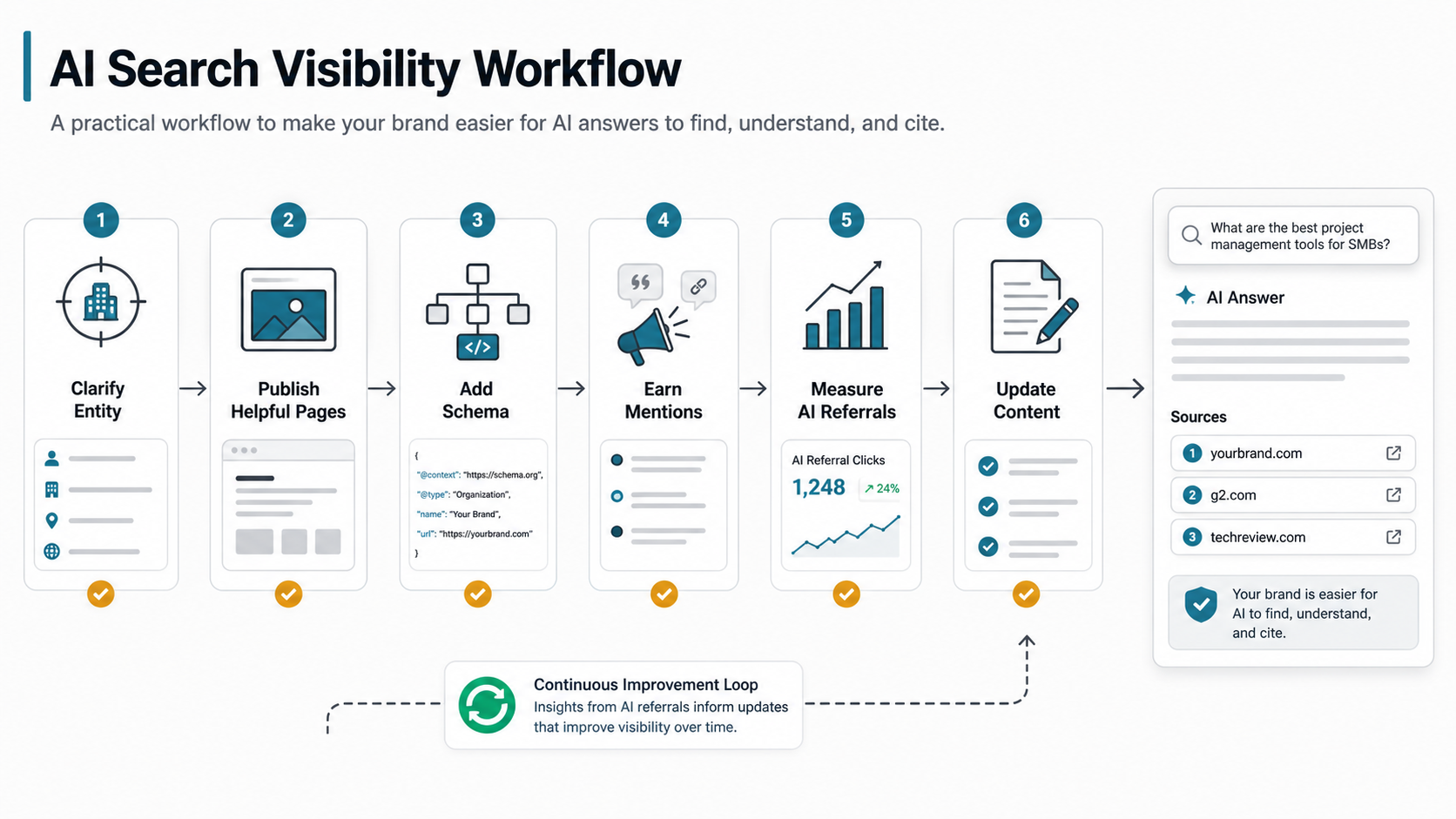
For 2026, build an AI-search checklist around these actions:
- Define your entity: company name, services, locations, audiences, proof points, and differentiators.
- Publish pages that answer buyer questions directly, especially comparison, cost, process, use-case, and implementation questions.
- Add structured data where appropriate and keep page titles, headings, and metadata aligned.
- Measure AI referrals, branded search, assisted conversions, and mention quality instead of only ranking positions.
2. First-Party Data Powers Privacy-Safe Personalization
Personalization still matters, but the winning version is consented, useful, and measurable. Instead of depending on fragile third-party signals, marketers need their own customer profiles, preference centers, CRM events, purchase history, support conversations, and behavior data.
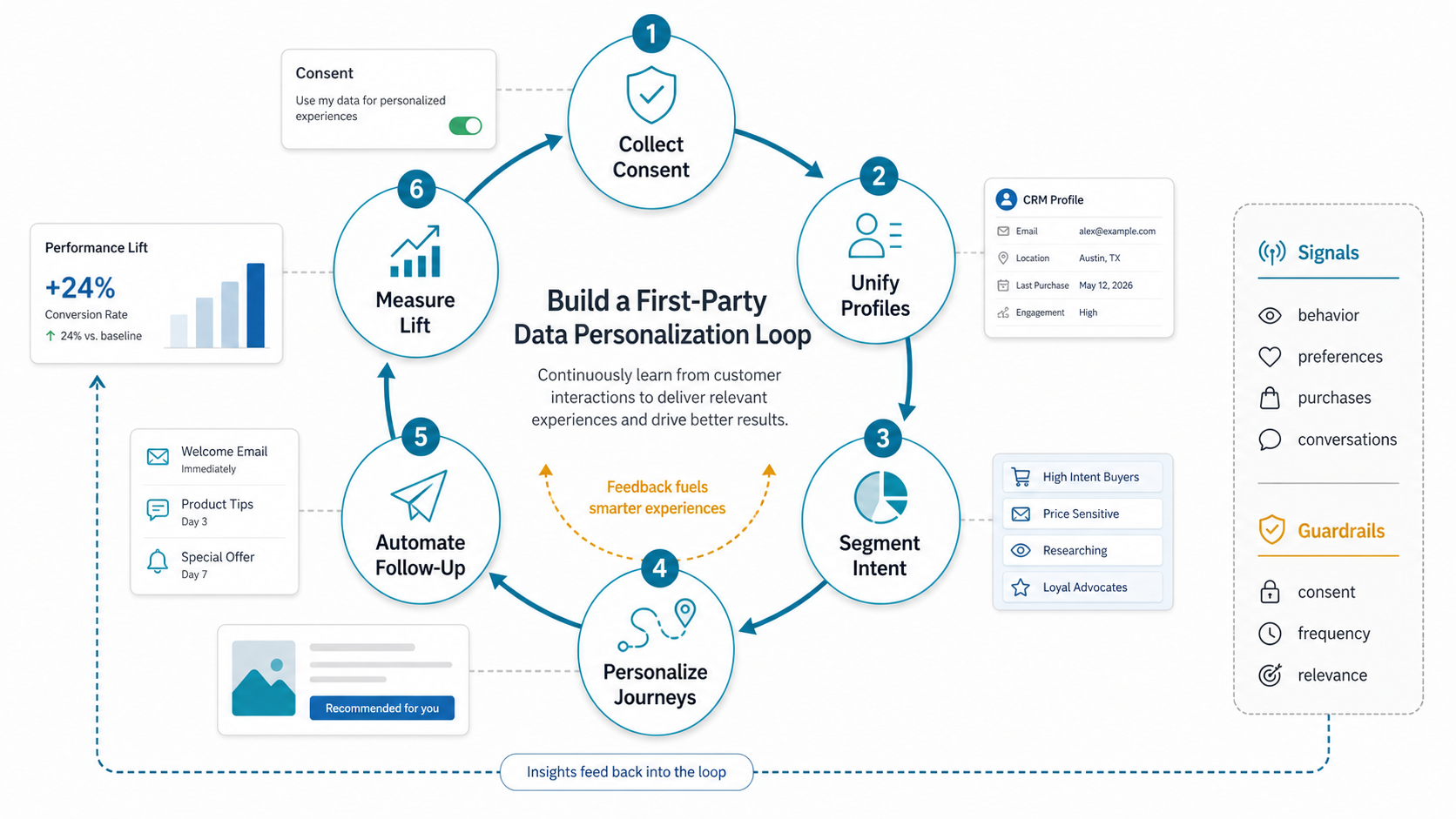
Start small. Segment leads by intent, lifecycle stage, problem, and fit. Then personalize the next best action: an email sequence, sales handoff, retargeting audience, in-app prompt, or helpful resource. If the journey depends on AI-generated recommendations, make the rules visible enough that a human can audit them.
For teams building AI-enabled personalization or campaign workflows, generative AI development can connect content generation, data enrichment, and review workflows without giving up brand control.
3. Marketing Automation Moves From Tasks to Workflows
Automation in 2026 is no longer limited to scheduled emails. AI agents and workflow automation can qualify leads, summarize calls, create campaign briefs, update CRM fields, draft nurture copy, route tasks, and prepare performance reports.
The mistake is automating a broken process. First define the trigger, decision rule, owner, fallback path, and success metric. Then automate the repeatable pieces. Use human approval for sensitive offers, audience exclusions, pricing claims, compliance language, and customer-facing responses.
NextPage's AI Development Services page shows how controlled agents and workflow automation can hand off cleanly when approval or exception handling is needed. Before investing, estimate the business case with the AI Automation ROI Calculator.
4. Short Video and Messaging Compress the Buyer Journey
Video, social discovery, messaging apps, and community channels are merging into faster decision journeys. Buyers may discover a brand through a short video, ask a question in chat, compare options in an AI answer, and expect a useful follow-up within minutes.
Use short-form video for education, objection handling, product walkthroughs, testimonials, and founder-led clarity. Then connect that attention to messaging journeys that answer questions, collect preferences, and move qualified leads into CRM. Generic broadcast messages will feel noisy; helpful, context-aware messages can improve conversion and retention.
For app-led businesses, channel integration matters as much as content. The social engagement patterns in Social Media Integration in Pizza Delivery App are a useful example of turning social interactions into support, loyalty, and conversion moments.
5. AR, Interactive Content, and Immersive Commerce Become Selective Advantages
AR, interactive tools, calculators, quizzes, configurators, and product previews can still be powerful, but only when they reduce buyer uncertainty. A virtual try-on, ROI calculator, cost estimator, comparison wizard, or onboarding checklist usually performs better than a decorative interactive experience.
Before building immersive content, ask three questions: Does it help the buyer decide? Does it capture useful consented intent? Can sales or support use the output? If the answer is yes, interactive content can become a qualified-lead engine rather than a campaign novelty.
6. Measurement Shifts From Clicks to Outcomes
As AI search and cross-channel discovery grow, last-click attribution becomes even less reliable. Buyers may see a video, ask an AI system for recommendations, visit comparison pages, talk to sales, and return through branded search. The metric stack has to reflect that journey.
Track a balanced scorecard: qualified pipeline, conversion rate by segment, cost per opportunity, customer acquisition cost payback, retention, lifetime value, branded demand, AI referral traffic, and content-assisted conversions. The goal is not perfect attribution; it is better decisions about what to scale, fix, or stop.
A Practical 90-Day Implementation Plan
Use the first 90 days to build foundations instead of chasing disconnected tactics.
Days 1-30: Fix Visibility and Message Clarity
- Rewrite core service pages around buyer questions, outcomes, proof, and use cases.
- Audit metadata, headings, schema, FAQs, and internal links.
- Create a list of AI-search prompts buyers might ask before choosing a vendor.
Days 31-60: Build Data and Personalization Loops
- Connect CRM, forms, analytics, email, and sales handoff data.
- Create lifecycle segments and preference-based nurture paths.
- Define privacy guardrails, consent language, and frequency limits.
Days 61-90: Automate and Measure
- Automate one lead-nurture or reporting workflow with human review.
- Launch one short-video or interactive-content experiment tied to a landing page.
- Review pipeline quality, assisted conversions, AI referrals, and content engagement weekly.
Conclusion: Build a Marketing System, Not a Trend List
The future of digital marketing is not one channel, tool, or tactic. In 2026, the advantage goes to businesses that make their expertise easy for AI systems to understand, use first-party data responsibly, personalize useful journeys, automate repeatable work, and measure outcomes that connect to revenue.
Start with the foundations: clear content, trusted data, focused automation, and disciplined measurement. Once those pieces are connected, every new channel becomes easier to test and scale.