

End-of-life care planning is not only a medical conversation. It is a coordinated plan for comfort, dignity, family communication, legal authority, financial readiness, and day-to-day care decisions when a person may no longer be able to explain what they want.
For families and care teams, the practical goal is to make difficult decisions easier before a crisis arrives. A good plan explains who can speak for the patient, what treatments should or should not be used, where care should happen, which records must be available, and how loved ones should be supported. For software leaders building this kind of care workflow, NextPage's guide to healthcare app development cost explains how sensitive data, integrations, and compliance needs affect product scope.
What Does End-Of-Life Care Planning Include?
End-of-life care planning brings medical, emotional, practical, legal, and financial decisions into one understandable plan. It can include palliative care, hospice care, advance directives, healthcare power of attorney, medication comfort plans, funeral preferences, insurance details, and instructions for family members.
The most useful plans are specific enough to guide action but simple enough to find and use during a stressful moment. Families should know where the documents are, who has authority to make decisions, which clinicians are involved, and which wishes are non-negotiable for the patient.
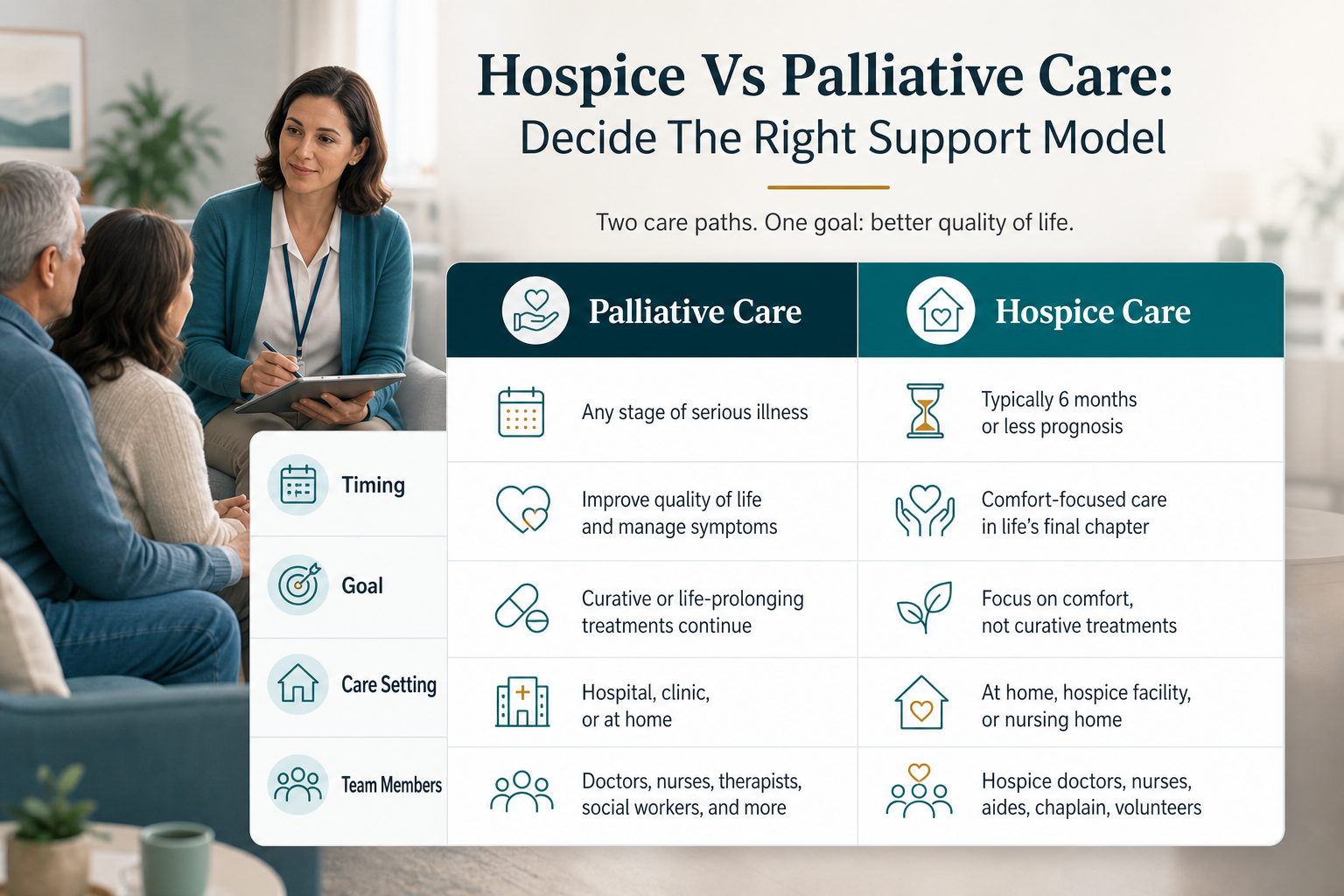
Hospice Care And Palliative Care Are Related, But Not The Same
Palliative care can begin at any stage of a serious illness. It focuses on symptom relief, emotional support, communication, and quality of life, and it can happen alongside treatment aimed at slowing or curing the illness.
Hospice care usually begins when curative treatment is no longer the primary goal and the expected prognosis is limited. The focus shifts toward comfort, dignity, family support, and practical help in the final phase of life. Both models rely on coordinated teams that can include doctors, nurses, social workers, aides, counselors, and spiritual care providers.
Advance Directives Turn Wishes Into Actionable Instructions
Advance directives are legal documents that explain a person's healthcare wishes if they cannot speak for themselves. They commonly include a living will, healthcare power of attorney, treatment preferences, and instructions about life-sustaining interventions.
These documents reduce uncertainty for family members and healthcare providers. They also help avoid conflict when several people are trying to do the right thing under pressure. The plan should be reviewed with the person, the chosen decision-maker, close family members, and relevant clinicians so everyone understands the intent behind the documents.
Home End-Of-Life Care Needs A Clear Operating Plan
Many people prefer to receive end-of-life care at home when symptoms can be managed safely. Home care requires more than goodwill. The family needs a practical operating plan for medication schedules, personal care, food and hydration decisions, mobility support, hygiene, emergency contacts, and respite for caregivers.
If the care plan depends on reminders, shared notes, scheduling, or remote family visibility, the technology must be easy for tired caregivers to use. NextPage's mobile app development work is relevant when care teams need dependable notifications, accessible screens, offline behavior, and secure caregiver communication in a family-facing app.
Healthcare Providers Keep Care Coordinated
Healthcare providers help assess symptoms, adjust medications, explain treatment choices, coordinate specialists, and make sure the patient's wishes are respected. Good communication between providers and family members is essential because small gaps can create distress, duplicated work, or avoidable emergency visits.
Scheduling, reminders, and care handoffs are often the operational backbone of this coordination. The same design patterns used in doctor appointment scheduling and reminders can support caregiver visits, medication reviews, symptom check-ins, and provider follow-ups when adapted for end-of-life care.
Emotional And Spiritual Support Should Be Planned, Too
End-of-life planning should make room for fear, grief, unfinished conversations, spiritual needs, and family stress. Support may include counseling, chaplaincy, support groups, life review conversations, memory projects, and structured family meetings.
These needs vary widely, so the plan should not assume one correct path. The important step is to ask what the person values, who they want nearby, which rituals or beliefs matter, and how family members can get support before and after death.
Legal And Financial Planning Prevents Last-Minute Confusion
Legal and financial preparation can include wills, powers of attorney, healthcare proxies, insurance details, bank and account information, beneficiary records, property documents, funeral preferences, and long-term care cost planning. Families should consult qualified legal and financial advisors for jurisdiction-specific decisions.
For organizations building internal or customer-facing planning workflows, these records create requirements around permissions, audit trails, document storage, and secure access. A custom system may be necessary when off-the-shelf tools cannot match the workflow, and NextPage's custom software development process helps map those operational rules before engineering begins.
A Digital Planning Workflow Can Reduce Family Burden
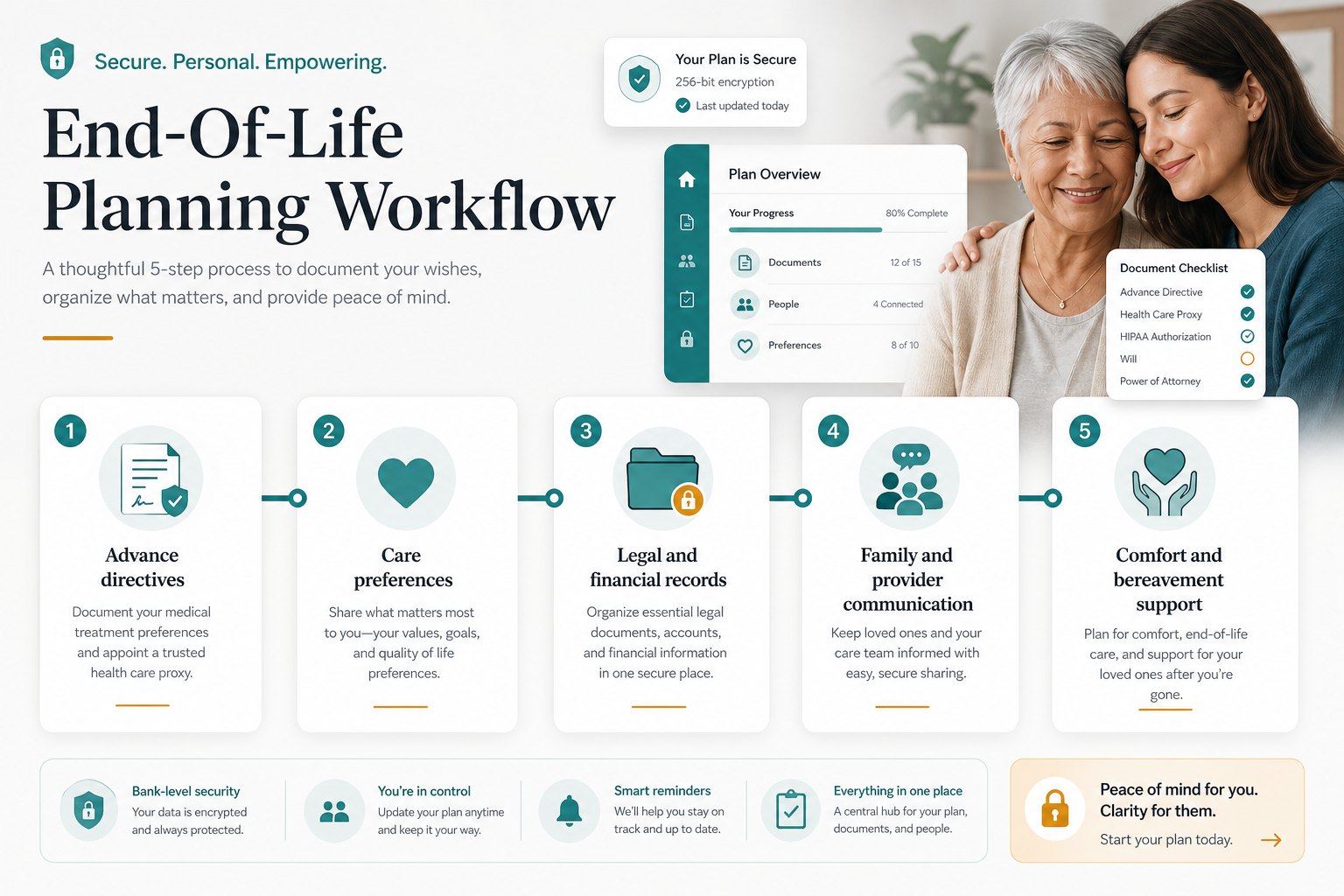
A well-designed digital planning tool should not replace human judgment. It should organize decisions, make records easy to find, and give the right people access at the right time. The workflow can start with advance directives, then connect care preferences, legal and financial records, family and provider communication, and bereavement support.
Product teams should design for permission boundaries, plain-language instructions, document versioning, emergency access, and compassionate UX. Before scoping a build, the Custom Software Cost Estimator can help teams pressure-test budget, complexity, and likely delivery timeline.
Choose The Care Setting Around Needs And Support
End-of-life care can happen at home, in hospice facilities, hospitals, nursing homes, or assisted living communities. The right setting depends on symptom complexity, family support, equipment needs, safety, personal preference, and what services are available locally.
Families should revisit the setting decision as needs change. A home plan may work for weeks and then become unsafe. A facility may offer better symptom control but require emotional preparation. The plan should make these tradeoffs visible instead of treating the first choice as permanent.
Key Takeaways For Families And Care Teams
- End-of-life planning should coordinate care wishes, decision authority, family communication, records, and practical support.
- Palliative care can support quality of life during serious illness, while hospice care usually focuses on comfort near the final phase of life.
- Advance directives are most useful when family members and providers understand both the documents and the values behind them.
- Home care needs a clear plan for symptoms, medication, hygiene, safety, emergency contacts, and caregiver respite.
- Digital tools can help when they organize decisions securely and make the plan easier to use during stressful moments.
Compassionate end-of-life care is built through preparation, communication, and respect for the person's wishes. The best plan gives families fewer unanswered questions and gives care teams clearer guidance when decisions matter most.