
Quick Answer: How Should A Music App Make Money?
A music app usually makes money through a mix of subscriptions, freemium upgrades, ads, sponsored playlists, artist promotions, in-app purchases, ticketing, merchandise, creator tools, affiliate partnerships, and data products for labels or artists. The right monetization mix depends on the product model, music rights, audience size, engagement depth, and whether the app is built for listeners, artists, communities, or a niche catalog.
For most startups, the safest path is to start with one primary revenue model, design the product around retention, and add secondary monetization only when it improves the listener or artist experience. Monetization decisions should be made during mobile app development, because payments, subscriptions, analytics, content rights, and user experience all shape the architecture.
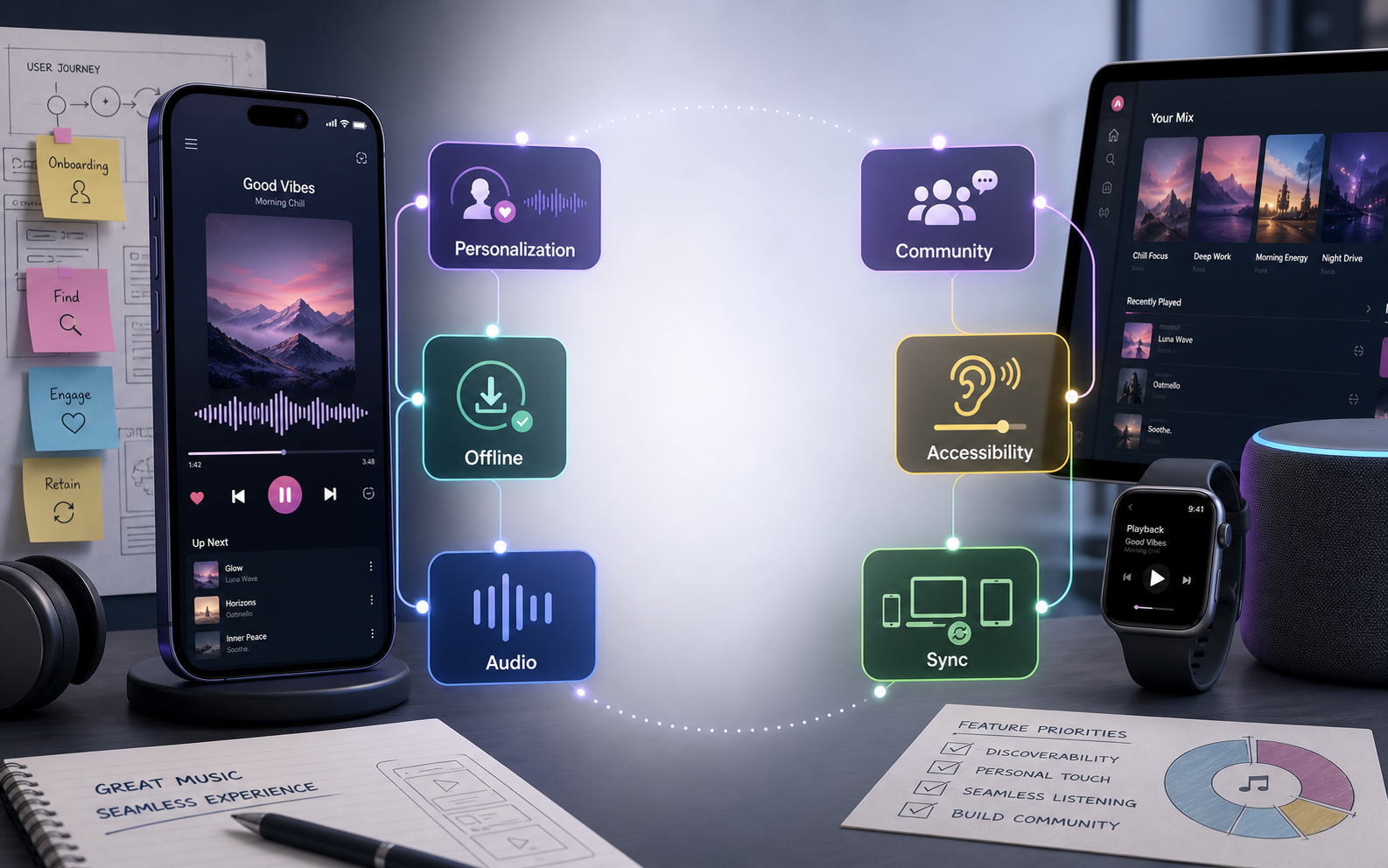
Start With The Music App Business Model
Music app monetization fails when a team copies a famous streaming model without matching its economics. A global streaming platform, independent artist community, fitness music product, fan club app, playlist discovery tool, live-event companion, and music learning app all need different revenue logic.
Before choosing subscriptions or ads, define the app's core exchange. Does the user pay for unlimited access, better discovery, exclusive artist access, community belonging, offline convenience, curation, audio quality, creator tools, or event access? The monetization model should strengthen that exchange instead of interrupting it.
| Music App Type | Best Revenue Fit | What Must Be Strong |
|---|---|---|
| Streaming catalog app | Subscriptions, ads, family plans | Rights, discovery, retention, playback reliability |
| Independent artist platform | Fan subscriptions, tips, merch, ticketing | Creator tools, trust, payments, community |
| Playlist discovery app | Sponsored placements, premium curation, affiliate links | Editorial quality, relevance, transparent sponsorships |
| Music learning or practice app | Subscriptions, packs, coaching, certification | Progress proof, content depth, feedback loops |
| Event and fan engagement app | Ticketing, memberships, merchandise, sponsorship | Live-event workflows, notifications, CRM, inventory |
If the product still needs feature definition, compare this monetization plan with NextPage's guide to music streaming app features so revenue does not get planned separately from the listening experience.
Compare The Core Music App Monetization Models
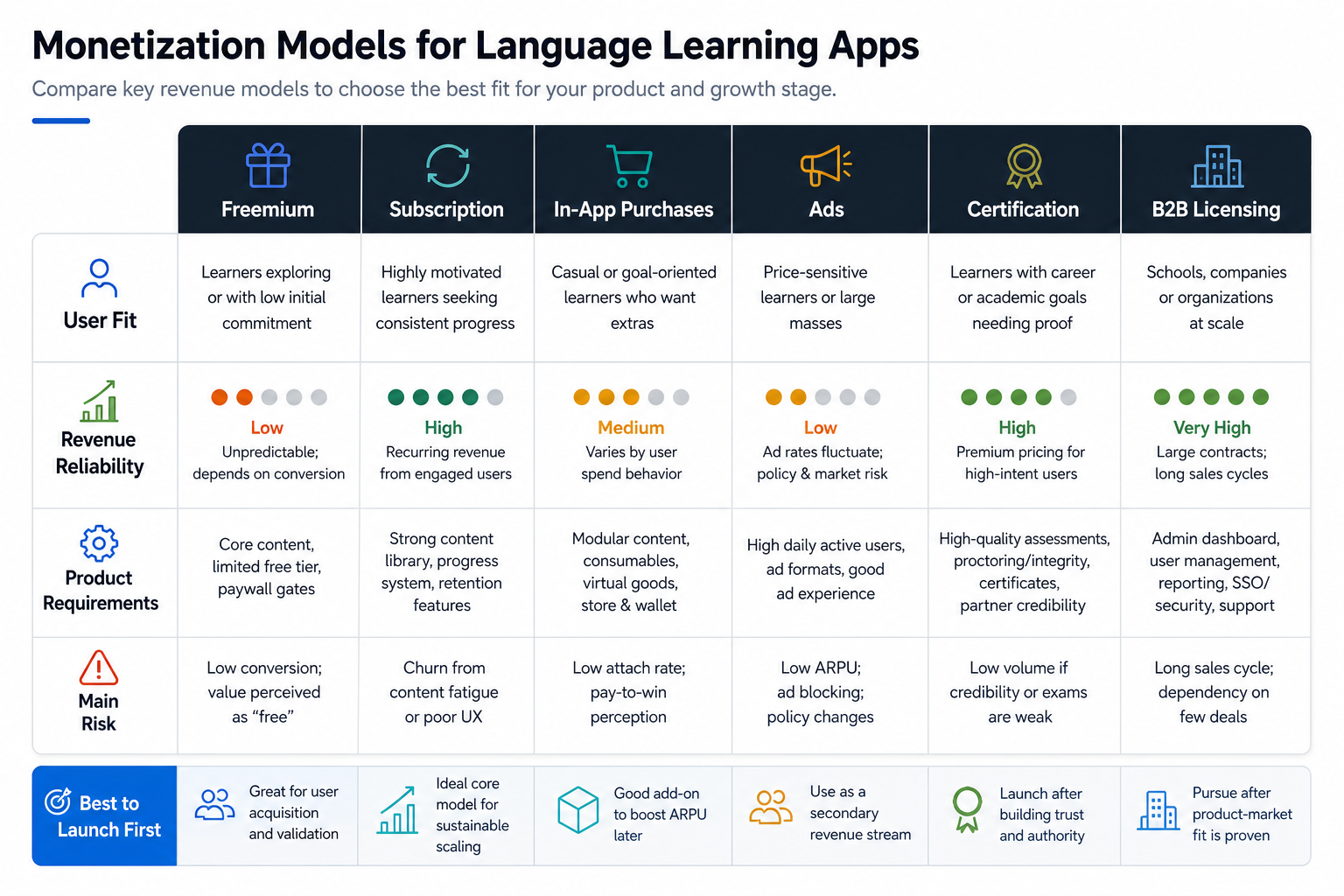
Subscriptions And Premium Plans
Subscriptions are the most familiar music app revenue model because listening is recurring. Premium plans can include ad-free playback, offline listening, higher audio quality, unlimited skips, exclusive content, family plans, artist communities, or personalized discovery.
The subscription promise must be specific. Users do not subscribe because a payment screen exists; they subscribe because the app becomes part of their daily routine. Strong onboarding, reliable playback, playlist quality, search, recommendations, downloads, account recovery, and cross-device continuity all support the paid value.
Freemium With A Clear Upgrade Path
Freemium works when the free tier proves the product and the paid tier removes a meaningful limit. Free users can get basic listening, limited skips, ads, or restricted downloads. Paid users can get deeper control, better quality, offline mode, advanced personalization, and priority access to releases or events.
The paywall should appear after users understand the benefit. Locking the first useful session is risky. Waiting until a listener builds playlists, follows artists, saves favorites, or reaches a download limit usually creates a clearer reason to upgrade.
Advertising And Sponsored Audio
Ads can monetize free users, but interruption is expensive in a music experience. Audio ads, display ads, sponsored cards, and branded playlists should be placed carefully so they do not damage retention. If ads hurt listening quality, the app may earn short-term revenue while losing the engagement needed for subscriptions and partnerships.
Sponsored playlists and brand partnerships can work when they are transparent and relevant. A workout playlist sponsored by a fitness brand can feel natural. A generic ad in the middle of a focused listening session can feel intrusive.
In-App Purchases, Ticketing, And Merchandise
In-app purchases make sense for discrete value: exclusive tracks, remix packs, concert livestreams, artist Q&A access, fan badges, creator subscriptions, tipping, or premium playlist bundles. Ticketing and merchandise can also create revenue if the app has artist relationships or local event inventory.
These models require operational support. Payments, refunds, inventory, taxes, fulfillment, fraud checks, revenue shares, and support workflows matter as much as the visible purchase button.
Artist Tools And B2B Data Products
Music apps can also monetize the supply side. Artists, labels, venues, and managers may pay for audience analytics, campaign tools, playlist promotion, fan CRM, merch insights, or release planning. This path requires stronger data governance because user trust is part of the product value.
Data products should aggregate and protect listener behavior. Avoid selling sensitive user-level data. The more useful route is to provide artists and partners with trend, cohort, geography, engagement, and conversion insights they can act on without violating user expectations.
Design Monetization Around Retention
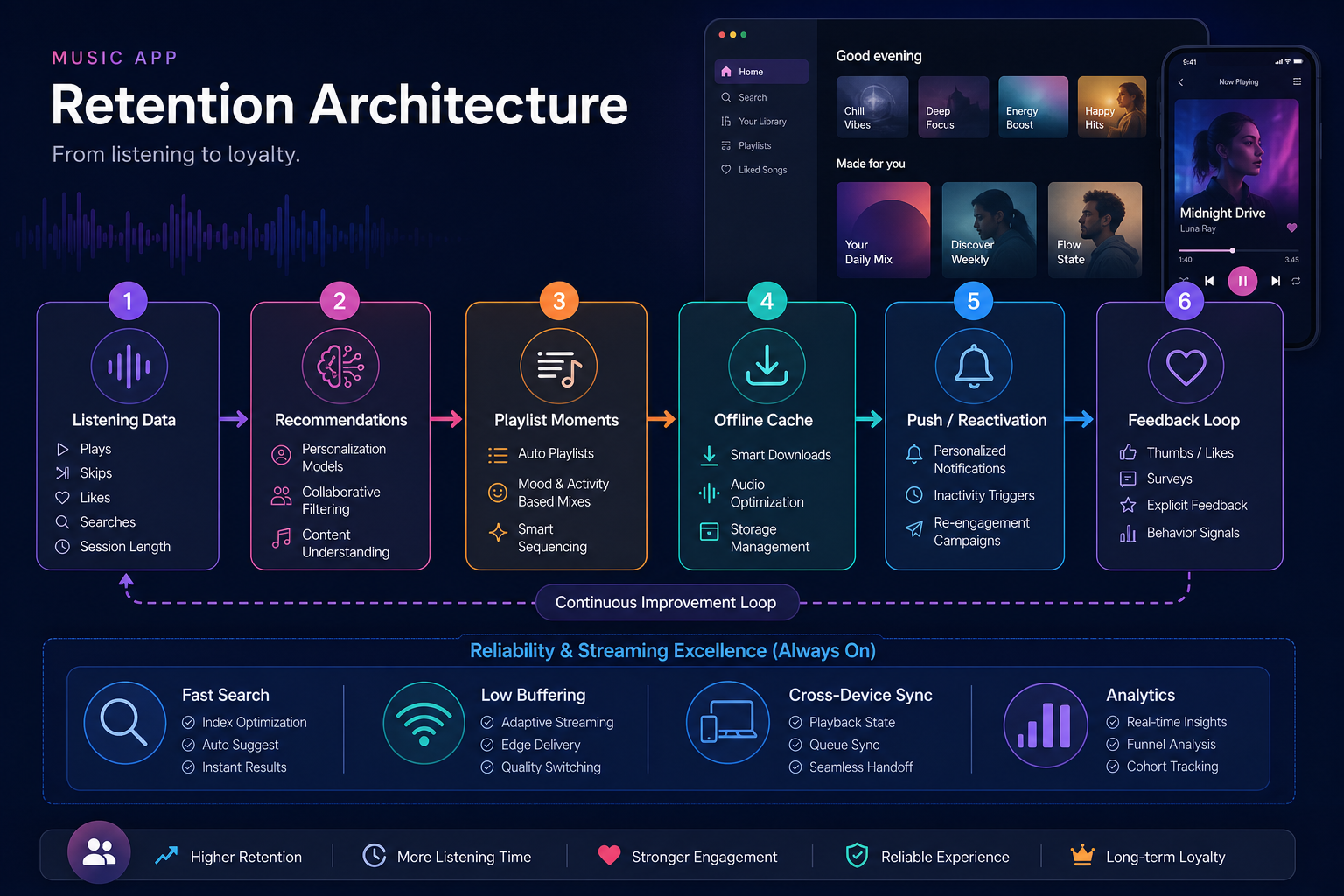
Music app revenue depends on repeat behavior. If users do not save playlists, follow artists, return to recommendations, and listen across contexts, monetization becomes fragile. A revenue model should be designed around the moments that make users come back.
Useful retention signals include first-session playlist saves, artist follows, search success, skip rate, daily listening streaks, download usage, notification response, session length, return frequency, and premium feature adoption. For product teams focused on UX, NextPage's guide to music app user experience is a relevant companion because monetization depends on how the product feels before users pay.
Pricing And Packaging Recommendations
Keep the first pricing model simple. A free tier, individual premium plan, annual discount, and possibly a family or creator plan are easier to test than a crowded set of packages. Add-ons should be tied to clear use cases such as offline listening, exclusive artist access, event passes, or creator analytics.
- Free tier: prove discovery, playlists, and listening quality while limiting high-cost features.
- Individual premium: remove ads, add downloads, improve quality, and unlock advanced personalization.
- Family or group plan: increase account value when shared listening and profiles matter.
- Artist or creator plan: monetize dashboards, promotion tools, fan CRM, and campaign analytics.
- Event and merchandise add-ons: sell high-intent purchases without forcing every listener into the same plan.
For early scope decisions, the MVP Scope Builder can help separate launch-critical monetization features from later experiments. For budget planning, use the Custom Software Cost Estimator to frame payments, subscriptions, analytics, media storage, admin, and integration complexity.
Technical Scope That Affects Revenue
Monetization is not just a business decision. It changes product architecture. A music app that sells subscriptions needs app-store billing, plan state, entitlement checks, receipts, refunds, grace periods, account recovery, analytics, and support tooling. A product that sells merch or tickets needs checkout, inventory, fulfillment, tax rules, fraud checks, and customer communication.
Streaming products also need media infrastructure, catalog metadata, rights rules, search, recommendations, caching, download handling, and observability. If the app uses AI recommendations or personalized playlists, the team should account for data quality, evaluation, privacy, and operating cost. NextPage's AI development services page is relevant when personalization, recommendation systems, or AI-assisted discovery become part of the paid promise.
Analytics That Matter For Music App Revenue
A monetized music app should measure listening, revenue, and product quality together. Track activation, search success, first playlist save, artist follow rate, repeat listening, ad load, premium trial starts, trial-to-paid conversion, churn, refund rate, ARPU, LTV, CAC, skip rate, offline usage, and support contact reasons.
Segment the data by listener type and product model. A casual playlist listener, independent artist fan, workout listener, DJ, student, and event attendee will respond to different offers. Revenue decisions become better when the team can see which segments retain, convert, churn, and expand.
Launch Roadmap For Music App Monetization
- Define the monetization thesis: choose subscription, freemium, ads, creator tools, event commerce, or a hybrid model based on the actual audience.
- Build the retention loop: onboarding, search, discovery, playlist saves, artist follows, notifications, and reliable playback.
- Add the first paid path: keep the first offer simple and connect it to a clear upgrade moment.
- Instrument the funnel: measure activation, engagement, paywall behavior, payment success, churn, and support reasons.
- Expand secondary revenue: add sponsored playlists, merchandise, ticketing, creator dashboards, or B2B analytics after the core model is working.
For a portfolio example of media-heavy, role-aware mobile workflows, see the FieldIQ case study. While it is not a music product, it shows how mobile app surfaces, media workflows, role-based access, storage, and operational tooling need to stay connected when content is central to the product.
Common Music App Monetization Mistakes To Avoid
- Copying a large streaming platform too early: the rights, catalog, and scale economics may not match a startup product.
- Interrupting listening with too many ads: ad load can reduce retention and weaken subscription conversion.
- Adding payments before value is clear: users need to experience discovery, control, quality, or community before they pay.
- Ignoring app-store billing rules: subscription handling, receipts, trials, refunds, and entitlements need careful implementation.
- Selling data without trust: analytics products should protect listener privacy and avoid user-level exposure.
- Underbuilding creator operations: artist payouts, promotion review, rights metadata, and support workflows need admin tooling.
Final Recommendation
The best music app monetization strategy is not a long list of revenue options. It is a focused business model that fits the product's audience, catalog, rights position, and retention loop. Start with one primary revenue path, make the listening or creator experience strong enough to justify it, and use analytics to decide which secondary revenue streams deserve investment.
A music app can combine subscriptions, ads, sponsored playlists, purchases, merch, ticketing, artist tools, and data products over time. The sequencing matters: prove engagement first, monetize the clearest upgrade moment second, and expand revenue channels only when they make the product more valuable instead of more cluttered.