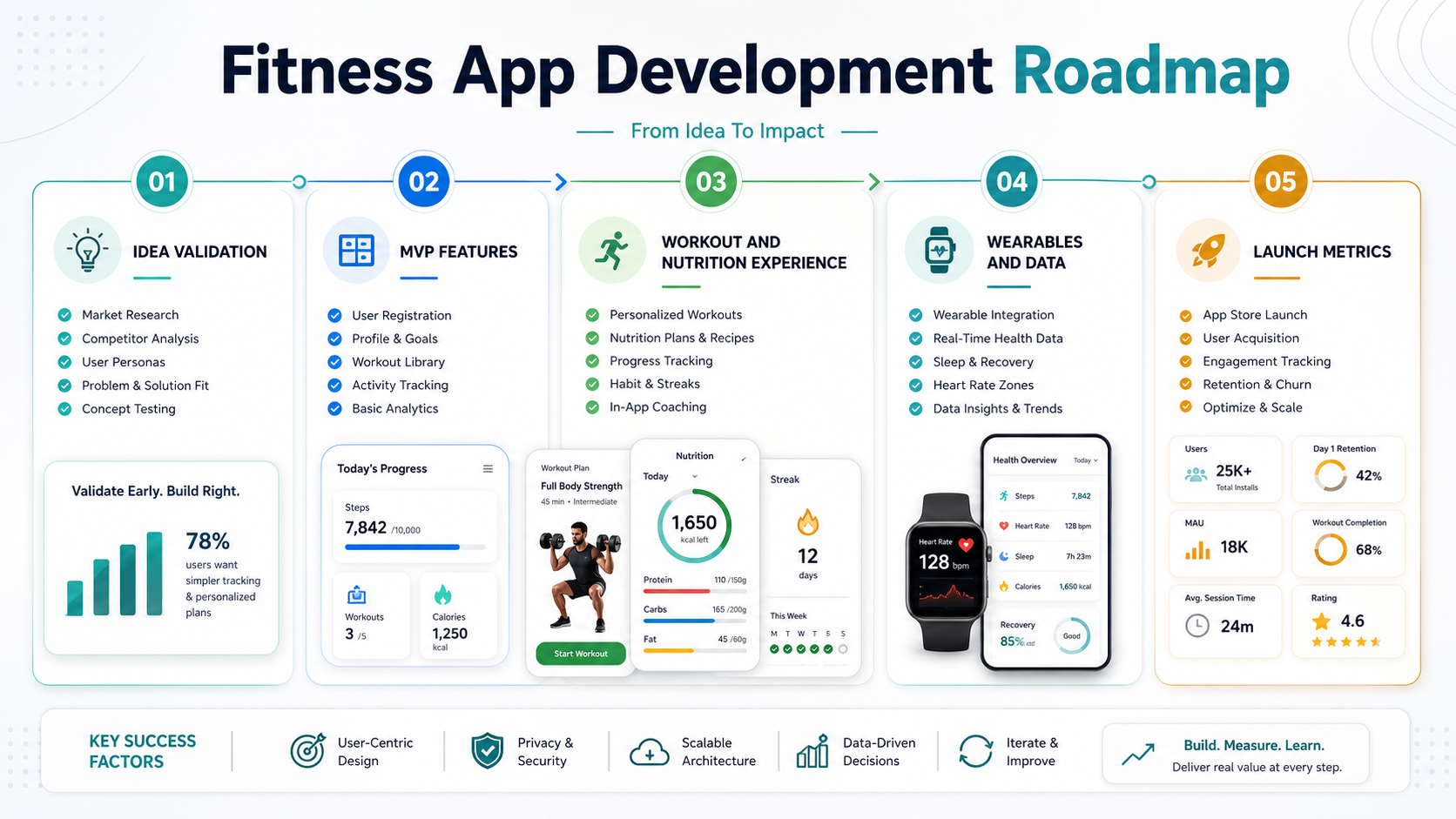

Quick Answer: Why Are Fitness Apps Trending Now?
Fitness apps are trending because they make coaching, habit tracking, workouts, wearable data, and wellness support available wherever users already are: on their phones. Busy schedules, hybrid work, connected devices, lower-cost subscriptions, and demand for personalized health experiences have pushed fitness products from optional downloads into everyday lifestyle tools.
For founders and product teams, the opportunity is bigger than a workout library. A strong fitness product connects habit design, mobile UX, content strategy, device integrations, privacy, analytics, and retention into one clear experience. That is why many teams now start with a practical mobile app development plan before deciding which features belong in the MVP.
The Market Shift Behind Fitness App Growth
Fitness used to be tied to gyms, trainers, and fixed schedules. Mobile apps changed that by letting users exercise at home, outdoors, while traveling, or between meetings. The best apps reduce friction: open the app, see the next workout, follow clear instructions, track progress, and keep moving.
This convenience matters because users rarely adopt fitness habits in perfect conditions. They need products that work around limited time, limited equipment, different confidence levels, and changing motivation. A good app does not replace every gym or trainer relationship, but it makes the next healthy action easier to take.
Personalization Has Become The Default Expectation
Users expect fitness apps to feel tailored to their goals, not generic. A beginner trying to build consistency needs a different journey from an athlete tracking performance, a parent exercising at home, or a wellness user recovering from injury. Personalization can include goals, schedule, equipment, current level, preferred workout style, body limitations, and recovery signals.
Personalization does not require complex AI in the first release. Rule-based plans, trainer-authored programs, careful onboarding, and feedback loops can create a strong experience. Teams planning deeper coaching models can use NextPage's guide to fitness app development from idea to reality to think through product research, feature planning, and launch steps.
Fitness App MVP Feature Matrix
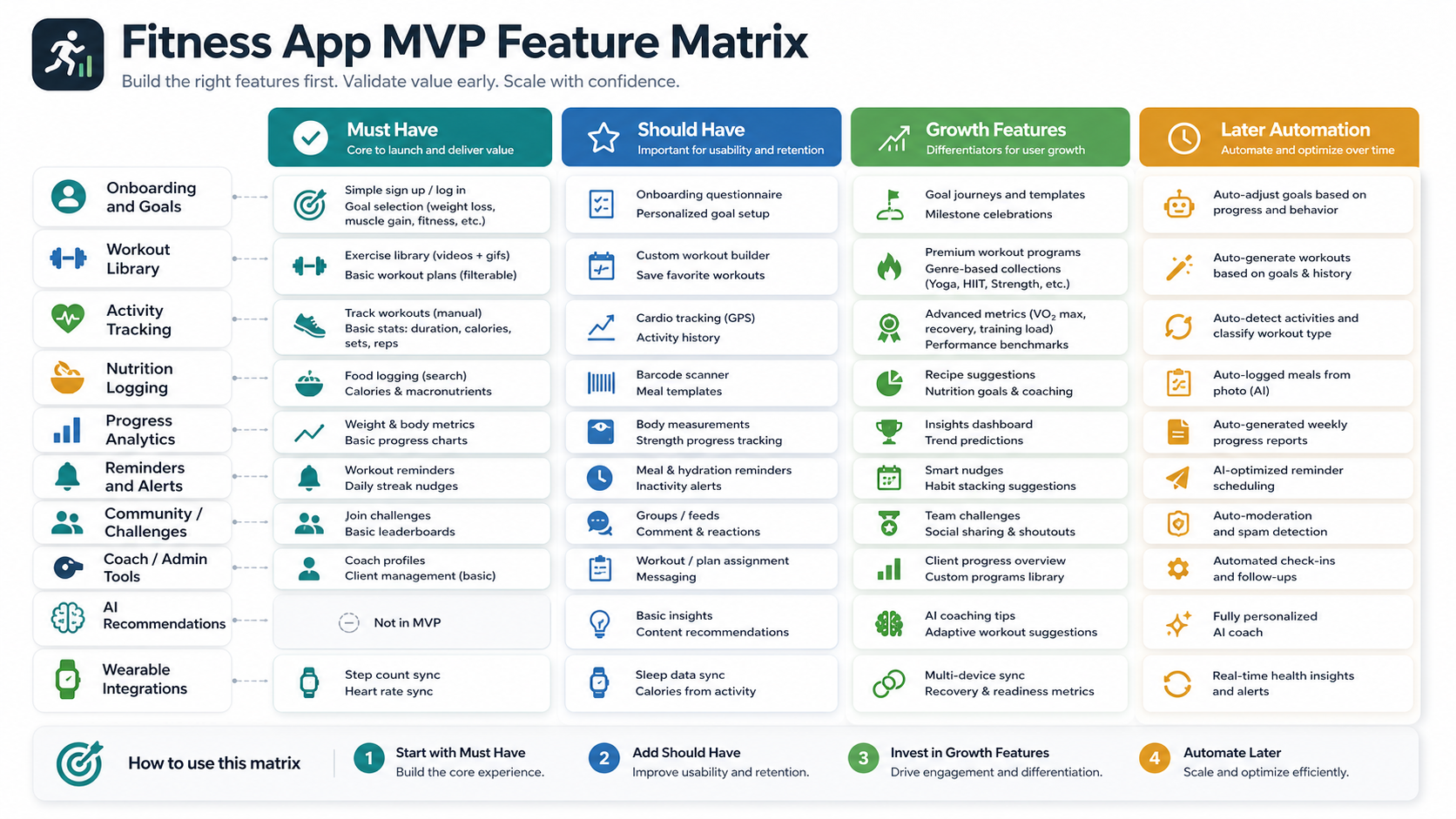
A useful MVP should focus on the core habit loop before adding every possible feature. The first release usually needs onboarding, goal capture, workout plans, exercise instructions, progress tracking, reminders, basic profile controls, analytics, and an admin workflow for managing content.
Features such as live classes, social challenges, trainer chat, nutrition logs, subscriptions, AI coaching, and wearable integrations can be phased in once the main product behavior is proven. This keeps development scope realistic while still giving the product a roadmap for retention and monetization.
Wearables Make Fitness Apps Feel More Useful
Wearables have changed how users think about fitness products. Steps, heart rate, sleep, calories, active minutes, recovery, and workout history can all make recommendations feel more relevant. When the data is used well, the app becomes less of a static content library and more of a personal operating system for movement and health.
The tradeoff is that wearable integrations add complexity. Teams need device APIs, permissions, sync status, data normalization, background jobs, privacy controls, and graceful handling when data is delayed or missing. If wearable signals drive recommendations, the app should explain why a plan changed instead of creating a black-box coaching experience.
Wearable Data And Privacy Architecture
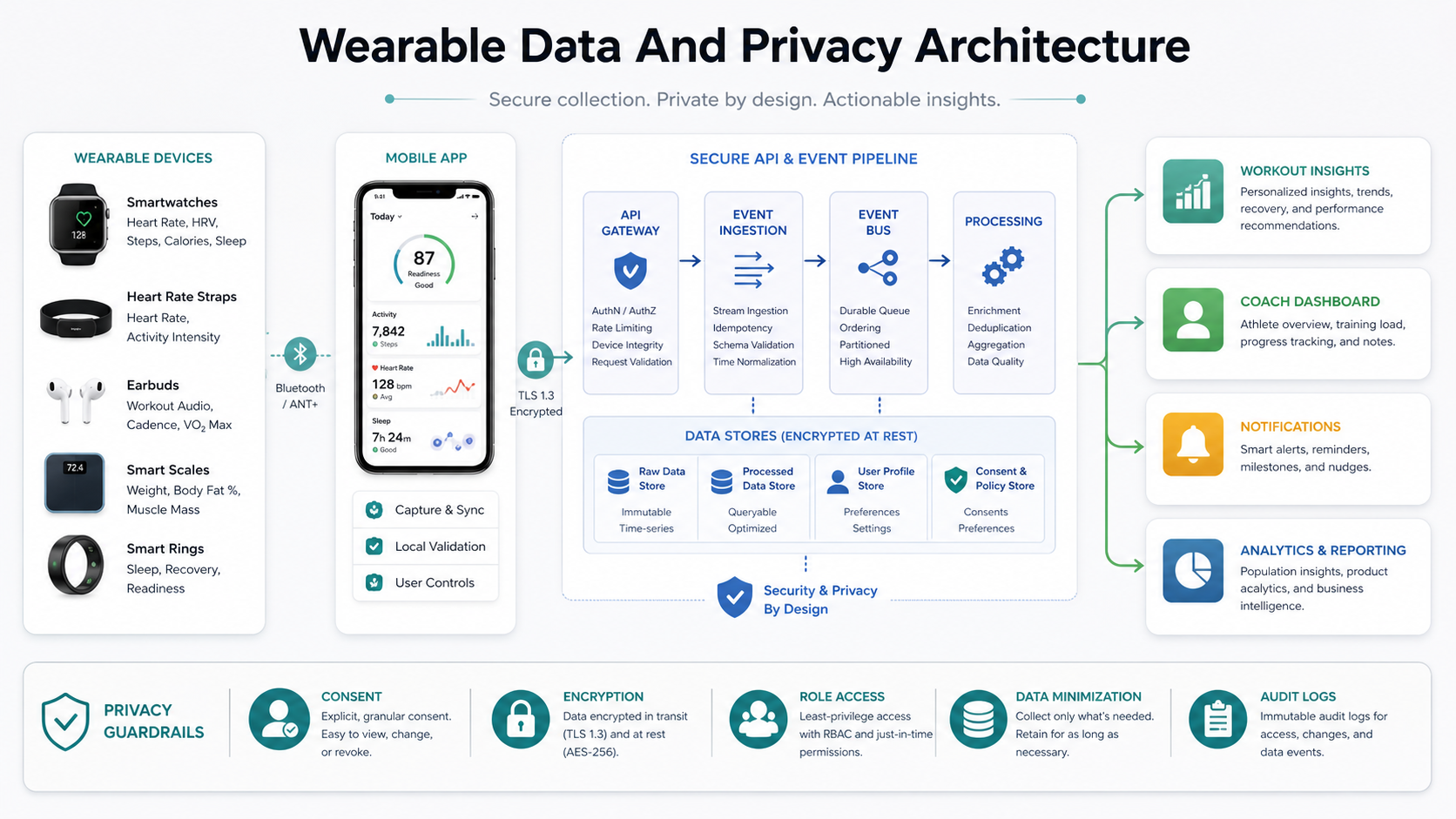
Fitness and wellness apps often touch sensitive health-adjacent data even when they are not clinical products. Users need clear consent, data controls, deletion options, and plain-language explanations of how their information is used. Product teams should treat privacy as part of the experience, not a legal page hidden after signup.
If the product expands into wellness, recovery, mental health, or medical-adjacent workflows, planning should borrow from secure healthcare product thinking. NextPage's healthcare app development cost guide explains why compliance, integrations, and data architecture can change scope even when screens look simple.
Habit Loops Drive Retention
Fitness apps trend because they help users return. The strongest products create a loop: set a goal, get a realistic plan, complete a session, see progress, receive a useful reminder, and adjust the plan. That loop is more powerful than a large exercise library with no guidance.
Retention features should be supportive, not punishing. Streaks, reminders, milestones, recovery prompts, and community nudges work best when users can control tone, timing, and intensity. For broader wellbeing products, the same principle appears in wellness app development: retention should come from useful progress rather than pressure.
Short Workouts Match Modern Schedules
Time-efficient workouts are one of the biggest reasons fitness apps keep growing. HIIT sessions, guided strength circuits, mobility flows, yoga routines, walking plans, and micro-workouts help users fit exercise into fragmented days. The app should make it easy to choose by duration, equipment, intensity, and goal.
This also affects content operations. A product team needs a repeatable way to create, tag, review, update, and recommend workouts. Without a content model, the app becomes hard to maintain as the workout library grows.
Community And Coaching Add Accountability
Community features can make fitness feel less isolated. Private groups, friend challenges, trainer-led cohorts, progress sharing, comments, and milestone celebrations can all improve accountability. The key is to connect social features to the core user goal instead of adding public leaderboards by default.
Coaching features need similar discipline. A user should know whether they are following a human coach, a static plan, a rule-based recommendation, or an AI-assisted suggestion. That transparency builds trust and reduces confusion when workouts change.
Accessibility Expands The Addressable Audience
Fitness apps are trending partly because they can serve people who may not feel comfortable in traditional fitness environments. Accessibility includes readable contrast, large controls, captions, audio cues, screen reader labels, beginner modifications, seated options, low-impact alternatives, flexible pace controls, and nonjudgmental language.
Inclusive design is also good product strategy. When the app supports different bodies, schedules, abilities, and confidence levels, more users can succeed long enough to become retained customers.
Monetization Works When Value Is Clear
Fitness apps commonly use freemium access, subscriptions, paid programs, trainer marketplaces, corporate wellness contracts, equipment partnerships, or premium analytics. The right model depends on the promise. A casual habit tracker, a coach-led product, and a performance training platform should not monetize in the same way.
App store positioning matters too. Screenshots, descriptions, reviews, onboarding claims, and subscription messaging all influence whether users trust the product. When the product is ready for launch, NextPage's guide to app store optimization is a useful next step.
How To Build A Fitness App That Can Compete
Start with a narrow user promise: what outcome will the app help users reach, and why is a mobile product the best way to deliver it? Then map the core journey from onboarding to first workout, progress review, reminders, plan changes, and renewal. This journey should guide the MVP backlog more than a generic feature checklist.
NextPage helps product teams scope, design, build, and improve mobile apps with the backend systems, analytics, admin workflows, integrations, QA, and launch support needed for real usage. For a fitness app, that can include workout content architecture, wearable integrations, subscriptions, trainer workflows, progress dashboards, and post-launch optimization.
Conclusion
Fitness apps are trending because they match how people now build habits: mobile-first, personalized, flexible, data-aware, and available on demand. The best products combine convenience, coaching, progress tracking, wearables, privacy, accessibility, community, and clear monetization into a focused experience. For businesses, the opportunity is not just to follow a trend. It is to build a trusted fitness product users can return to every week.