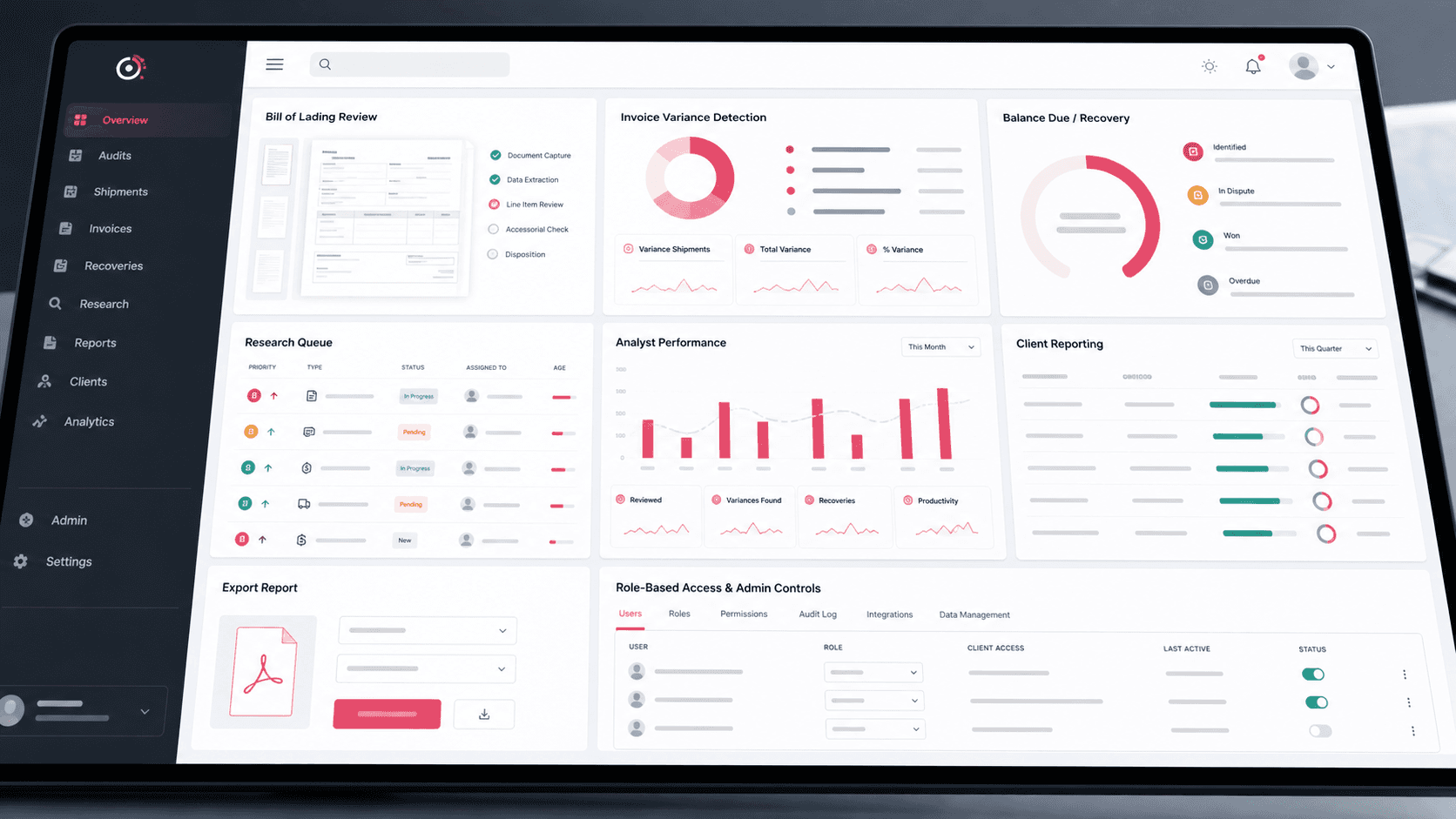
Freight audit work needed more structure than spreadsheets could provide
Operations teams needed to review shipment records, identify balance dues and overcharges, manage analyst research, track collection and invoice statuses, and produce client-facing reports without losing context across separate files and manual handoffs.
- Bill of lading, booking, customer, invoice, balance due, payment, and collection data needed to stay connected
- Analysts and managers needed filtered work queues, status updates, research notes, and playbook comments
- Client reporting required management summaries, overcharge reports, PDF output, and region/date filtering
- Administrators needed role-aware menus, permissions, clients, groups, users, settings, templates, and import configuration