Portfolio case study

MessageBridge: WhatsApp notification and campaign operations platform

A WhatsApp notification and campaign operations platform for retail teams that need store staff, e-commerce operators, saved media messages, customer lists, delivery queues, and gateway settings in one controlled workspace.

Name changed to respect NDA.

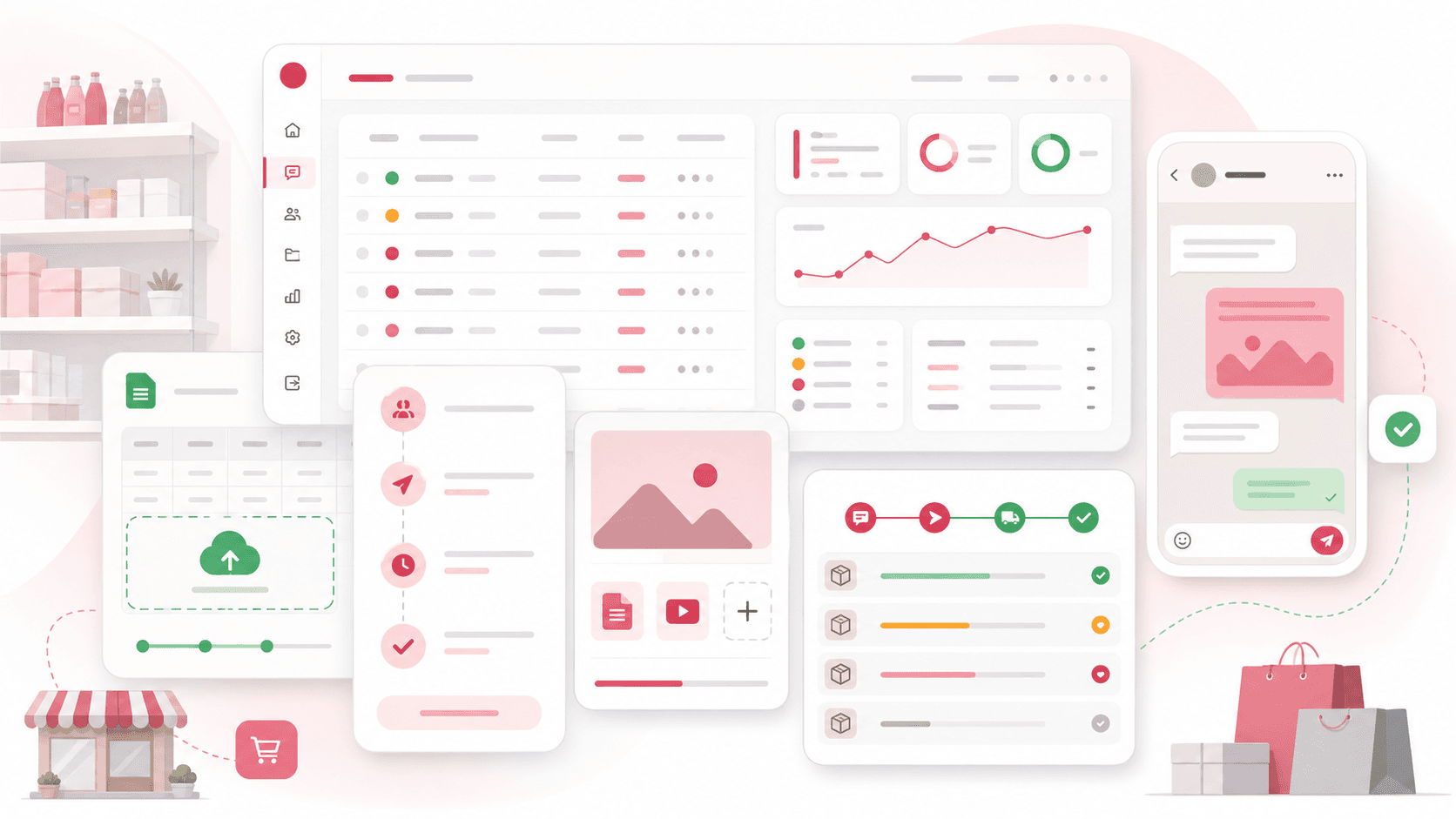
Abstract retail WhatsApp notification operations dashboard with campaign queue cards, contact import surface, message preview, and delivery status indicators
Project scope

Full-stack product engineering across Next.js operations screens, Prisma and MySQL data modeling, WhatsApp gateway integrations, message queues, media management, and deployment support

3
WhatsApp sending methods supported
5
queue reporting windows
2
contact import paths
1
operator workspace

Timeline

Retail notification workflow build, campaign operations expansion, and gateway reliability hardening

Retail messaging needed operational control, not another manual send flow

Store and e-commerce teams needed a practical way to queue WhatsApp notifications, manage campaign contacts, reuse saved message assets, switch delivery methods, and see send health without exposing gateway credentials or forcing staff into developer tools.

  • On-ground staff needed a simple phone-number entry flow for customer follow-up and store-driven outreach
  • Operators needed campaign workflows with uploaded or copied contact lists, pause and resume controls, and result visibility
  • Message assets needed to support text, image, and video-backed WhatsApp communication without re-uploading files every time
  • Gateway failures, stale processing, retries, and delivery history needed to be visible enough for non-engineers to act on

A controlled WhatsApp operations workspace for store and e-commerce teams

MessageBridge brings a protected operator interface, queue dashboard, campaign manager, reusable message library, gateway configuration, and delivery processor into one product so customer notifications can be run with clearer control.

  • Protected staff workspace with phone-number validation, success notifications, active gateway status, and quick access to campaigns and message management
  • Message queue with due-item claiming, retry scheduling, stale-lock recovery, editable failed or queued items, and send statistics
  • Campaign management for saved flow IDs, contact upload, contact reuse from prior campaigns, intervals, status changes, and result tracking
  • Reusable media-message library backed by upload policies, object storage keys, active or deleted states, and cleanup handling

Product surfaces

What the platform brought together

The work spanned core product operations, daily user workflows, data-heavy coordination, and resilient platform management.

Store notification intake

The daily staff flow keeps customer notification entry short while still routing sends through the safer queue layer.

  • Phone-number input with India number normalization and validation
  • Immediate queue insertion so staff can continue working without waiting for gateway delivery
  • Visible active gateway state and recent send dashboard alongside the form

Campaign operations

Operators can manage larger WhatsApp campaigns with contact imports, saved flow IDs, status transitions, and result visibility.

  • Campaign create, update, delete, start, pause, and resume workflows
  • Excel, CSV, text, and copied-campaign contact ingestion paths
  • Campaign results and stats for sent, failed, delivered, pending, and total contact states

Message queue and delivery health

Queued sends are processed with retry behavior and enough diagnostics to understand when a gateway needs attention.

  • Due-item claiming with lock tokens and stale processing recovery
  • Configurable retry delay, lock timeout, and maximum attempts
  • Recent queue panel with queued, processing, sent, failed, attempt count, last error, next retry, and reporting windows

Reusable messages and media

Operators can maintain message content and media assets without treating every send as a fresh upload.

  • Saved WhatsApp message records with active, archived, and deleted states
  • Image and video upload support with MIME-type and file-size validation
  • Object storage URLs, object keys, cleanup checks, and replacement handling for unreferenced media

Buyer priorities

What mattered most to the people evaluating the platform

Prospective buyers want to know whether the work solved real workflow, adoption, reliability, data, and operations problems. These priorities shaped the product decisions.

Staff usability

Store employees needed the interface to be quick, clear, and difficult to misuse during real customer conversations.

  • The primary form accepts only normalized mobile numbers and immediately moves sends into the queue
  • Success and error notifications make the next action obvious without requiring support tickets
  • Campaign and message controls stay available from the same protected workspace

Messaging reliability

E-commerce and store notifications are operational touchpoints, so delivery behavior needed retries, gateway switching, and failure visibility.

  • The queue recovers stale processing locks before claiming the next due message
  • Failed and queued items can be corrected and reset for another attempt
  • Gateway warnings highlight blocked queues, permanent failures, and processor issues

Operator control

Business operators needed to adjust flow IDs, template settings, media, and campaign inputs without editing code.

  • Settings workflows cover WhatsApp method selection, flow IDs, template IDs, and session-based gateway configuration
  • Campaign contact reuse reduces repeated list handling for recurring outreach
  • Saved messages and media give operators a repeatable content base for future sends

System model

How the platform connects roles, workflows, and product surfaces

The product architecture brings every role into the same operating model, with shared data moving cleanly between web, mobile, media, and notification layers.

One workspace for staff and operators

Store staff, campaign operators, support users, and administrators share one messaging foundation through role-appropriate controls.

Queue to delivery workflow

Customer numbers move from intake or campaign import through validation, queueing, gateway send, retry handling, and result review.

Messaging platform model

The web workspace, queue service, database, object storage, and WhatsApp gateways coordinate through shared settings and delivery state.

Technology

The Stack We Used And Why

The stack section is written for buyers who need to understand the product architecture, operational trade-offs, and long-term maintainability of the system.

Web application

Used for protected operator screens, queue dashboards, campaign management, settings controls, and saved message workflows.

Next.jsReactTypeScriptTailwind CSSshadcn/uiLucide ReactSonner

Data and persistence

Used to keep campaigns, contacts, queue items, results, settings, files, and reusable messages in a structured operational model.

PrismaMySQLCampaign tablesMessageQueueItemsSettingsFiles

WhatsApp delivery gateways

Used to support multiple sending paths so the operator could choose the most practical route for a particular workflow.

Meta WhatsApp Cloud APIShiprocket Flow APIShiprocket APIWHAPITemplate messages

Media and imports

Used for reusable campaign assets, saved media messages, presigned uploads, and customer-list ingestion.

Object storagePresigned S3-compatible URLsExcelJSCSV parsingImage and video uploads

Operations and testing

Used to support deployment, runtime configuration, queue safety, gateway behavior, and regression checks.

DockerPM2 ecosystem configNode test runnertsxESLintEnvironment-backed settings

Why Next.js For The Operator Workspace

The product needed authenticated pages, API-backed forms, responsive dashboards, and operational dialogs in one deployable web application.

  • Next.js kept form pages, campaign pages, API routes, and server-side services close together
  • React and TypeScript made queue rows, dialogs, settings controls, and campaign states easier to reason about
  • Tailwind, shadcn/ui, and Lucide kept dense operational screens consistent without heavy custom UI code

Why A Queue Layer

WhatsApp gateways can fail, throttle, or require different parameters, so direct sends from staff forms would have been too fragile.

  • Queued items can be retried, edited, marked failed, and inspected after the original form submission
  • Lock tokens and stale processing recovery prevent stuck sends from silently blocking the workflow
  • Dashboard windows help operators understand recent activity without querying the database

Why Multiple Gateway Paths

Retail messaging often depends on practical provider availability, approved templates, media support, and campaign tooling constraints.

  • Gateway selection lets operators switch between flow-based, API-based, and media-message sending methods
  • Template and flow settings stay configurable outside the source code
  • Error sanitization helps keep operational logs useful without storing sensitive session or token details

Delivery

How the product came together

The work moved from domain modeling to core platform delivery, mobile adoption, and operational hardening.

1

Map messaging operations

Identify the store intake, e-commerce campaign, media-message, gateway, and support workflows that needed to live together.

2

Build the queue foundation

Create database-backed queue records, due-item processing, retry behavior, stale-lock recovery, and dashboard status views.

3

Add campaigns and content tools

Expand from one-off queueing into campaign contact imports, reusable messages, media uploads, saved settings, and result tracking.

4

Harden gateway operations

Connect multiple delivery methods, sanitize stored responses, validate phone numbers, and add targeted tests around gateway behavior.

Operational depth

What made the platform usable after launch

The strongest case studies are not only feature lists. They show how the system is operated, monitored, governed, and improved when real users depend on it.

Queue safety

The delivery processor was designed to keep moving even when messages fail or a previous worker leaves an item stuck in processing.

  • Stale processing items are recovered before the next due send is claimed
  • Lock tokens prevent accidental updates from the wrong processing attempt
  • Failed and queued records can be edited and reset for another delivery attempt

Settings governance

Operational settings are managed through the product instead of buried in code changes.

  • WhatsApp method, flow ID, template ID, and session values can be updated through protected controls
  • Flow IDs can be reused and managed for repeated campaigns
  • Gateway selection is visible in the queue dashboard so staff know which path is active

Media lifecycle

Message media is treated as managed operational content with upload policies and cleanup behavior.

  • Accepted MIME types and upload sizes are enforced before storage records are saved
  • Presigned upload URLs keep large media transfer away from the application server
  • Unreferenced media cleanup prevents abandoned replacement files from accumulating

Results

The measurable and observable lift from the work

The strongest improvements are the ones a buyer can connect to daily work: fewer disconnected tools, safer operations, clearer workflows, and more reliable product behavior.

3 gateways

Delivery Flexibility

The system supports flow-based sends, API-based sends, and WHAPI media sends from one configurable operations layer.

Retryable

Safer Message Handling

Customer notifications moved from immediate one-shot sends into a queue with retry scheduling, stale-lock recovery, and edit-and-resend support.

Reusable

Saved Message Assets

Text, image, and video-backed message content can be maintained as reusable records instead of recreated for every outreach cycle.

Observable

Operator Visibility

Queue totals, recent status rows, campaign stats, failed attempts, and gateway warnings give operators a clearer view of delivery health.

Outcome

A stronger operating system for retail whatsapp notification operations platform

The platform reduced tool fragmentation and gave each role a clearer path from live activity to day-to-day action.

A protected WhatsApp operations workspace instead of disconnected manual sends, campaign spreadsheets, and developer-managed gateway settings

Queue-based notification delivery with retries, stale processing recovery, editable records, and clear dashboard status

Campaign workflows for uploaded contacts, copied campaign lists, flow IDs, intervals, status changes, and result tracking

Reusable message and media management backed by structured records, upload policies, object storage URLs, and cleanup behavior

FAQ

Frequently Asked Questions About MessageBridge

Answers about the retail whatsapp notification operations platform scope, platform model, technology choices, operational workflows, and related build patterns.

What Kind Of Retail Platform Does MessageBridge Represent?

MessageBridge represents a WhatsApp notification operations platform for on-ground retail stores and e-commerce teams that need customer sends, campaign workflows, reusable messages, media assets, and delivery status in one workspace.

Why Was Custom Software Useful For WhatsApp Notifications?

Custom software was useful because the workflow combined staff intake, campaign imports, gateway settings, retries, saved media, delivery results, and operational diagnostics that generic messaging tools often keep separated.

How Does The Queue Improve Store And E-Commerce Messaging?

The queue lets staff submit a customer notification quickly while the system handles gateway delivery, retry timing, stale processing recovery, failed-send editing, and status reporting in the background.

Can This Pattern Support Other Retail Or D2C Businesses?

Yes. The same pattern can support appointment reminders, order updates, promotional campaigns, abandoned-cart follow-ups, service reminders, post-purchase care, and store-led customer engagement for retail and D2C teams.

Related services

Build a similarly ambitious product without starting from a blank page.

We can help scope the web, mobile, AI, media, and operating layers needed for your own platform.

Start a project inquiry