
Quick Answer: How Political Apps Mobilize Supporters
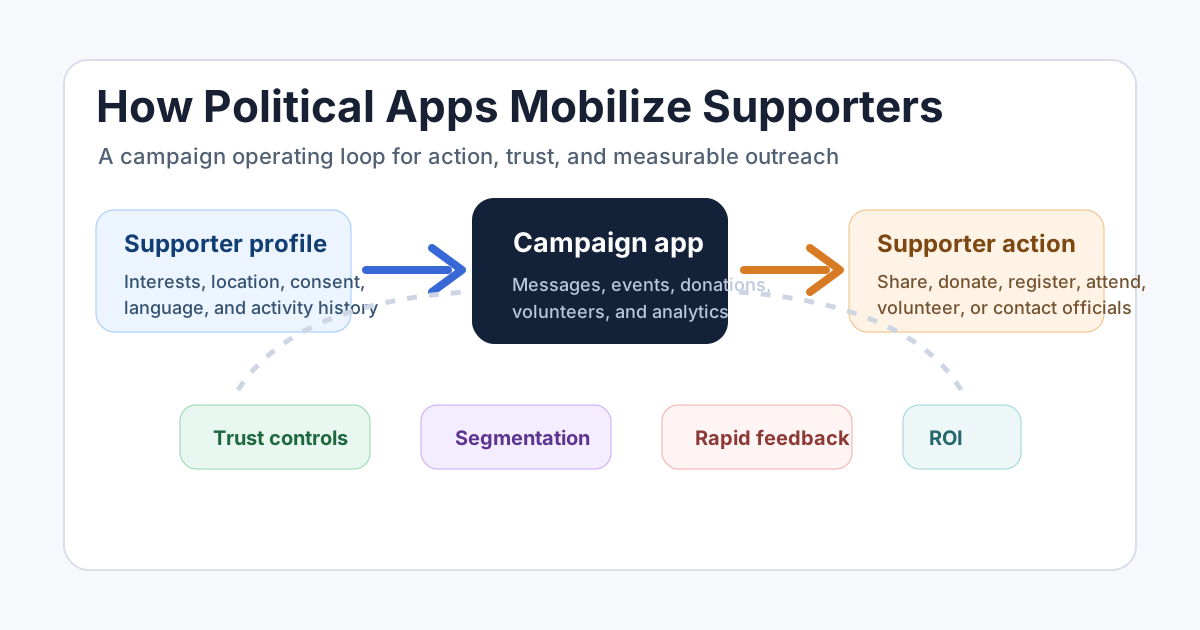
Political apps mobilize supporters by turning campaign interest into repeated, measurable action. A good app does more than publish news. It helps a campaign identify supporters, ask for consent, segment audiences, send timely messages, collect donations, coordinate volunteers, promote events, and measure which actions actually move people.
For political parties, candidates, advocacy groups, unions, and civic campaigns, the app becomes a controlled operating layer between public social channels and the private tools used by campaign staff. Supporters get a direct place to register interest, receive updates, join local work, and share approved content. Campaign teams get clearer data on engagement, volunteer capacity, fundraising momentum, and message performance.
The strongest political apps balance mobilization with trust. They need fast communication, but they also need consent, accessibility, moderation, payment security, content review, and responsible data handling. Without those controls, the same features that increase participation can create privacy, misinformation, or operational risk.
Why Campaigns Use Political Apps
Campaigns use political apps because social platforms alone do not give them enough control. Social media can help a message travel, but algorithms, platform policy changes, spam, and fragmented audiences make it hard to build a durable supporter relationship. A campaign app gives supporters a first-party channel where the organization can communicate directly and measure outcomes.
That direct channel matters during time-sensitive moments: voter registration deadlines, rally announcements, fundraising pushes, volunteer shifts, policy launches, local canvassing drives, and election-day reminders. Instead of hoping supporters notice a public post, the campaign can send targeted in-app updates, push notifications, SMS or email follow-ups, and location-aware calls to action.
For teams planning a new campaign product, this is a mobile app development problem and an operations problem at the same time. The app must feel simple for supporters, while the admin side must help staff manage audiences, approvals, events, donations, and reporting without developer help.
Core Features That Turn Supporters Into Action
The feature list for a political app should start from the actions a campaign needs supporters to take. News feeds and candidate profiles are useful, but mobilization usually depends on a few deeper workflows.
| Mobilization Goal | App Feature | What The Campaign Should Measure |
|---|---|---|
| Keep supporters informed | Push notifications, in-app updates, issue feeds, and local alerts | Open rate, click-through rate, opt-out rate, and message fatigue |
| Grow participation | Event discovery, RSVP flows, calendar reminders, and local group pages | RSVPs, attendance, repeat participation, and no-show patterns |
| Coordinate volunteers | Task signup, canvassing routes, phone banking, role assignments, and shift reminders | Completed tasks, active volunteers, response speed, and organizer workload |
| Raise funds | Donation pages, recurring contribution prompts, receipts, and campaign-specific appeals | Conversion rate, average donation, recurring donor rate, and payment failures |
| Increase reach | Approved share cards, referral links, social sharing, and supporter invitations | Shares, referral signups, content performance, and regional lift |
| Improve decisions | Dashboards, segmentation, experiments, and supporter feedback | Action rate by audience, message performance, and campaign ROI |
These features are most effective when they are connected. A supporter who RSVPs to an event may later receive a volunteer prompt. A donor may receive a thank-you update and a local meeting invitation. A volunteer who finishes a canvassing shift may receive a next-best action based on location and availability.
Real-Time Communication And Targeted Messaging
Real-time communication is one of the clearest reasons political apps mobilize supporters worldwide. Campaigns can send urgent updates without waiting for a press cycle or a social algorithm. Supporters can receive alerts about events, policy announcements, registration deadlines, polling-place information, livestreams, or rapid response moments.
The risk is over-messaging. A campaign app should treat notification permission as a relationship, not a blank check. Good systems let supporters choose topics, locations, frequency, and channels. Campaign staff should also see opt-out trends so they can reduce noise before supporters disengage.
Targeted messaging should be practical and transparent. Campaigns can segment by declared interests, geography, language, event attendance, volunteer role, donation history, or content engagement. Sensitive data should be minimized, access-controlled, and used only for clear campaign purposes.
Fundraising, Events, And Volunteer Management
Mobilization becomes real when supporters can act inside the product. Donation workflows should be fast, secure, and easy to reconcile. Event workflows should support local discovery, RSVP limits, reminders, check-ins, and post-event follow-up. Volunteer workflows should help organizers assign tasks, track completion, and communicate changes quickly.
A custom campaign app is often valuable when these workflows need to live together. Generic donation tools, spreadsheets, messaging apps, and event pages can work for small teams, but they often create fragmented data. A connected custom software development approach can bring supporter profiles, payments, content approvals, event operations, and campaign analytics into one controlled system.
NextPage has built adjacent campaign-style public participation systems, including HonorLoop, a community nomination and verified voting platform with public submissions, OTP-protected voting, finalist workflows, admin review, media handling, and campaign lifecycle controls. The same operational thinking applies to political and advocacy products where timing, trust, and public participation all matter.
Social Sharing Without Losing Control
Political apps can amplify campaign messages by giving supporters approved content to share. This can include quote cards, short videos, event invitations, donation appeals, voter education explainers, or local issue updates. The campaign benefits because shared content is easier to keep on-message, trackable, and tied back to supporter referral flows.
However, social sharing should not replace owned communication. The app should act as the source of truth for approved materials, while social platforms act as distribution channels. This helps campaigns update outdated assets, avoid inconsistent messaging, and measure which content attracts new supporters.
For more feature-level planning, the related NextPage article on political app development covers communication, notifications, security, and campaign app functionality in more detail.
Trust, Privacy, And Governance In Political Apps
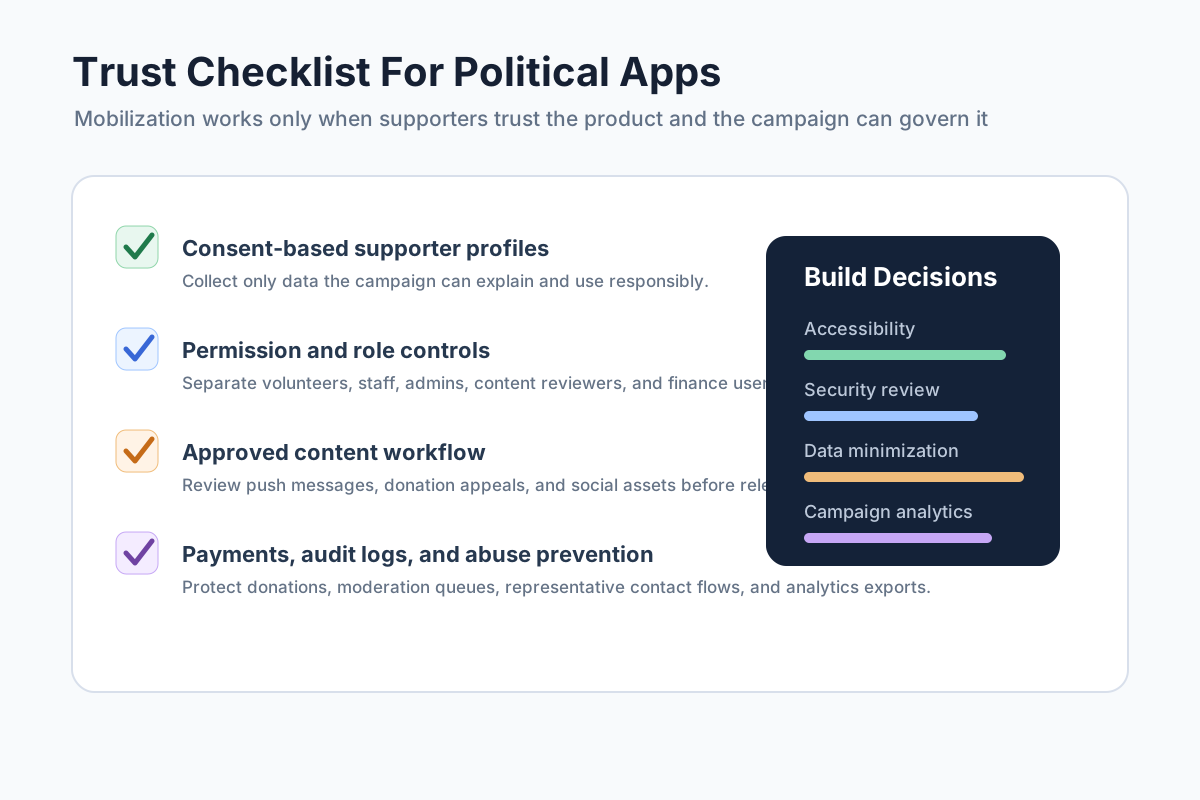
Political apps handle sensitive relationships. A supporter may reveal location, issue interests, donation behavior, volunteer availability, or civic preferences. That creates an obligation to design for privacy, security, accessibility, and responsible campaign operations from the beginning.
At minimum, the product should include consent-based onboarding, clear privacy notices, account controls, role-based admin permissions, audit logs, secure donation handling, content approval workflows, abuse reporting, moderation queues, data export rules, and deletion processes. Accessibility also matters because civic participation should not depend on perfect vision, expensive devices, or high-speed networks.
Analytics That Help Campaigns Improve
Political app analytics should connect outreach to action. It is not enough to know how many people installed the app. Campaign teams need to know which messages produced RSVPs, donations, volunteer signups, shares, calls, registrations, or repeat participation.
Useful dashboards usually include audience growth, active supporters, notification performance, event conversion, volunteer completion, donation conversion, referral sources, regional engagement, content performance, and churn signals. For leadership, these metrics should roll up into plain-language decisions: what to send next, which audience needs attention, where organizers need help, and which campaigns are producing a return.
If a team is deciding whether a campaign app is worth building, the custom software cost estimator can help frame scope, team size, timeline, and budget. If the campaign already has older internal tools, the legacy software modernization scorecard can help identify integration, security, and maintainability risks before rebuilding.
How To Plan A Political App Build
A strong build plan starts with the campaign model, not the technology stack. Define the audiences, actions, data rules, administrative roles, approval process, and success metrics before designing screens. Then decide which workflows belong in the first release and which can wait.
- Map supporter journeys. Identify how someone discovers the campaign, joins the app, receives updates, takes action, and returns.
- Choose the primary action loops. Prioritize the workflows that matter most: events, donations, volunteering, voter education, advocacy requests, or local organizing.
- Define governance early. Document who can send messages, approve content, view supporter data, export reports, and manage payments.
- Build for field conditions. Political and advocacy work often happens on mobile networks, in busy environments, and across languages, so performance and accessibility are not optional.
- Measure outcomes. Connect analytics to supporter action, not vanity metrics alone.
Depending on scope, the product may combine native mobile apps, a web admin dashboard, public campaign pages, content management, analytics pipelines, payment integrations, and third-party messaging services. That is why many teams pair mobile app development with web app development for the campaign back office.
Final Thoughts
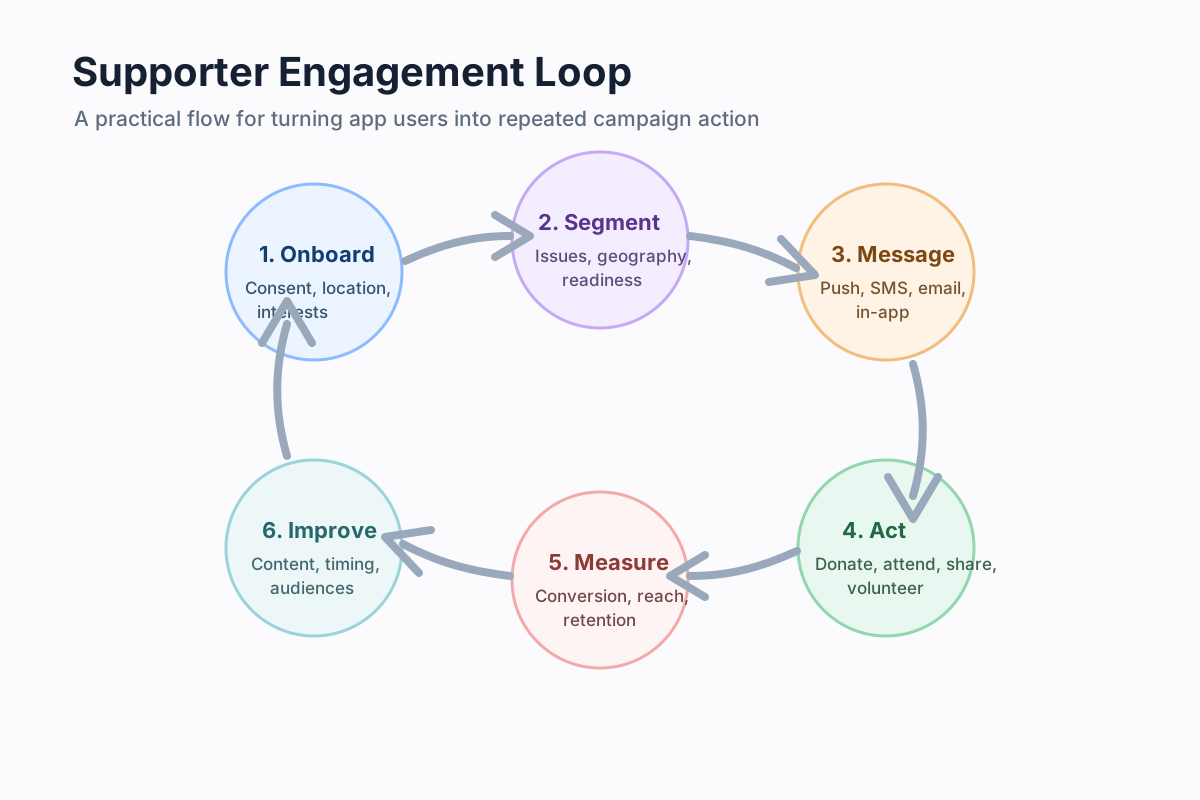
Political apps mobilize supporters worldwide because they make participation easier, faster, and more personal. They help campaigns move from broadcast messaging to action loops: inform the right people, ask for the right action, measure the result, and improve the next outreach cycle.
The best political apps are not just digital brochures. They are campaign operating systems with supporter trust at the center. When communication, donations, events, volunteer work, social sharing, analytics, and governance are designed together, a campaign can build a more durable supporter network and act with better timing.