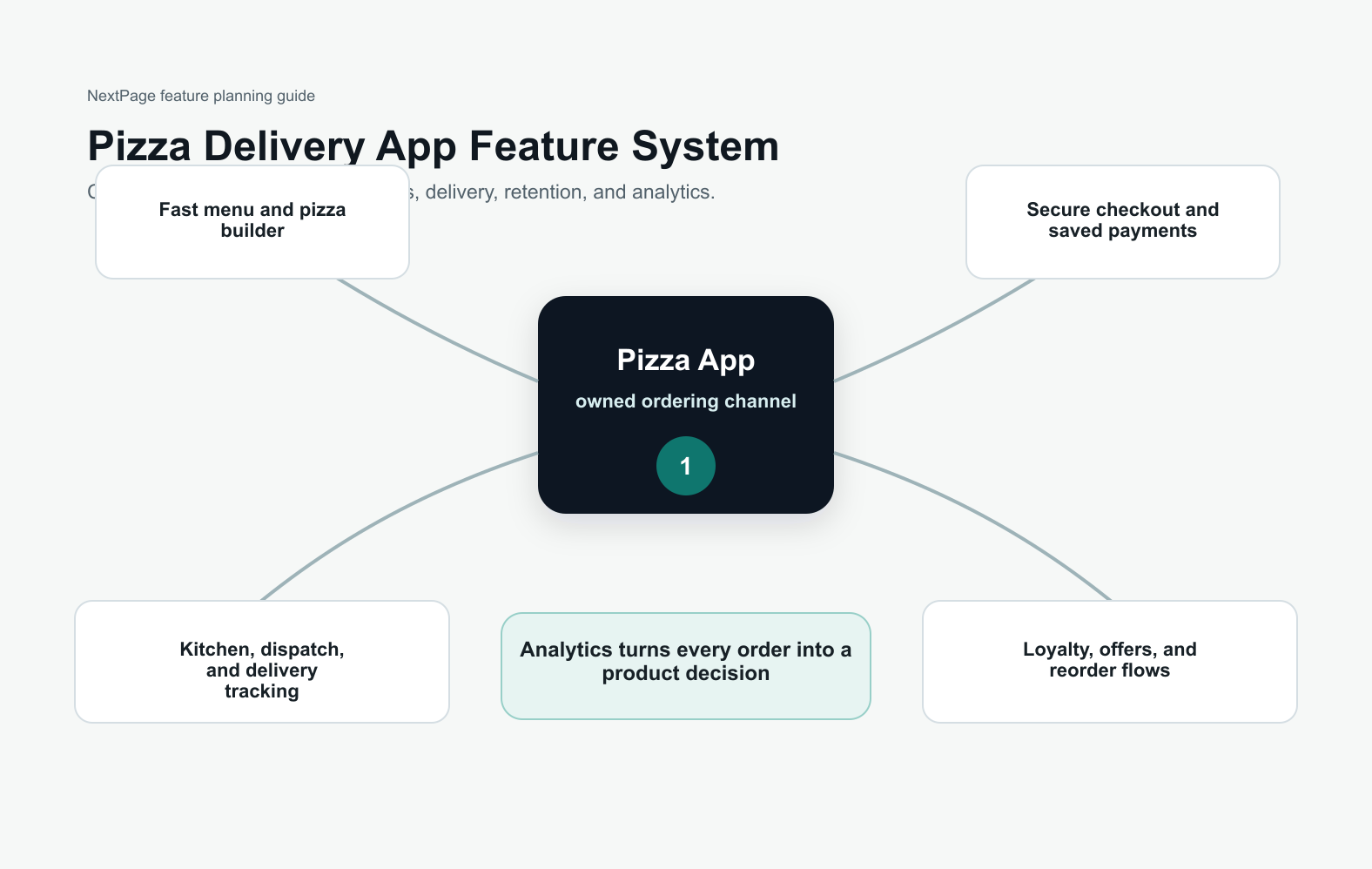

Quick Answer: Food Ordering App Best Practices
A strong food ordering app is not just a menu inside a mobile screen. It is a connected ordering system where customers can discover food quickly, customize items clearly, pay safely, track progress, get support, and reorder without friction. The lessons from successful products are practical: keep the first transaction simple, make restaurant operations reliable, and use data to improve the flow after launch.
If you are planning mobile app development for a restaurant, cloud kitchen, franchise, or food marketplace, start with the operating model before finalizing screens. The app should reflect how menus change, how orders are accepted, how delivery works, how refunds are handled, and how the business will retain customers.
Start With The Ordering Model
The best product decisions depend on the type of food business. A single restaurant app needs direct ordering, menu control, pickup slots, loyalty, and customer communication. A multi-restaurant marketplace needs partner onboarding, commissions, search ranking, courier assignment, dispute handling, and admin controls. A cloud kitchen may need multi-brand menus, kitchen capacity rules, and repeat-order flows.
Before design starts, define the core transaction: who orders, who prepares the food, who delivers it, who handles support, and what data the team needs after each order. This keeps the MVP focused on the real workflow instead of copying every feature from a larger marketplace.
Food Ordering App MVP Checklist
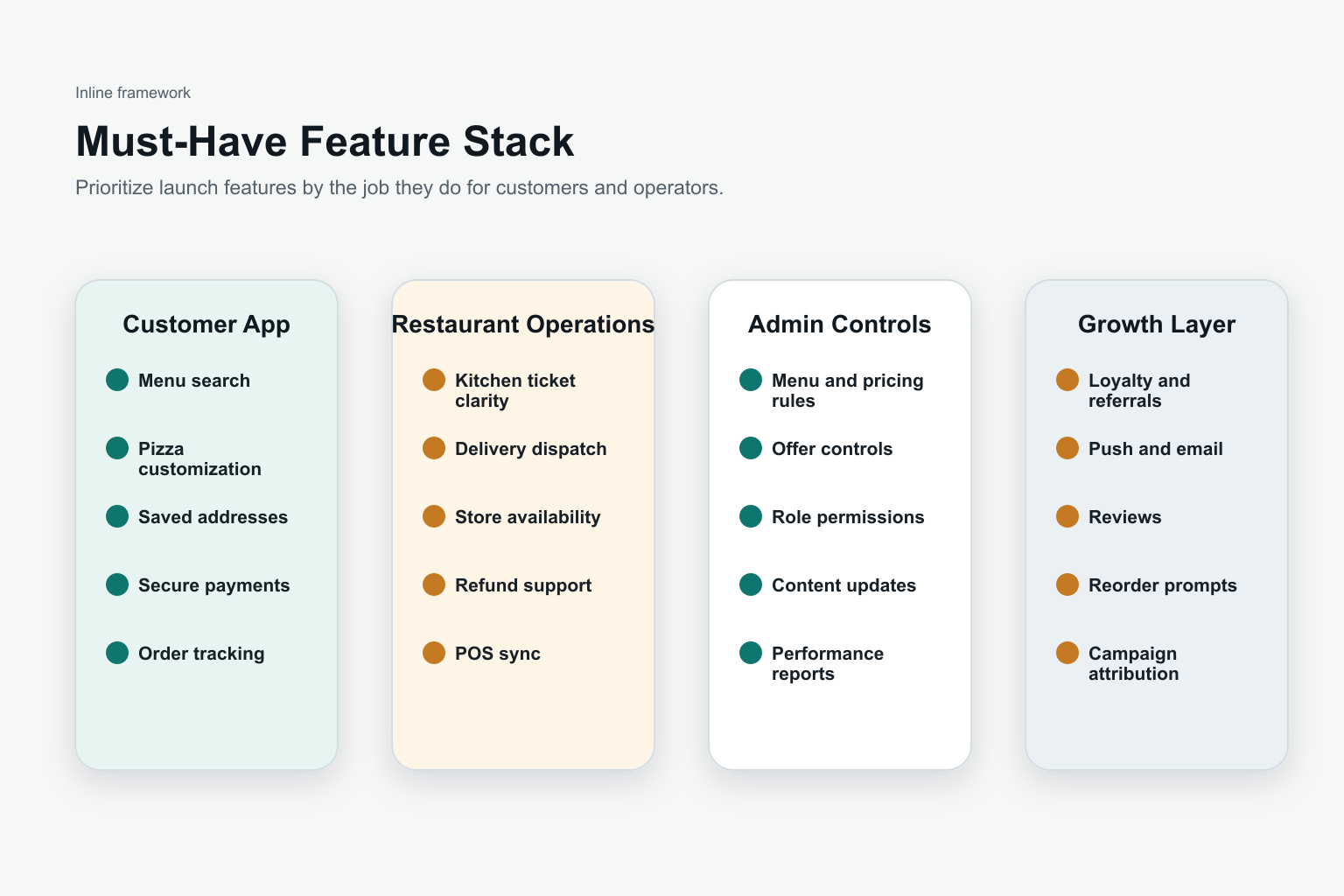
A practical MVP should include customer accounts, restaurant or menu listings, search and filters, item customization, cart review, secure checkout, payment handling, order status, notifications, customer support, and admin tools for menus and orders. These pieces should work together as one order journey, not as isolated features.
Teams comparing scope with budget can use the custom software cost estimator to pressure-test user roles, integrations, complexity, and timeline assumptions before committing to a build plan.
Best Practice 1: Research Customers And Restaurant Operations Together
Food app research should include customers, restaurant staff, support teams, and delivery operators. Customer interviews reveal ordering habits, cuisine preferences, price sensitivity, dietary needs, and common points of confusion. Restaurant research reveals menu update frequency, preparation bottlenecks, stock issues, packaging constraints, and refund scenarios.
The lesson is simple: a food ordering app can look polished and still fail if the kitchen or operations team cannot keep up. Map the full journey from browsing to order reconciliation so the product supports both demand generation and fulfillment.
Best Practice 2: Make Menu Discovery Fast
Users often open a food app with a craving, budget, delivery deadline, or dietary constraint. Search should support restaurant names, dishes, cuisines, ingredients, dietary tags, delivery time, ratings, open-now status, and price range. Filters should reduce effort instead of adding more choices to scan.
Menu pages need accurate item names, photos when available, descriptions, modifiers, allergens, preparation time, taxes, fees, and availability. If an item is sold out, unavailable in a branch, or limited to pickup, the customer should know before reaching checkout.
Best Practice 3: Keep Ordering And Checkout Transparent
Checkout is where many food apps lose trust. The cart should make modifiers, add-ons, substitutions, cooking notes, delivery instructions, tips, coupon rules, taxes, packaging fees, and total price easy to review. Customers should be able to edit the order without restarting the flow.
Secure payment options should match the market: cards, wallets, UPI or local wallets where relevant, cash-on-delivery if the business supports it, refunds, partial refunds, payment retry, and failure recovery. The same friction-reduction principles from ecommerce mobile app development apply here, but food apps have less tolerance for confusion because orders are time-sensitive.
Best Practice 4: Treat Real-Time Tracking As A Trust Feature
Order tracking should show meaningful stages: order placed, restaurant accepted, preparing, ready for pickup, courier assigned, out for delivery, delivered, cancelled, or refunded. A vague spinner is not enough. Customers need to know whether the restaurant has accepted the order and whether the ETA is still realistic.
For delivery-led products, the tracking workflow depends on restaurant status, courier location, route data, push notifications, exceptions, and support escalation. NextPage's guide to essential pizza delivery app features covers a narrower pizza use case, but the reliability lesson applies to every food category.
Order Operations Architecture
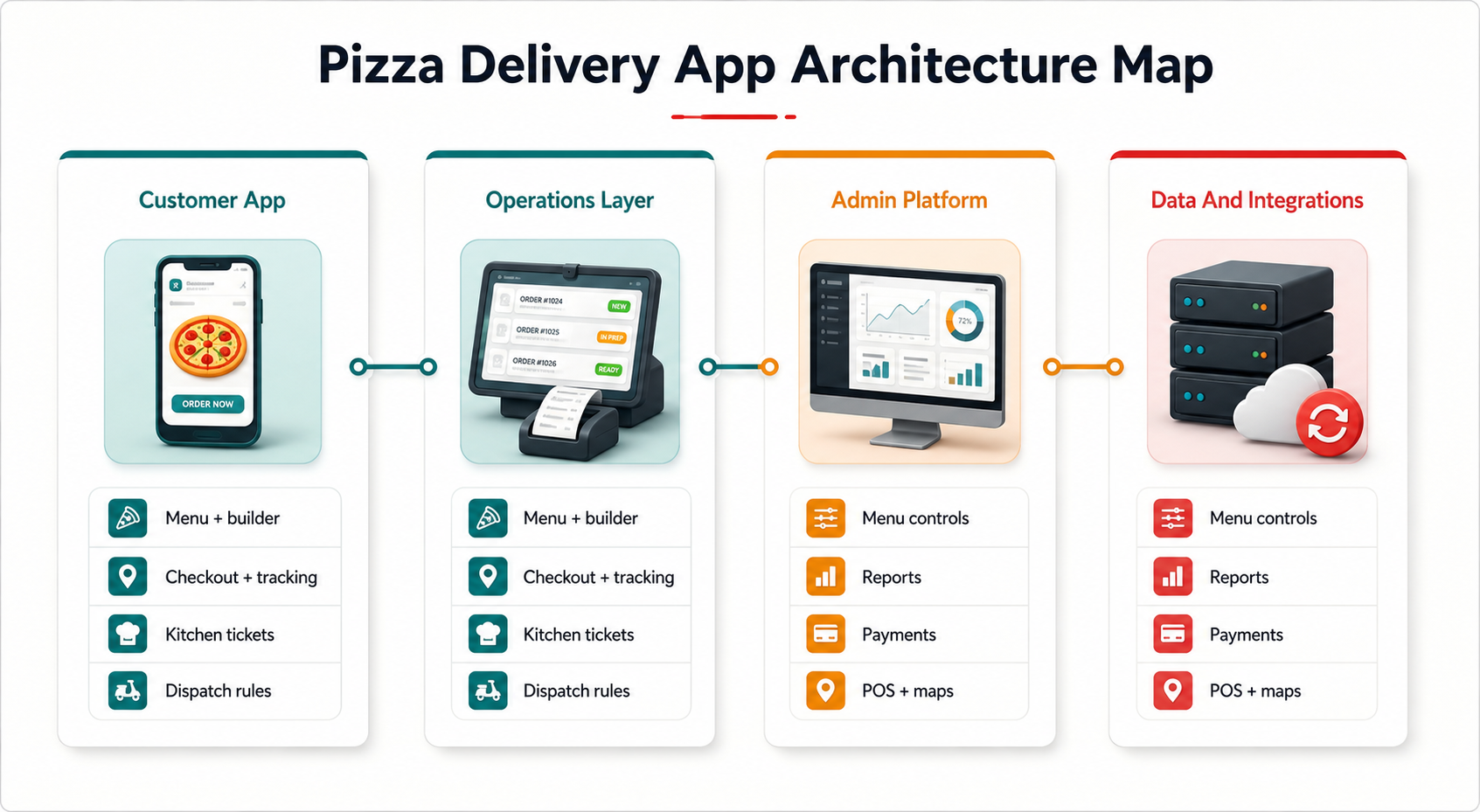
The customer app is only one part of the system. Restaurant teams need order queues, acceptance controls, preparation timers, item availability, cancellation reasons, refund notes, courier handoff status, and daily reconciliation. Marketplace operators also need commission rules, partner performance metrics, SLA alerts, and support history.
Plan these workflows early. Without them, staff end up resolving order changes, refunds, and delivery issues manually while customers see an app that appears digital but behaves like a disconnected process.
Best Practice 5: Build Personalization Without Losing Control
Personalization can start with saved addresses, favorite restaurants, recent orders, dietary preferences, reorder prompts, and relevant offers. More advanced recommendations can use location, order history, daypart, basket size, cuisine affinity, and promotion response.
The lesson from successful food apps is to personalize convenience before pushing promotions. A useful reorder suggestion, remembered preference, or accurate dietary filter often creates more loyalty than a broad discount campaign.
Best Practice 6: Use Loyalty And Offers To Improve Retention
Loyalty features can include points, wallet credits, free delivery thresholds, subscriptions, referral rewards, restaurant-specific deals, birthday offers, and reorder incentives. The strongest programs reward behavior that improves unit economics, not just one-time discount use.
For a broader business case, compare these retention levers with NextPage's guide to food delivery app development benefits. The most valuable retention features usually combine convenience, trust, and relevant timing.
Best Practice 7: Design Support Around The Order
Food app support must be fast because the product is perishable and time-bound. Include order-level help, refund requests, cancellation flows, courier issue escalation, restaurant contact rules, help articles, and feedback forms. Customers should not need to repeat order IDs, item names, address details, or payment status.
Support data should feed product decisions. Track late deliveries, missing items, search dead ends, payment failures, refund reasons, restaurant response time, and cancellation patterns. These signals show which parts of the app or operation need improvement.
Best Practice 8: Measure Unit Economics Before Scaling
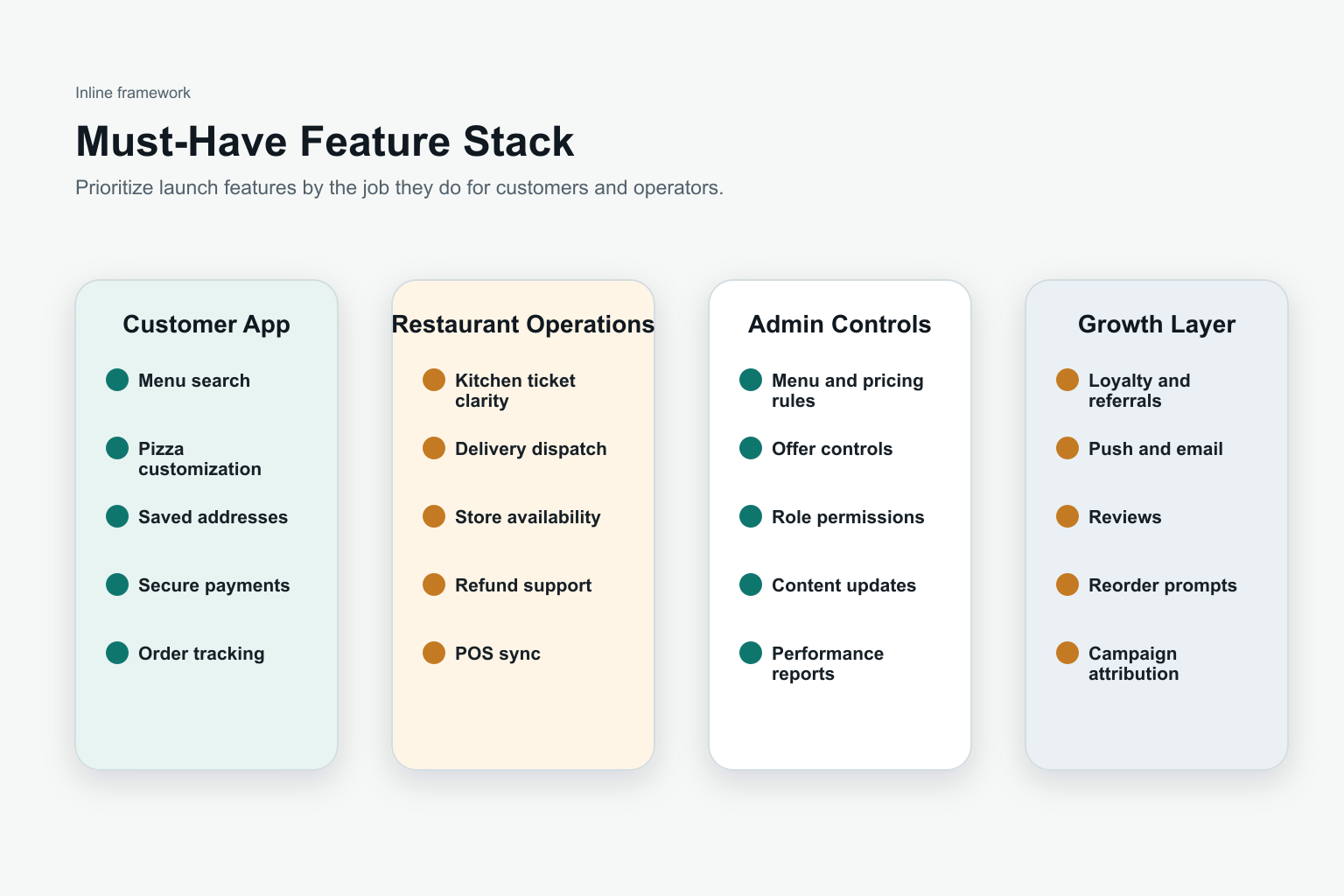
Food ordering products can grow revenue while losing money if discounts, delivery costs, payment fees, refunds, and support costs are not measured carefully. Track average order value, contribution margin, delivery cost per order, payment fees, repeat rate, restaurant commission, coupon cost, and support cost per order.
The related food delivery app development cost guide is useful when translating these operating assumptions into MVP scope, integration choices, and launch budget.
Best Practice 9: Test Peak Ordering Conditions
Food ordering apps should be tested under real dinner-rush conditions, not only happy-path demo flows. Test high menu traffic, simultaneous checkout, payment retries, coupon edge cases, restaurant acceptance delays, courier reassignment, cancellation timing, and support escalation.
QA should cover mobile devices, location permissions, push notifications, payment callbacks, admin dashboard updates, email or SMS fallbacks, accessibility, and analytics events. Load and reliability testing matter because a food app often fails publicly during the exact moments when demand is highest.
Best Practice 10: Launch In Phases And Improve With Data
A phased launch reduces risk. Start with a tight geography, limited partner set, manageable menu complexity, clear support coverage, and analytics on the full order journey. Use beta feedback to fix broken menu data, confusing fees, delivery ETA gaps, payment failures, and support delays before scaling.
If the target experience is closer to a large delivery marketplace, NextPage's guide on how to build a food delivery app like Uber Eats can help compare customer, restaurant, courier, and admin responsibilities before the roadmap expands.
Development Roadmap For A Food Ordering App
A practical roadmap includes discovery, business model definition, user and restaurant journey mapping, MVP scope, UX design, technical architecture, backend and admin development, payment and delivery integrations, QA, beta launch, analytics setup, and post-launch iteration. If the business needs a Domino's-style owned delivery flow, the guide on how to develop a pizza delivery app like Domino's is a useful planning reference.
Choose the technology stack around scale, integrations, location accuracy, admin complexity, security, and long-term maintenance. Native mobile apps may be useful when performance and device capabilities are critical, while cross-platform development can speed up iOS and Android delivery when requirements fit.
How NextPage Can Help
NextPage helps restaurants, food startups, cloud kitchens, and marketplace teams plan and build ordering apps with customer apps, restaurant dashboards, delivery workflows, payment integrations, analytics, and post-launch support. The goal is to ship software that works during real ordering peaks, not only in a product demo.
If you are scoping a food ordering product, define the business model, MVP ordering flow, operational dashboard, support model, and retention strategy first. The best app is the one that makes ordering easier for customers and operations clearer for the business.
Conclusion
Developing a food ordering app requires strong product discovery, simple ordering UX, reliable menu operations, transparent checkout, real-time tracking, secure payments, fast support, and disciplined launch measurement. The most important lesson is to connect customer convenience with restaurant operations from the beginning. That foundation helps the app launch faster, earn trust earlier, and improve with real data.