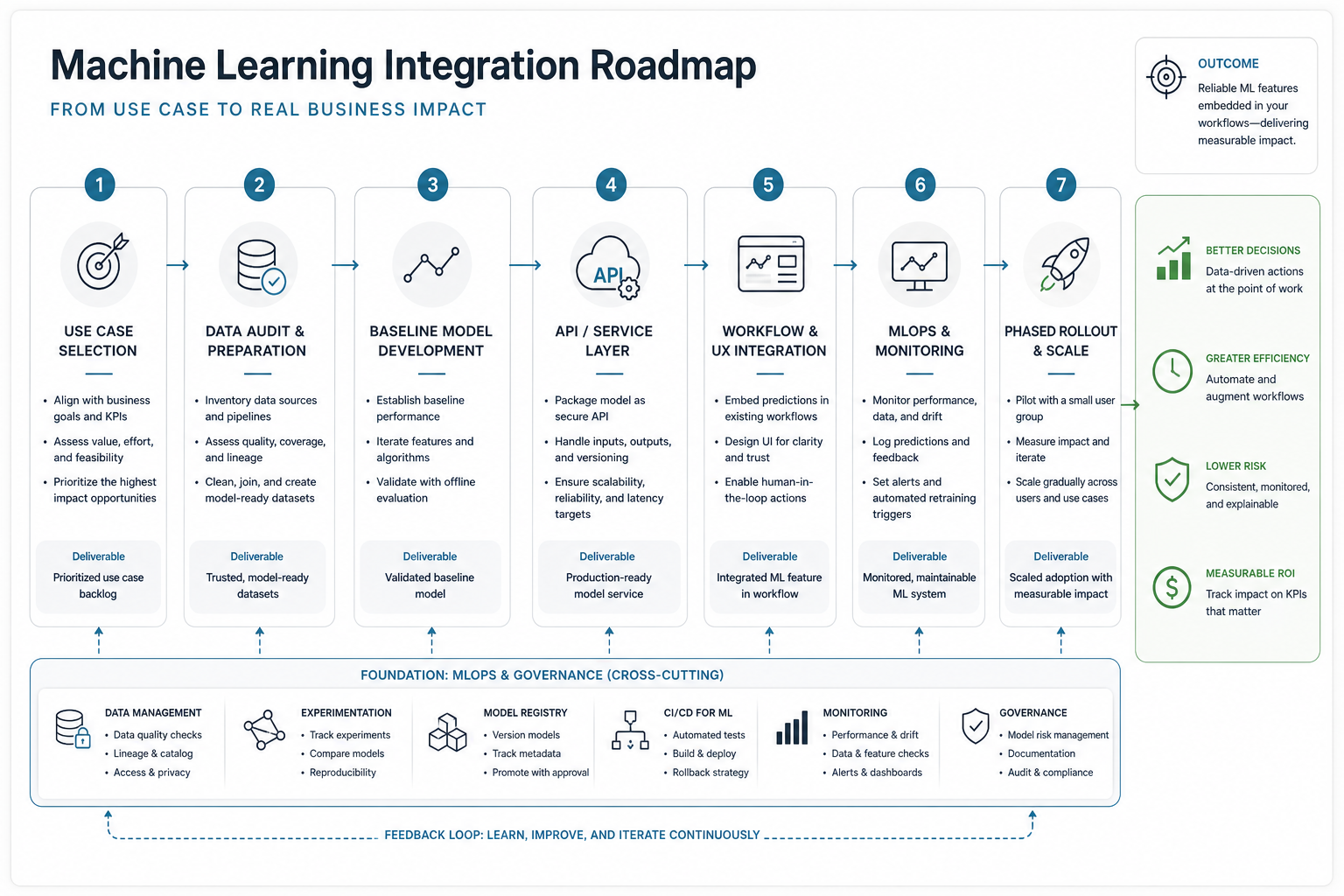
Machine Learning Integration Roadmap For Existing Apps And Workflows
Use this machine learning integration roadmap to plan predictive features for existing apps, data audits, model APIs, MLOps, governance, rollout gates, and ROI.
Assess custom software scope, build-versus-buy decisions, architecture, delivery costs and long-term ownership.
Custom software is useful when the workflow or integration requirements are poorly served by existing products. Compare those requirements against configurable commercial tools before choosing to build.
Define the smallest valuable release and its data model, integration boundaries and acceptance criteria. Include maintenance and operational ownership in total cost, not only implementation.
This topic brings together planning and implementation guides. The commercial service page describes how NextPage approaches a scoped software engagement.
Showing 13–21 of 21 posts
Use this machine learning integration roadmap to plan predictive features for existing apps, data audits, model APIs, MLOps, governance, rollout gates, and ROI.
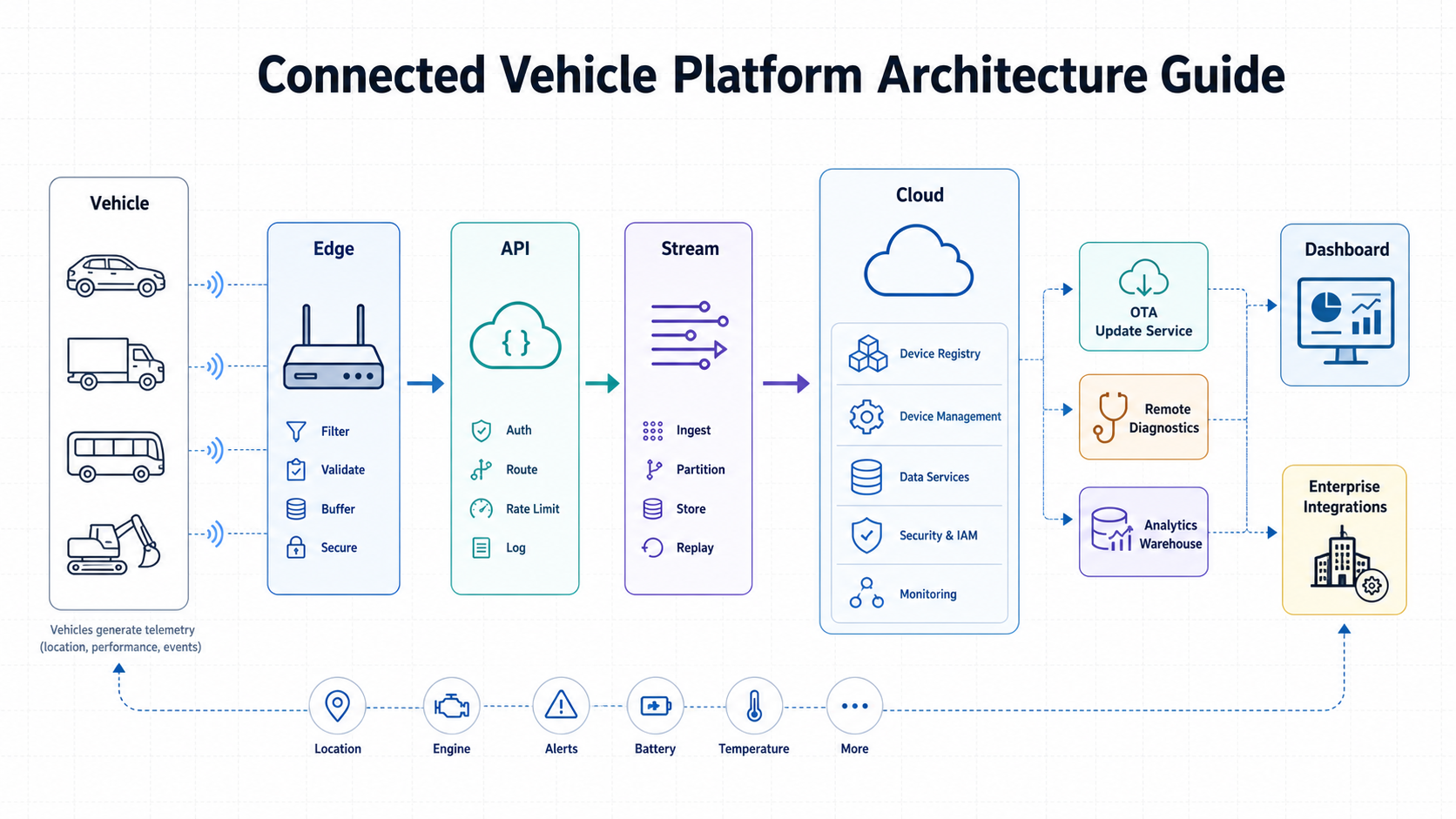
Plan connected vehicle platform architecture across telemetry ingestion, OTA updates, diagnostics, V2X, dashboards, security, data pipelines, and rollout phases.
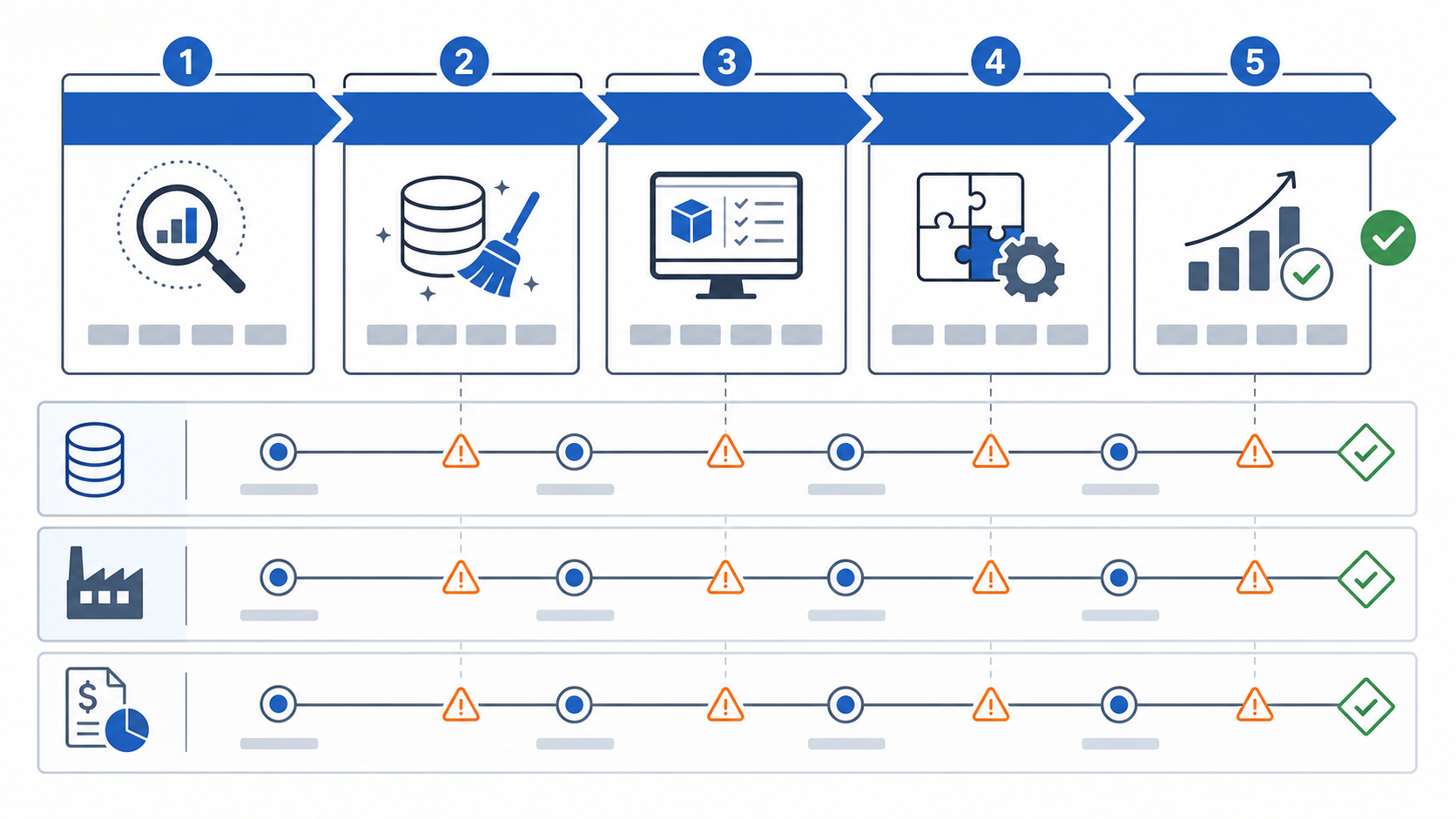
Plan manufacturing ERP implementation with module selection, integrations, cost drivers, rollout phases, custom extensions, AI automation, and risk controls.
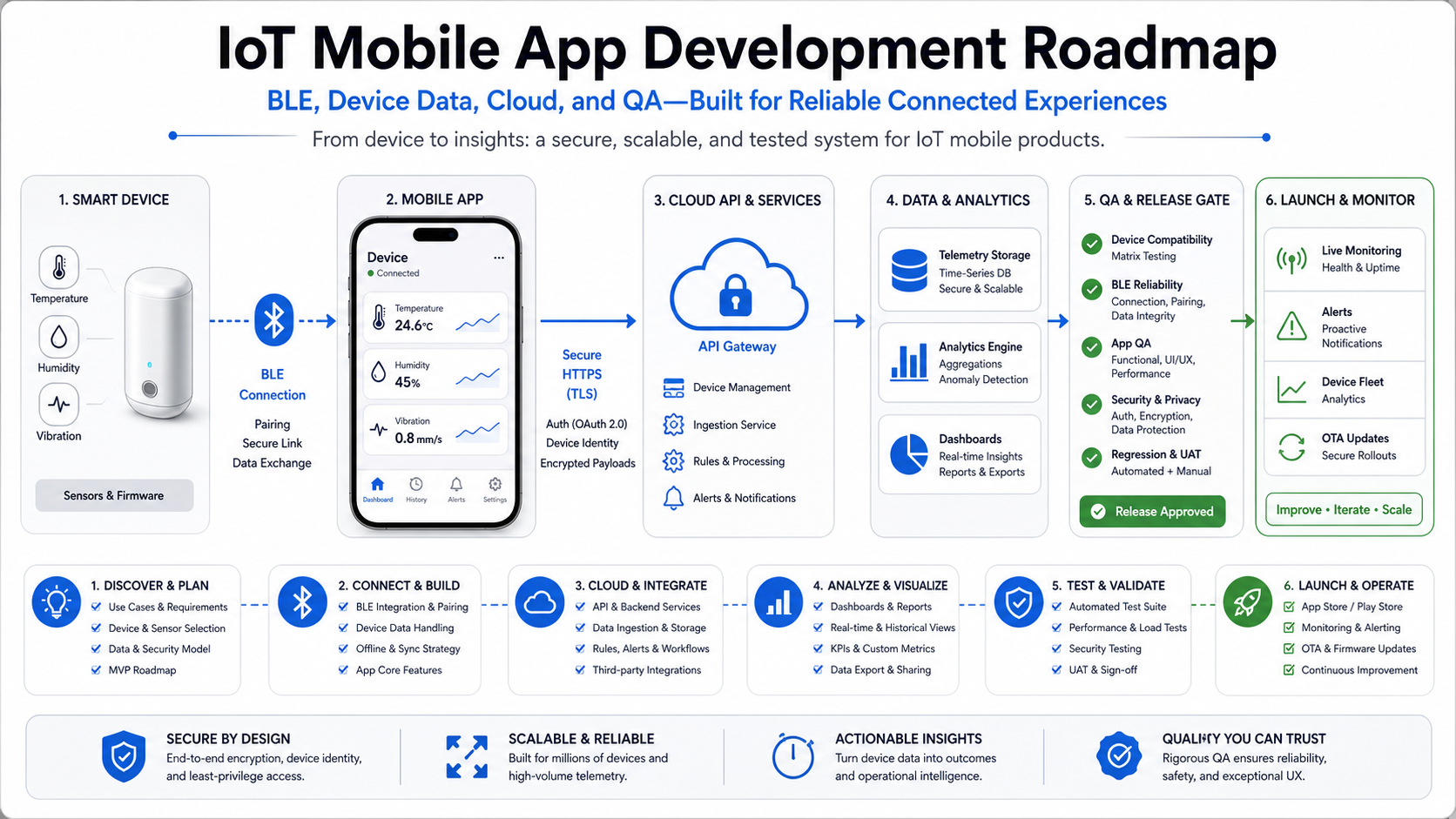
Plan an IoT mobile app across BLE pairing, device data, cloud APIs, offline sync, QA, launch monitoring, and cost-risk checkpoints.
Use this checklist to compare custom software companies by discovery quality, cost transparency, proposal evidence, security controls, delivery process, and support ownership.
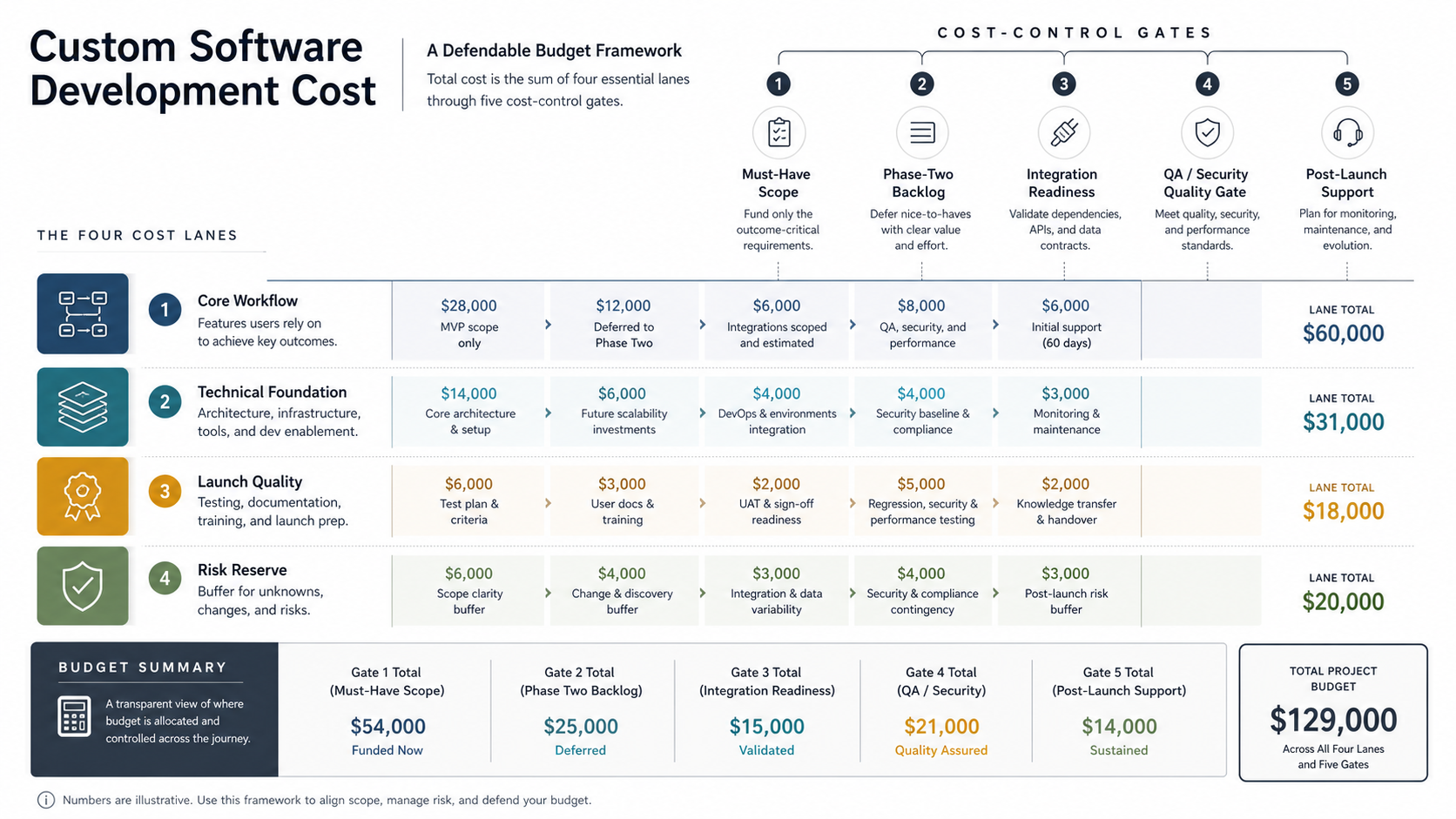
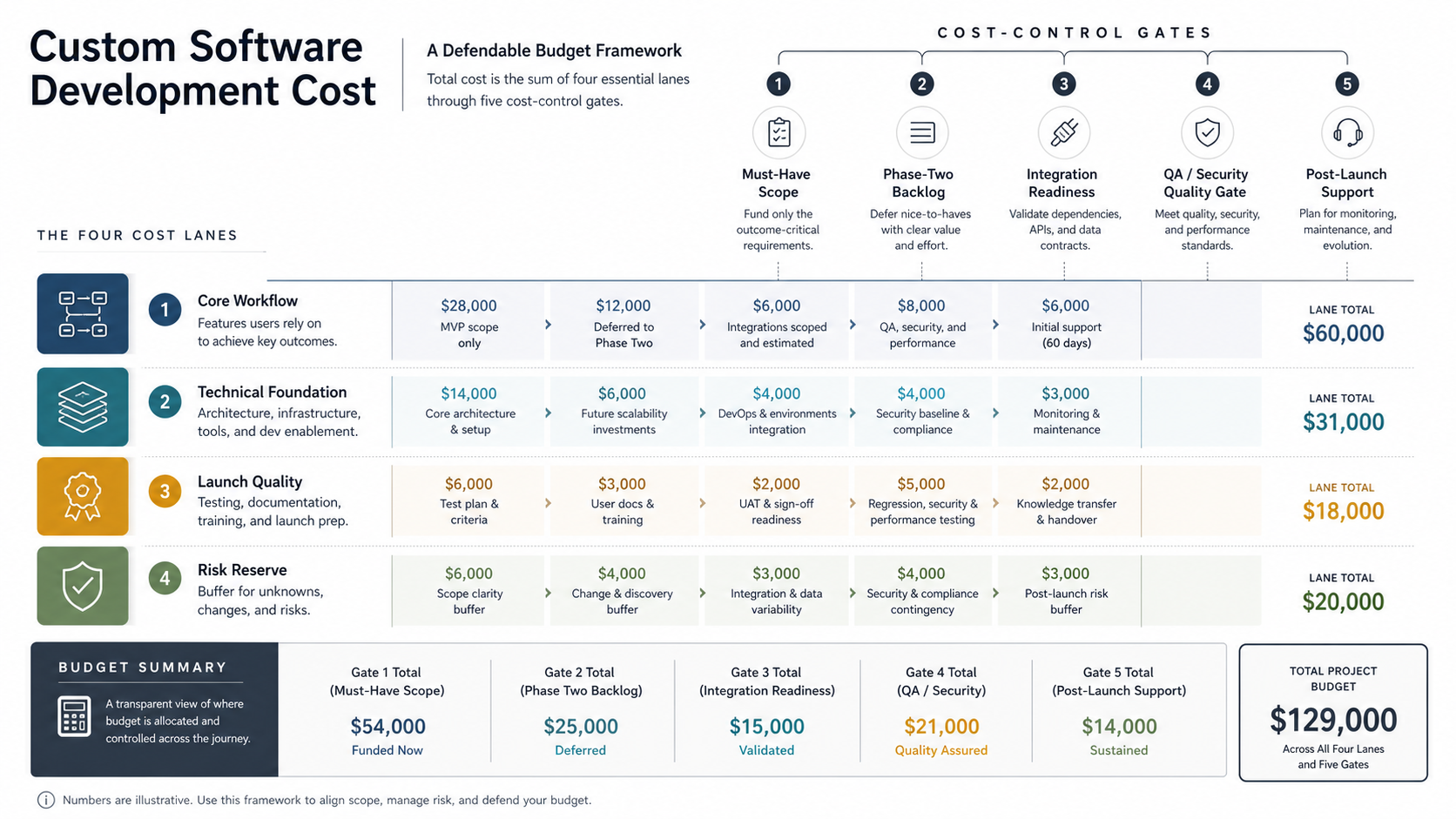
Estimate custom software development cost by workflow, features, team model, integrations, security, QA, cloud, and delivery risk.
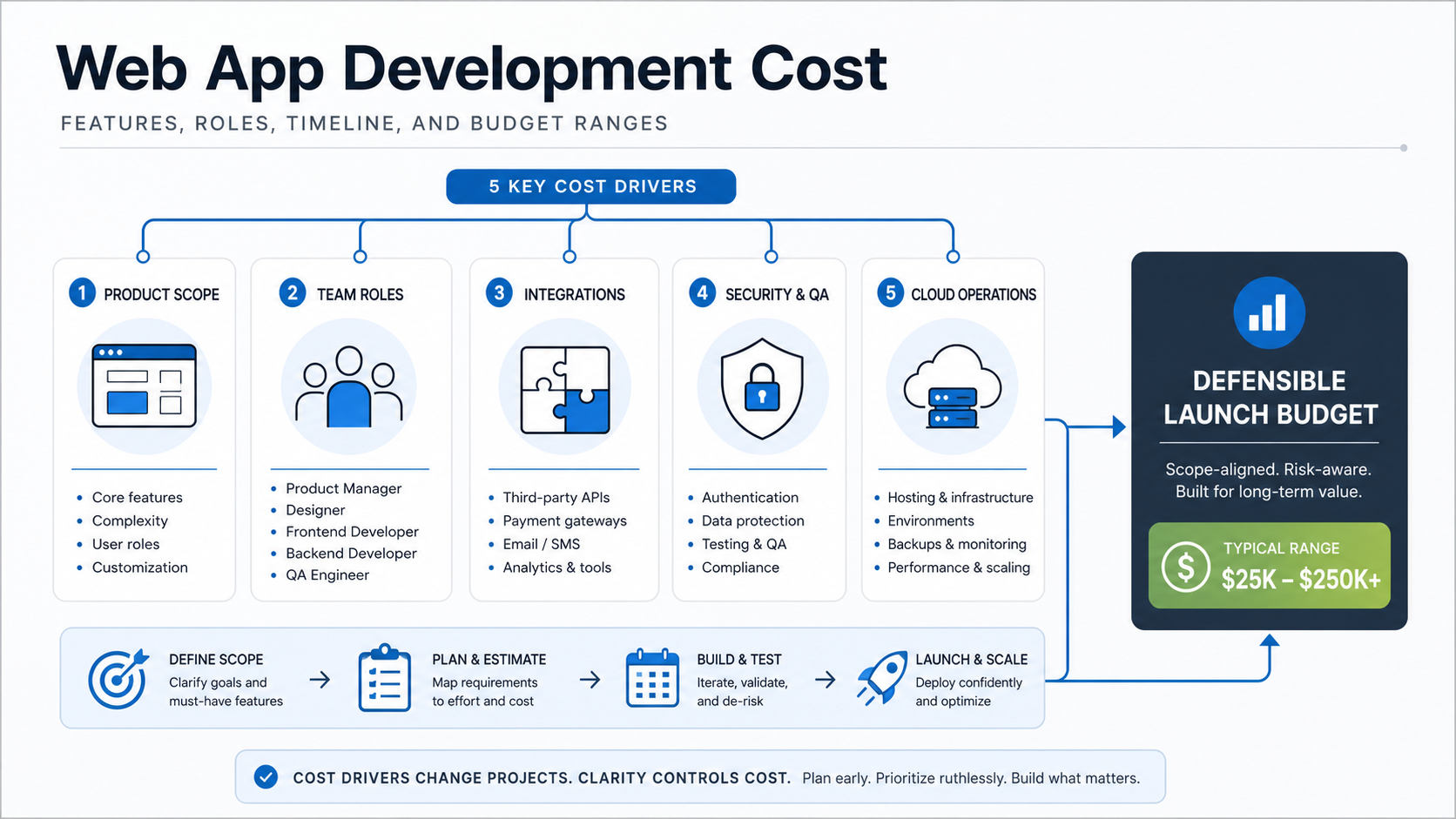
Estimate web app development cost in 2026 by scope, roles, integrations, QA, cloud, delivery model, timeline, and launch risk.
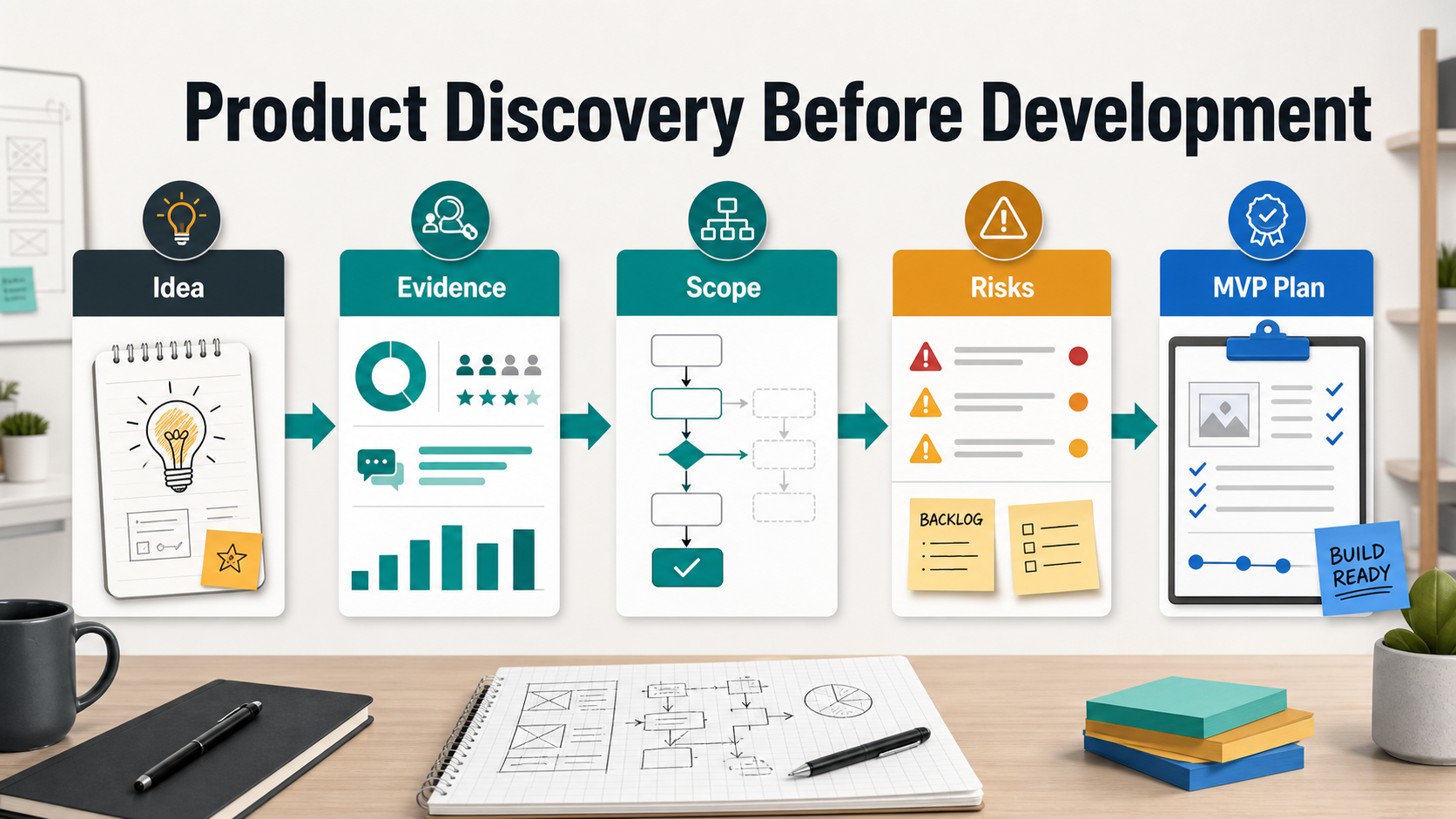
Use product discovery before development to clarify users, journeys, MVP scope, risky assumptions, estimates, and the decision gates that reduce build risk.
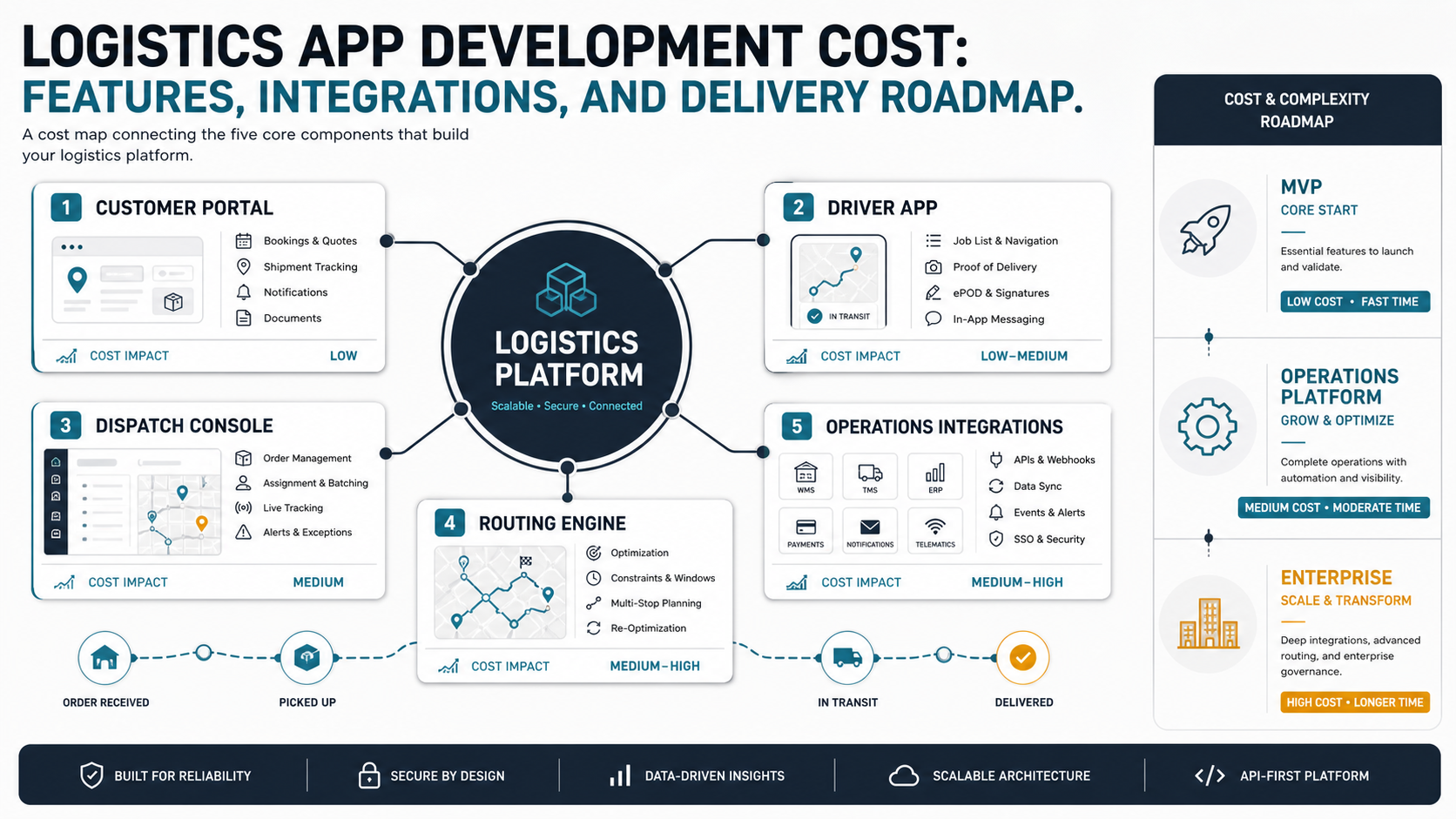
Plan logistics app development cost by MVP scope, dispatch workflows, route optimization, WMS/TMS/ERP integrations, launch evidence, and rollout risk.