











Facility Management Software Development

Facility Management Software Development for Connected Operations

Build a custom facility operations platform that connects spaces, work orders, preventive maintenance, inspections, vendors, technicians, files, and management reporting across web and mobile.

See how we work
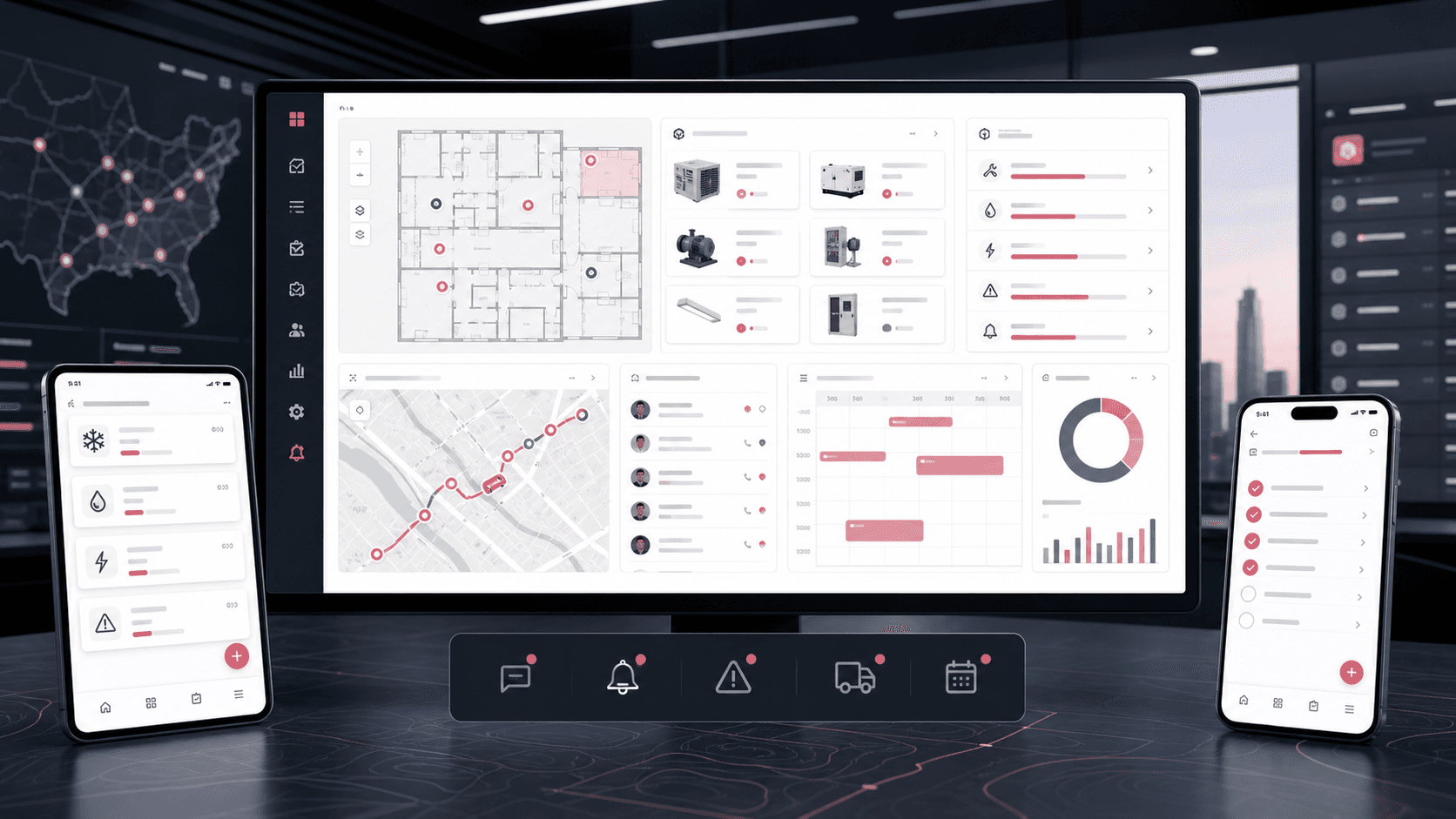
Connected facility operations software across building maps, maintenance work, inspections, vendors, fleet data, and a mobile field app

Built for

Facility directors, operations leaders, CTOs, and product teams replacing disconnected spreadsheets, point tools, or rigid legacy facility systems.

Web + Mobile
connected operations surfaces
12+
facility workflow modules delivered
Multi-site
location-aware operating model
Role-based
access and approval controls
  • OpenAI logo
  • Google Gemini badge
  • AWS Partner Advanced Tier Services badge
  • Upwork top-rated developer agency badge
  • HubSpot Solution Partner badge
  • mathaccelmaking math easy for everyone
  • Shopify Partners badge
  • Google Developers logo
  • AWS Partner Services badge
  • Microsoft Partner logo
  • AWS Partner Cloud Operations Services Competency badge
  • Microsoft Azure badge
  • ucodecoding for kids
  • Mixpanel logo
  • AWS Partner Security Services Competency badge
  • IBM Business Partner logo
  • Google Cloud Services badge

One operational view across places, people, maintenance, inspections, vendors, and field evidence.

Mobile workflows that let technicians receive, document, update, and close work at the facility.

Configurable modules that can grow from a focused first release into a multi-site platform.

Why this matters

Problems we remove before they become expensive

The best outsourcing and software projects work because expectations, ownership, and delivery rituals are clear from the first week.

Work orders, inspection evidence, asset context, and vendor updates live in separate systems.

Technicians cannot complete the full job from a mobile device at the point of work.

Buildings, floors, rooms, and equipment are not represented in a consistent operating model.

Preventive schedules and reactive requests compete without clear priority, ownership, or escalation rules.

Generic software cannot match your forms, permissions, approval paths, or service-provider network.

Management reporting is assembled manually because operational history is fragmented.

What we build

A focused scope for this service

We shape the scope around the result you need, the systems you already have, and the first release that can create value.

Space And Location Operations

Represent the physical operating environment so every request, inspection, asset, and field action keeps useful location context.

  • Sites, buildings, floors, areas, and rooms
  • Floor plans, maps, markers, and images
  • Bulk setup and configurable room data

Maintenance And Work Orders

Coordinate preventive schedules and reactive work through clear assignment, priority, evidence, communication, and status rules.

  • Recurring maintenance plans and task generation
  • Work-order lists, boards, assignments, timers, and chat
  • Duplicate-request warnings, escalation, and closure evidence

Inspections And Compliance Evidence

Turn repeatable checks into configurable forms that work for different sites, equipment types, teams, and review policies.

  • Reusable form and checklist configuration
  • Mobile photos, files, annotations, and signatures
  • Exceptions, corrective actions, and review history

Vendors And Service Networks

Bring external providers into controlled facility workflows without giving them unnecessary access to the rest of the platform.

  • Vendor profiles, service coverage, contacts, and approvals
  • Dispatch, response requests, deadlines, and reminders
  • Client, supervisor, and vendor communication trails

Mobile Field Execution

Give technicians and supervisors a field app designed around real jobs rather than a read-only dashboard.

  • Assigned work, schedules, directions, and notifications
  • QR scanning, files, photos, chat, and status updates
  • Offline-aware capture and safe retry patterns where required

Integrations And Operational Reporting

Connect the facility platform to identity, ERP, finance, IoT, telematics, document, messaging, and analytics systems.

  • API and event integration design
  • Role-aware dashboards and audit history
  • Migration from spreadsheets or legacy CAFM/CMMS tools

Delivery model

How we turn the first call into a working system

We keep discovery practical, ship in visible increments, and make ownership clear so you can scale with confidence.

1

Map The Operating Model

Document sites, spaces, roles, service levels, work types, evidence, approvals, and integration boundaries.

2

Prototype Critical Field Work

Test the high-friction admin and mobile journeys before committing to a broad module inventory.

3

Build A Focused First Release

Ship the smallest connected set of modules that can replace one real operational loop.

4

Expand With Usage Evidence

Add sites, integrations, automation, and reporting as operators show where the next constraint sits.

Engagement options

Flexible enough for a project, stable enough for a long-term team

Choose the model that fits your current stage. We can start small, add specialists, or run a full product pod.

Scoped sprint

Best for discovery, MVP planning, prototypes, audits, or a tightly defined release.

  • Fixed deliverables
  • Weekly checkpoints
  • Clear handoff

Dedicated pod

Best when you need consistent product velocity without hiring a full in-house team.

  • Developers, QA, and PM support
  • Sprint rituals
  • Monthly capacity planning

Long-term partner

Best for companies that want a reliable India team for ongoing software and AI delivery.

  • Roadmap ownership
  • Maintenance and scaling
  • Specialists added as needed

Delivery experience

A Facility Operations Platform Across Admin Web and Mobile

For an NDA-protected product engagement, NextPage connected facility structure, asset context, maintenance, tickets, inspections, vendors, schedules, notifications, chat, and field execution.

React operations console

Flutter field app

Configurable workflows and permissions

FAQ

Questions companies usually ask first

Clear answers help you understand how the engagement works before we get on a call.

What Is Custom Facility Management Software?

Custom facility management software is designed around a specific operator's spaces, maintenance rules, inspections, vendors, roles, integrations, and reporting needs. It can combine CAFM, CMMS, field-service, and asset context without forcing every organization into the same workflow.

How Much Does Facility Management Software Development Cost?

Cost depends on the number of roles, sites, modules, mobile and offline needs, integrations, migration complexity, security requirements, and reporting depth. A focused discovery phase should separate the first operational loop from later modules before a delivery estimate is finalized.

Can You Build Both Web And Mobile Facility Software?

Yes. A common pattern is a web console for administrators, dispatchers, configuration, and reporting, paired with an iOS and Android field app for technicians, inspections, QR scans, files, notifications, and job updates.

Can A Custom Platform Integrate With Existing CAFM, CMMS, ERP, Or IoT Systems?

Yes. We can design APIs, imports, events, identity integration, and staged migration so the new platform can coexist with existing systems while the team proves each replacement workflow.

Should We Build Every Facility Module In The First Release?

Usually not. The safer first release connects one valuable operating loop, such as request intake, work assignment, mobile completion, evidence, and reporting, then adds spaces, inspections, vendors, asset depth, and integrations in measured phases.

Next step

Tell us what you want to build. We will map the first practical plan.

Share your goal, current stack, deadline, and team gaps. We typically respond within 24 hours.

Use the project form first

The form captures your goal, budget, timeline, and service context so we can route the lead, prepare properly, and keep follow-up inside the pipeline.