AI Agent Development Cost: What Drives Budget, Risk, And Timeline
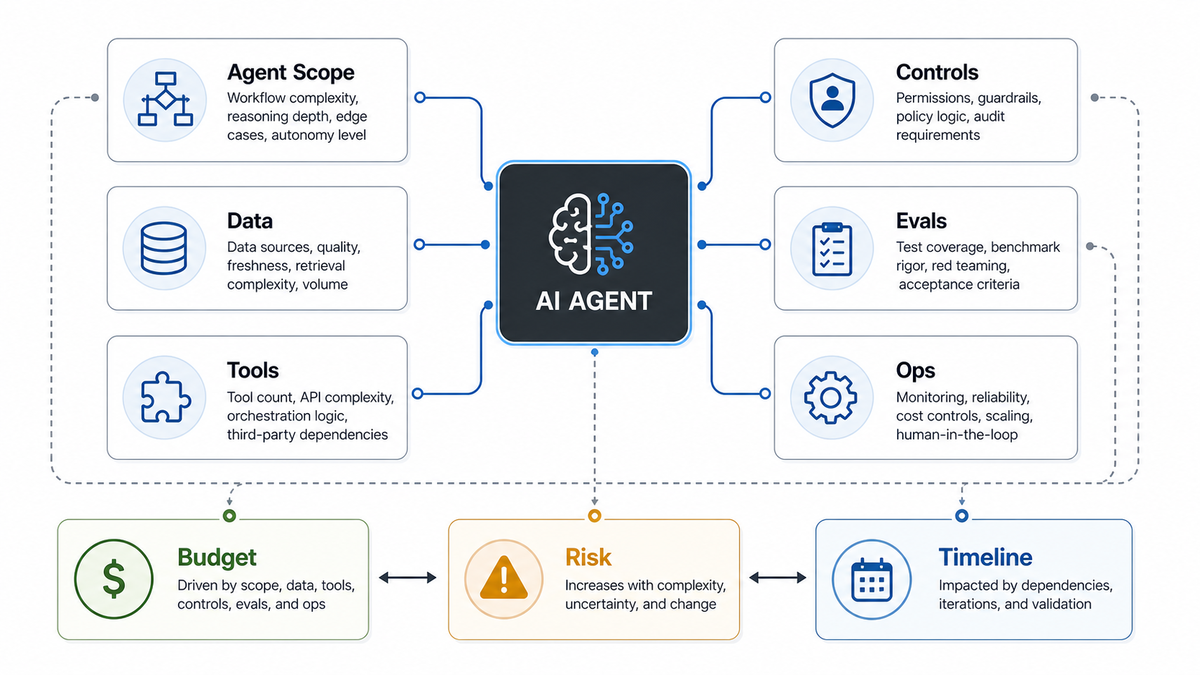
Estimate AI agent development cost with a 2026 framework for workflow scope, RAG, tools, permissions, evals, model usage, rollout risk, and ongoing operations.
Practical guidance on AI agent architecture, permissions, evaluation, governance and production workflows.
AI agents connect model decisions to tools and business workflows. A production design needs a clear objective, bounded permissions, observable tool calls and a safe way to hand uncertain work to people.
Start by deciding whether a deterministic workflow is sufficient. For agentic work, evaluate task success, tool failures, data leakage and operating cost against a realistic baseline.
Explore the articles below for implementation and governance decisions. Our AI agent service page covers scoping a pilot around your data and operating constraints.
Showing 37–43 of 43 posts
Estimate AI agent development cost with a 2026 framework for workflow scope, RAG, tools, permissions, evals, model usage, rollout risk, and ongoing operations.
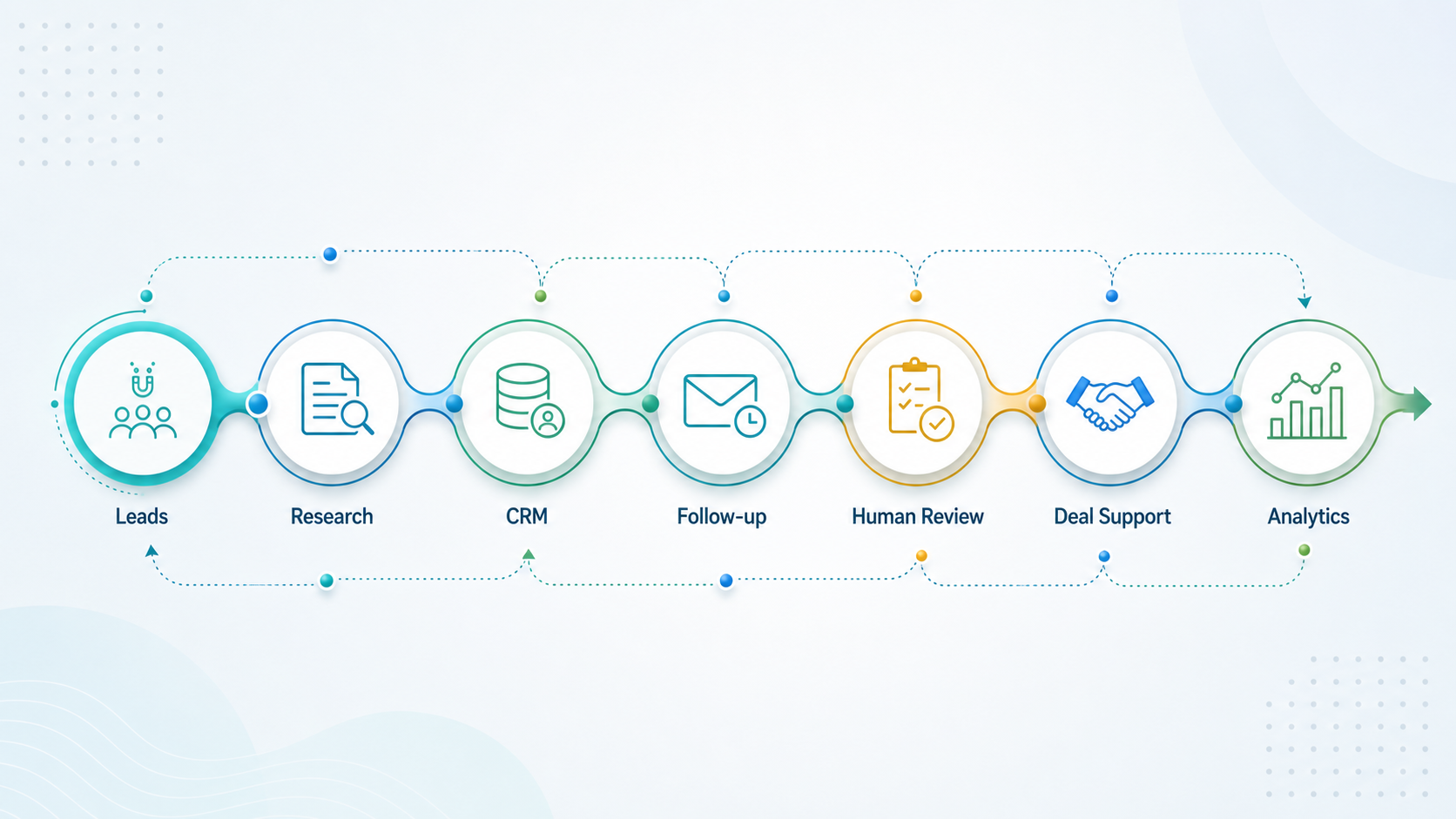
Plan sales AI agents with CRM-connected workflows for lead research, follow-up, CRM hygiene, human review, governance, ROI, and rollout readiness.
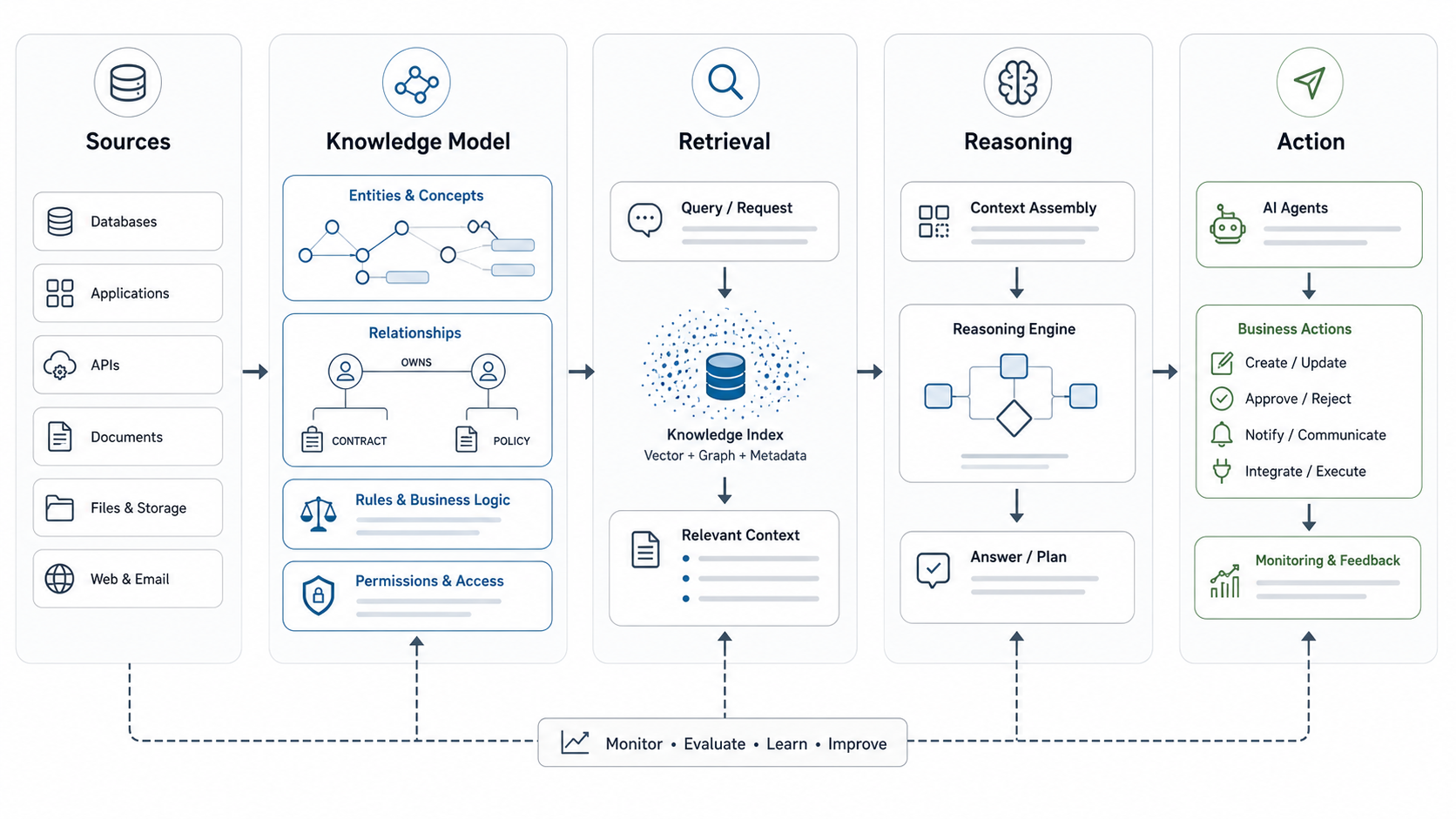
Learn how knowledge representation turns business data, rules, permissions, and relationships into reliable context for RAG systems, AI agents, and governed automation.
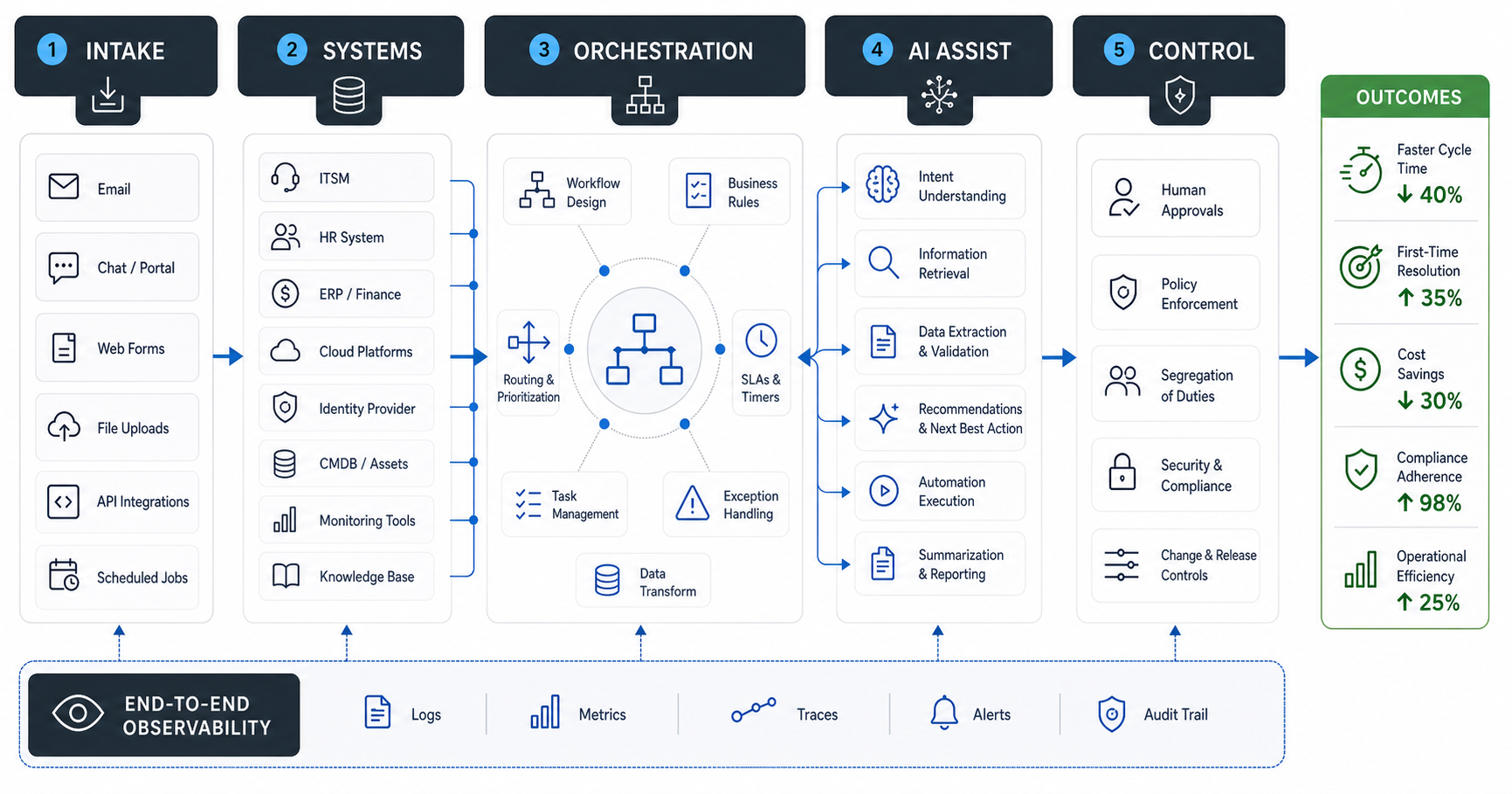
Use this IT process automation guide to choose scripts, RPA, workflow orchestration, copilots, or AI agents with the right controls, metrics, and rollout plan.
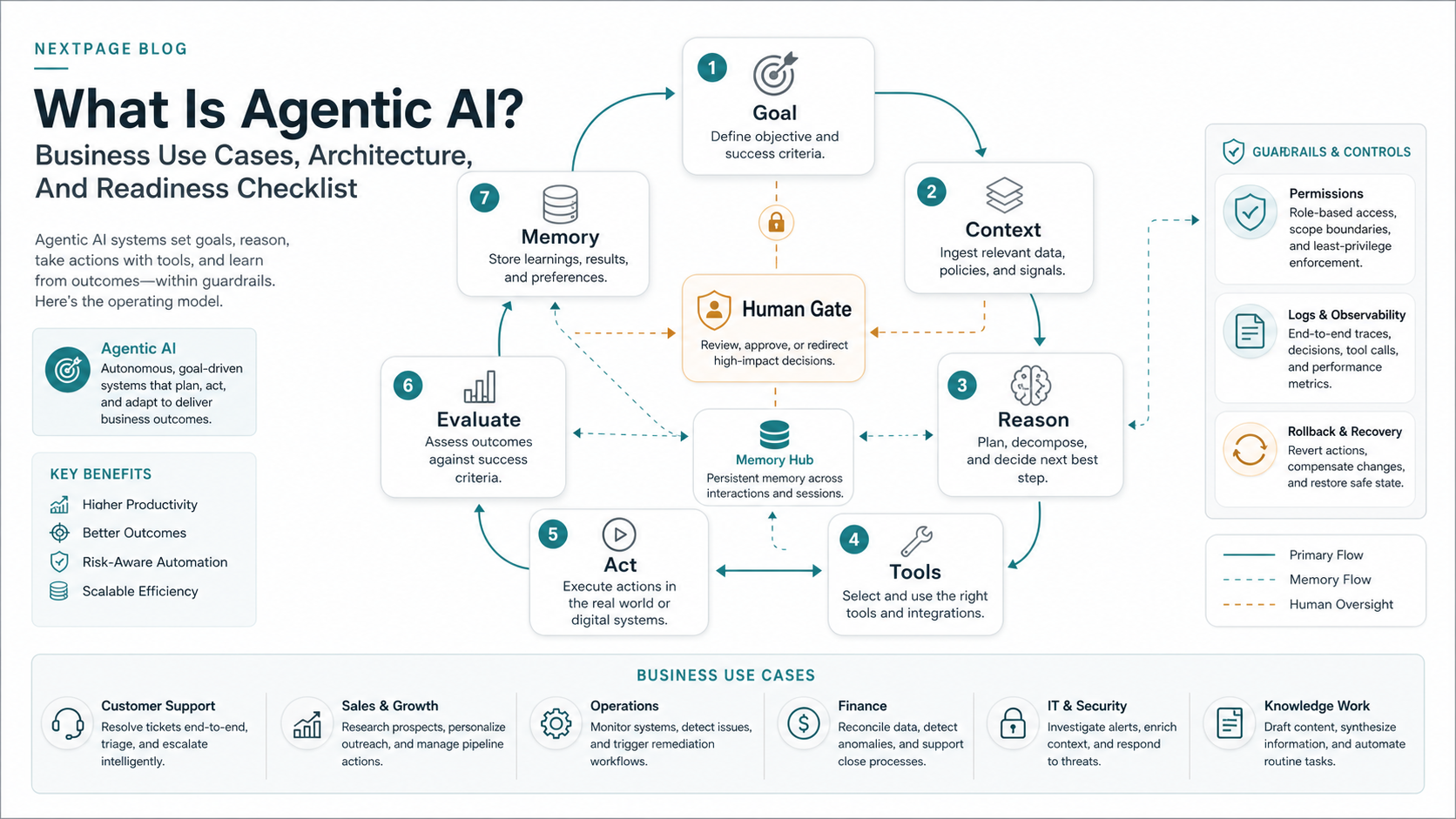
Learn what agentic AI is, how it works, where it fits in business workflows, and how to assess architecture, governance, ROI, and readiness before building.
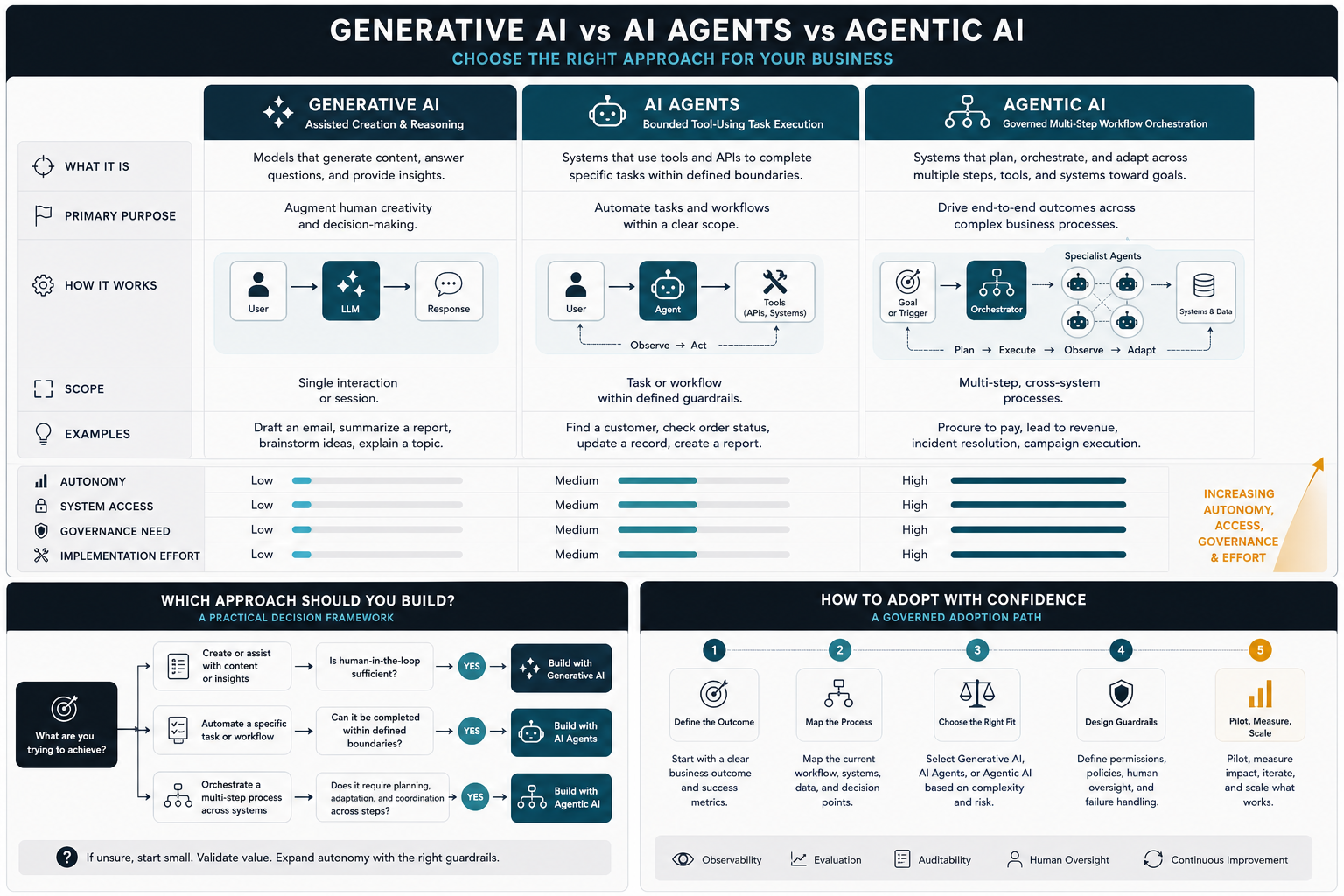
Compare generative AI, AI agents, and agentic AI with a practical build-choice framework for autonomy, tool access, governance, ROI, and rollout risk.
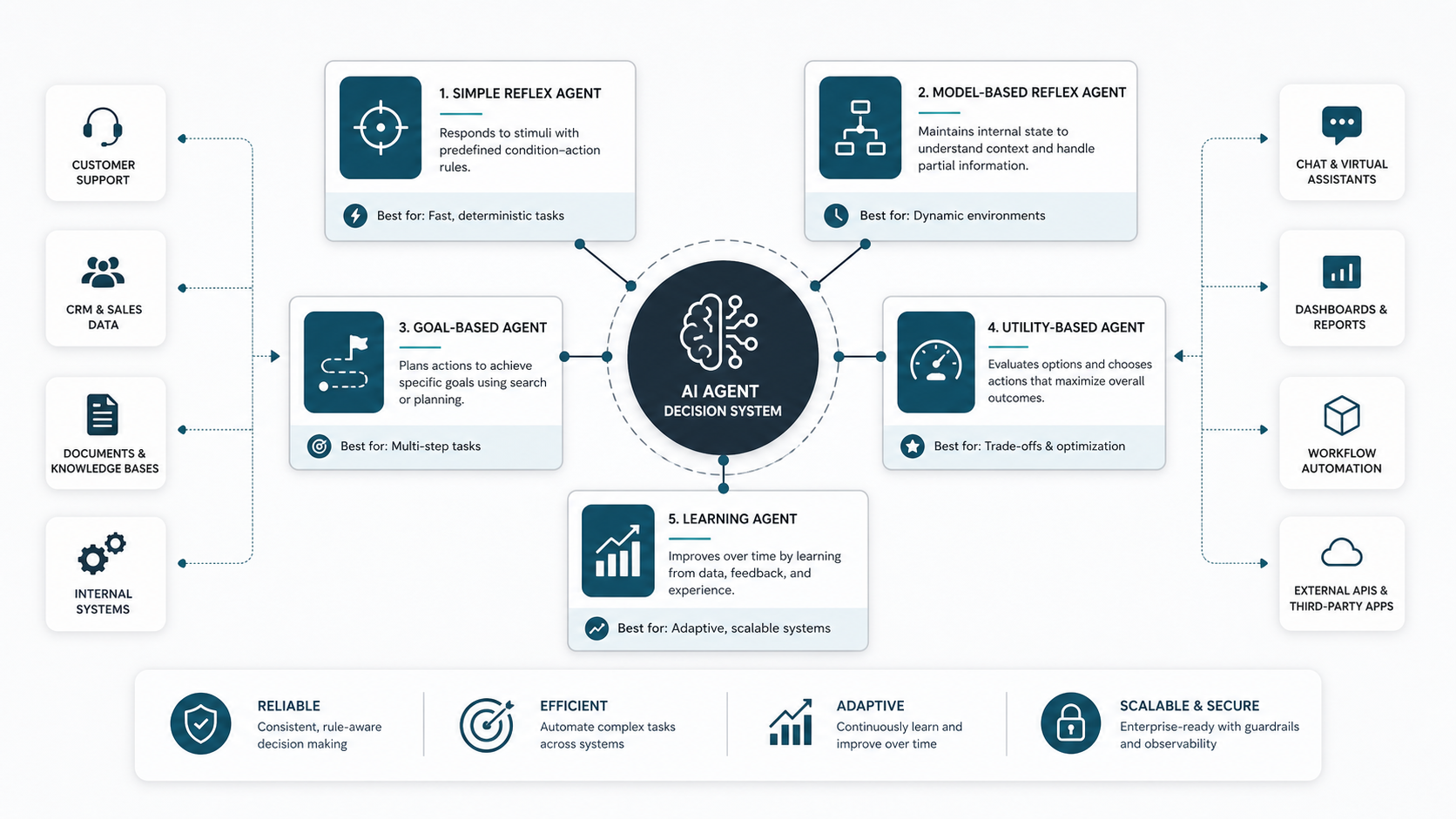
Compare the main types of AI agents, where each fits, how business teams should choose an architecture, and what controls are needed before production rollout.