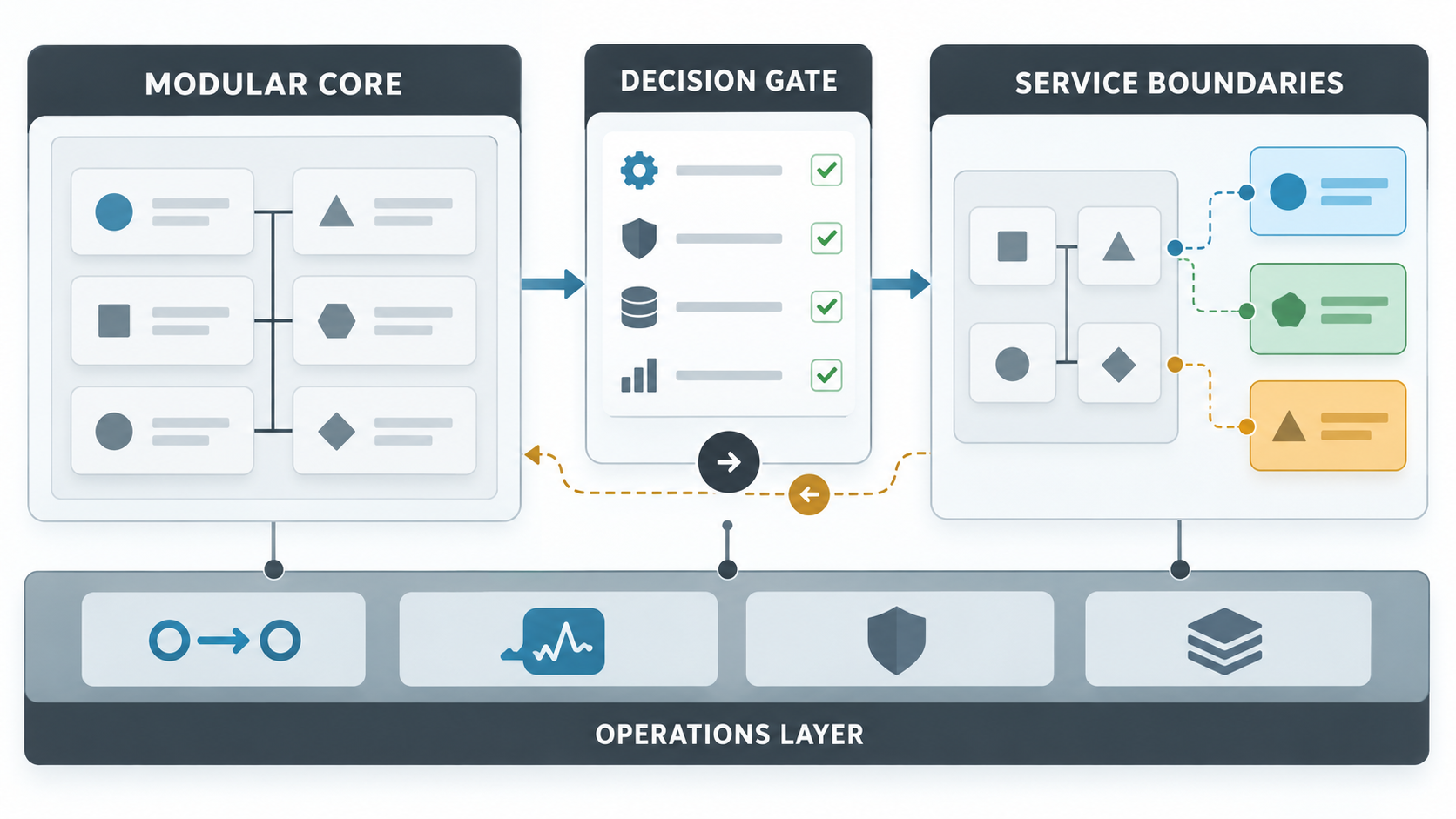
Microservices Architecture Guide: Decisions, Boundaries, Migration, And Reliability
A decision-first microservices guide covering architecture fit, service boundaries, migration waves, data ownership, observability, reliability, and rollback.
Guidance for technical decision-making, integration design, deployment planning, and scalable software systems.
Showing 1–9 of 9 posts
A decision-first microservices guide covering architecture fit, service boundaries, migration waves, data ownership, observability, reliability, and rollback.
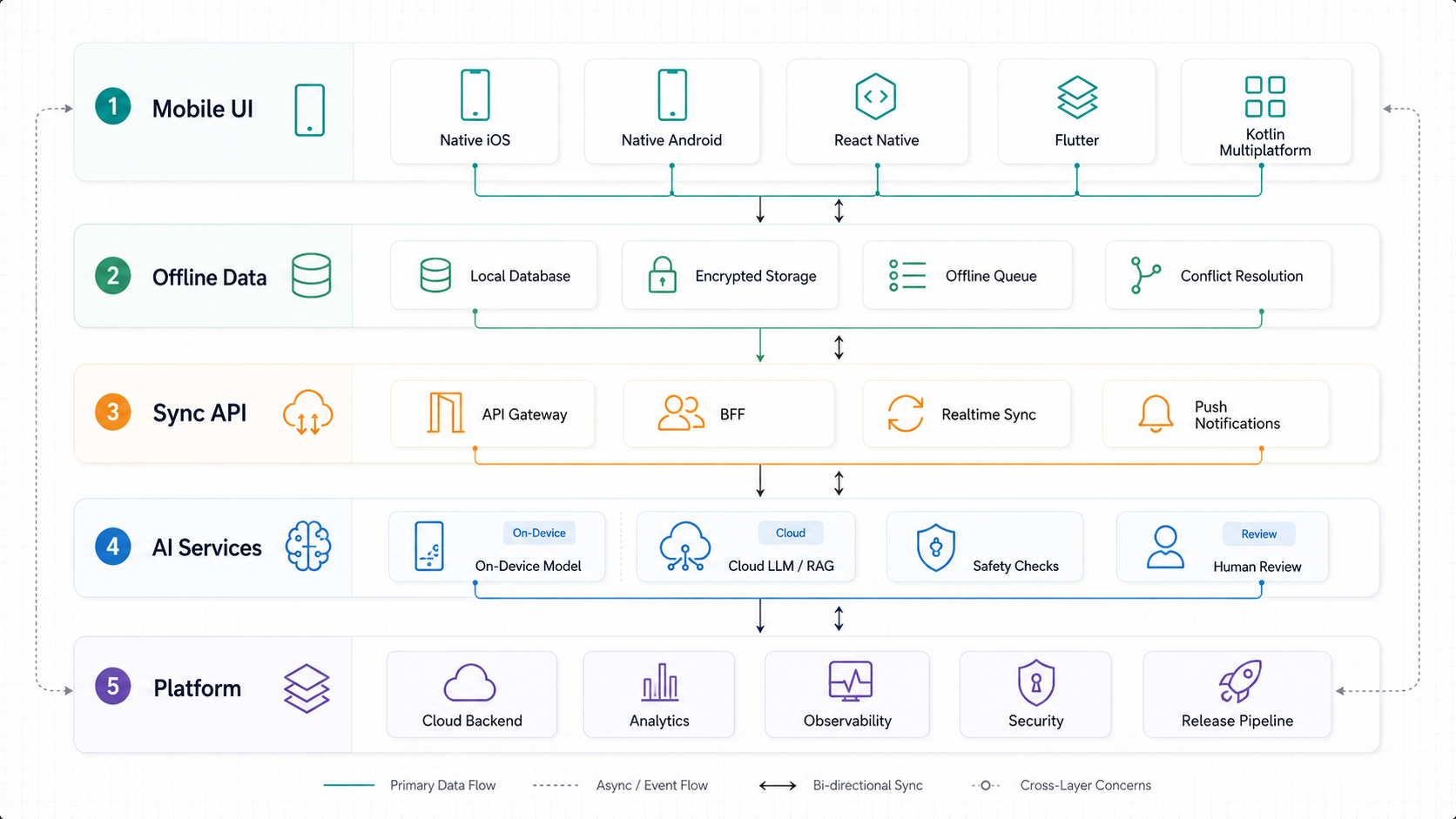
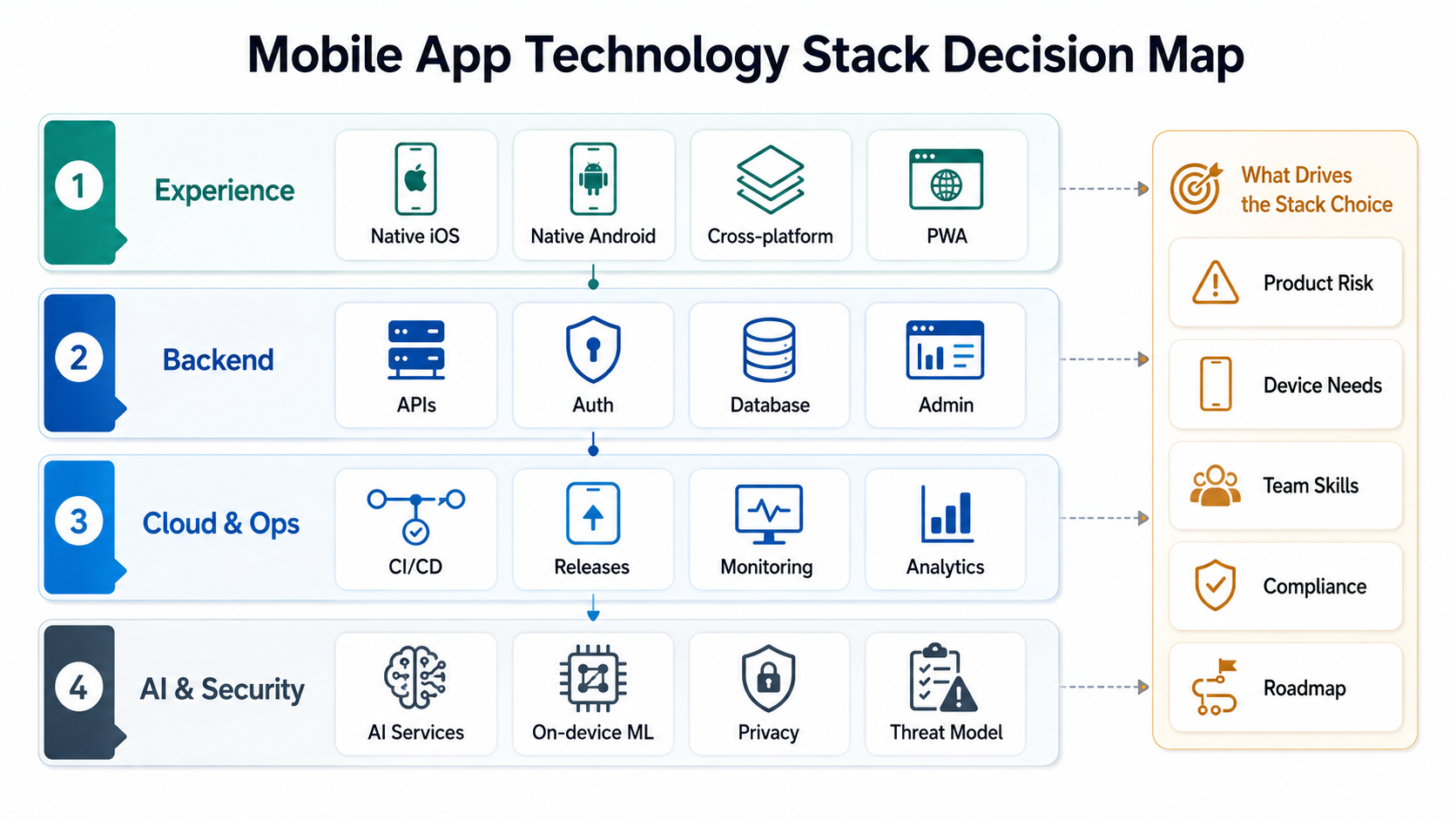
Choose mobile app architecture by mapping client layers, offline sync, backend APIs, AI placement, security, analytics, release gates, and cloud scaling decisions.
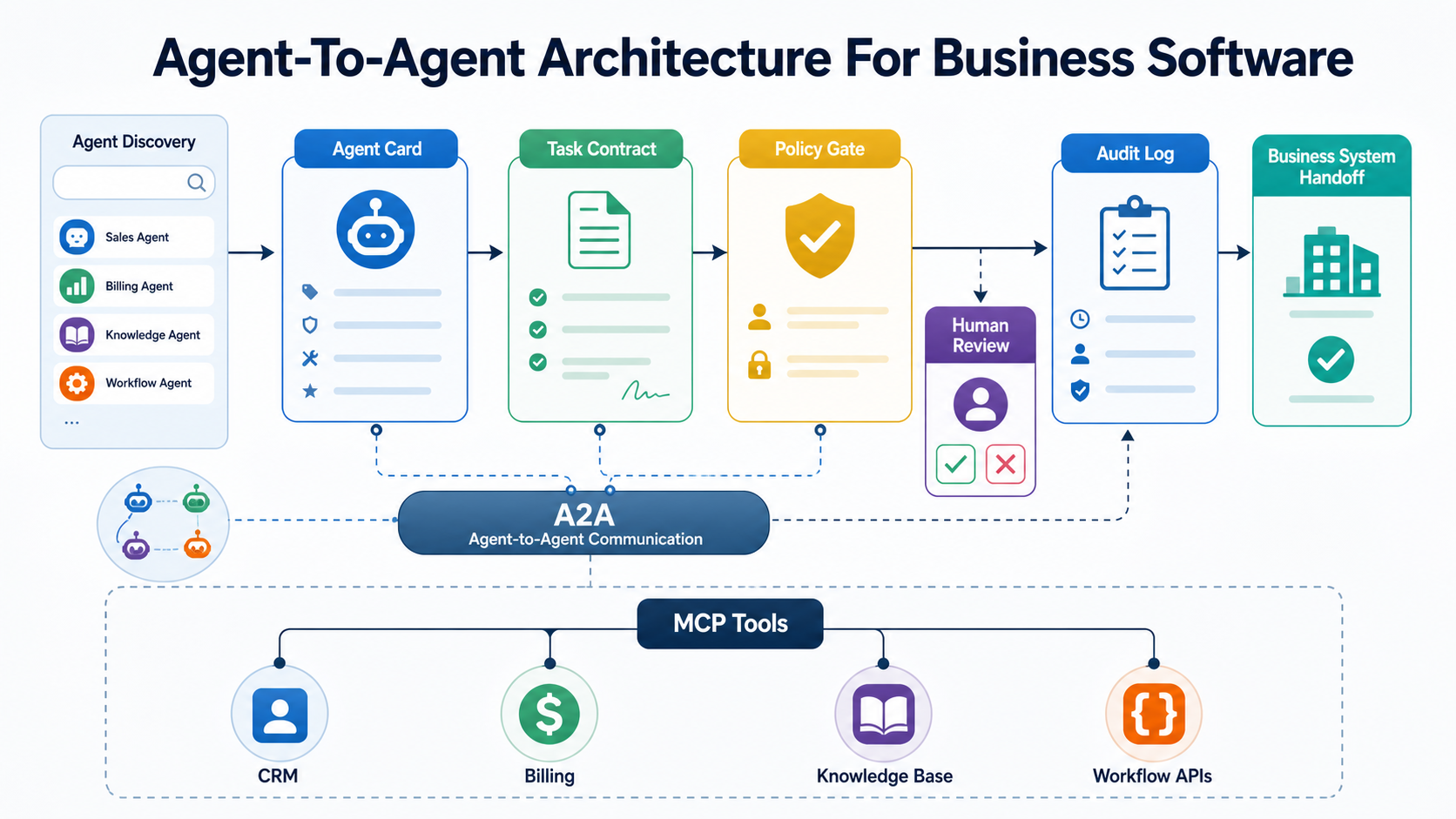
Use this agent-to-agent architecture guide to decide when A2A, MCP, single agents, or workflow orchestration fit real business software.
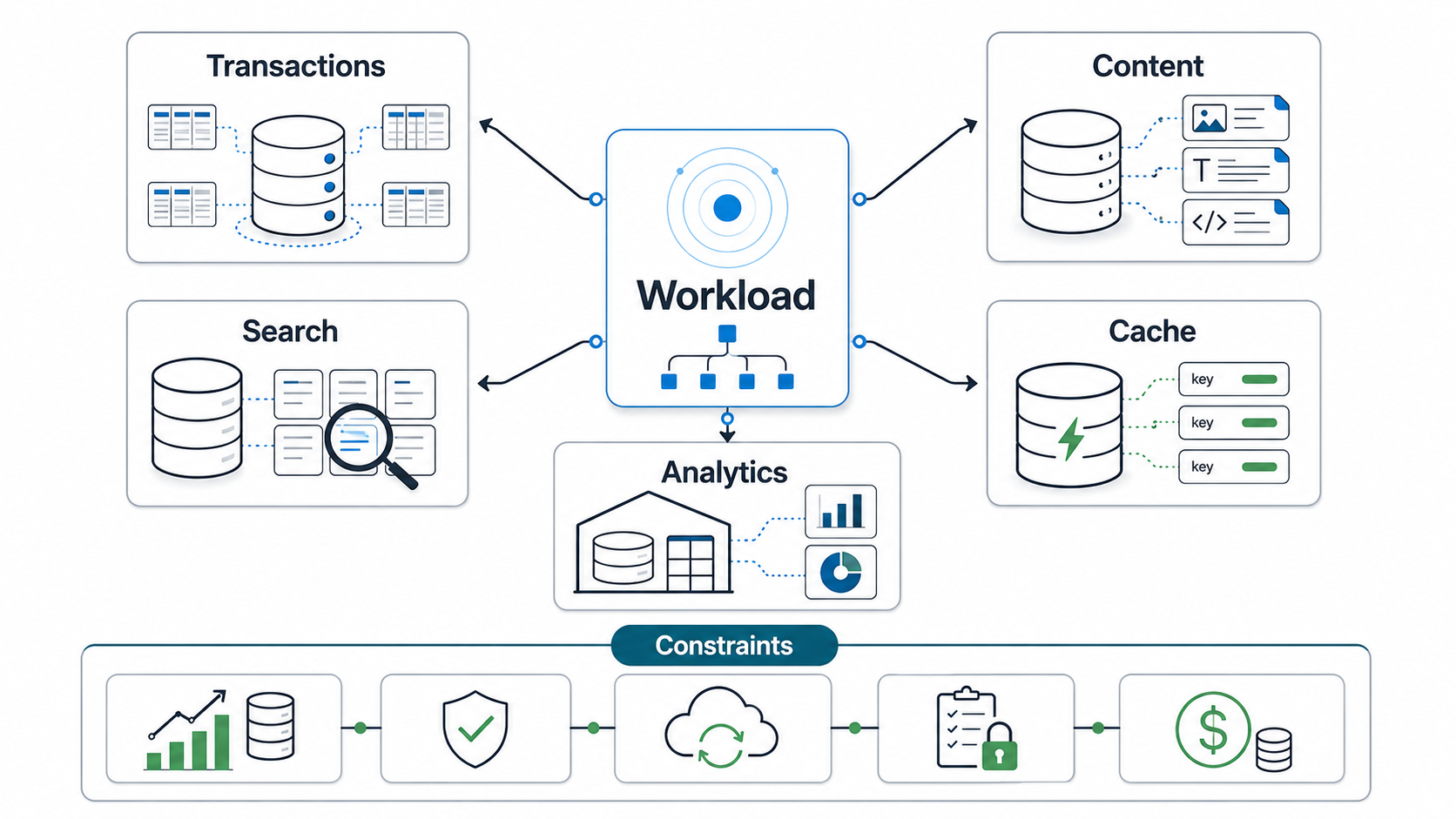
Choose a web application database by comparing workload, transactions, data model, cache, search, analytics, scaling, backup, and migration risk.
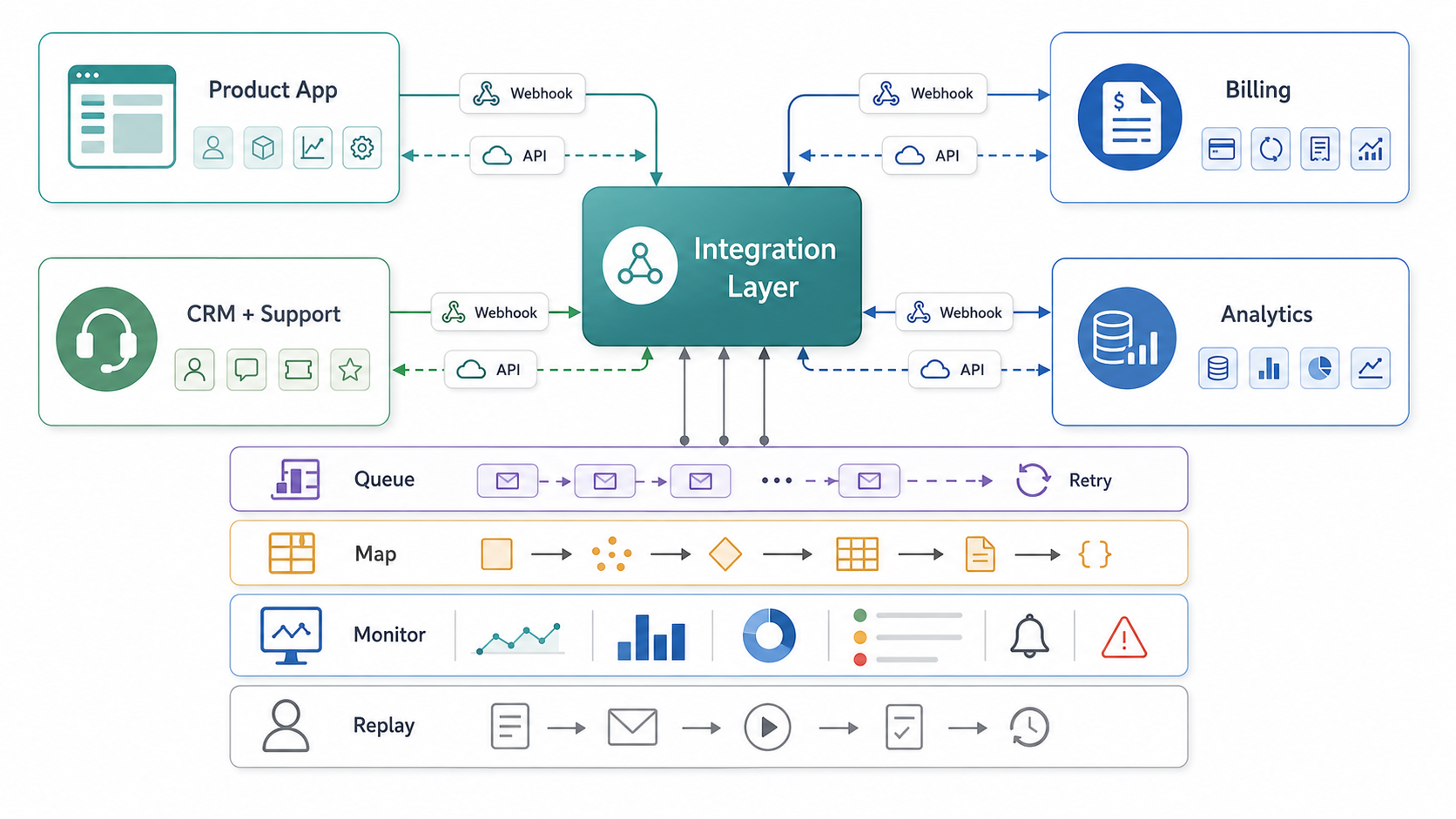
Plan SaaS integration architecture across APIs, webhooks, billing, CRM, support, analytics, source-of-truth rules, retries, replay, testing, and build-vs-buy decisions.
Choose a mobile app technology stack by product risk, platform needs, backend/API ownership, AI data boundaries, security, QA evidence, and release operations.
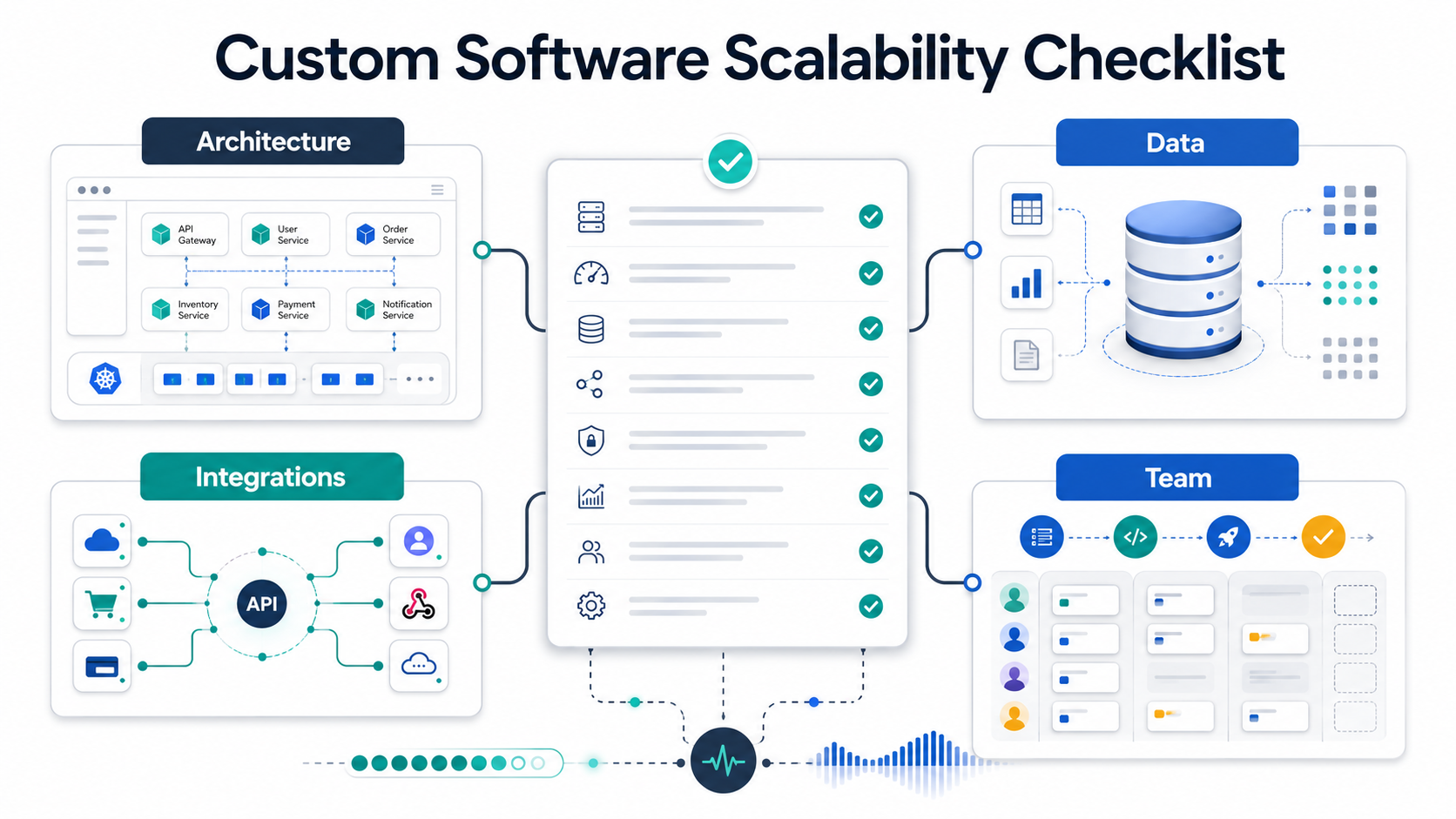
Use this custom software scalability checklist to review architecture, databases, APIs, integrations, load testing, observability, security, and team readiness before growth exposes bottlenecks.
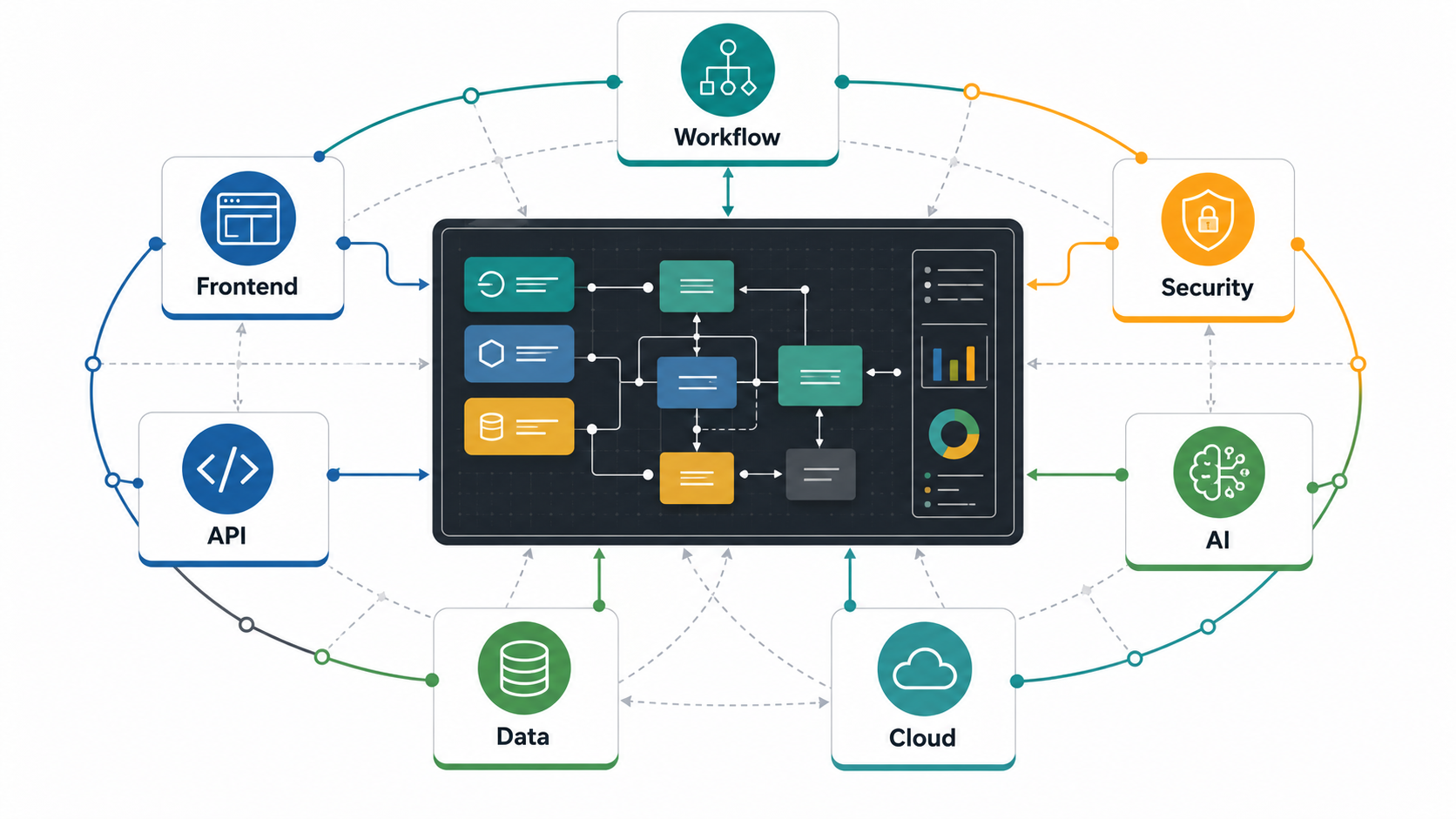
Choose a modern custom software tech stack with workflow-first scoring, data and cloud tradeoffs, AI readiness, security controls, release gates, and cost risk.
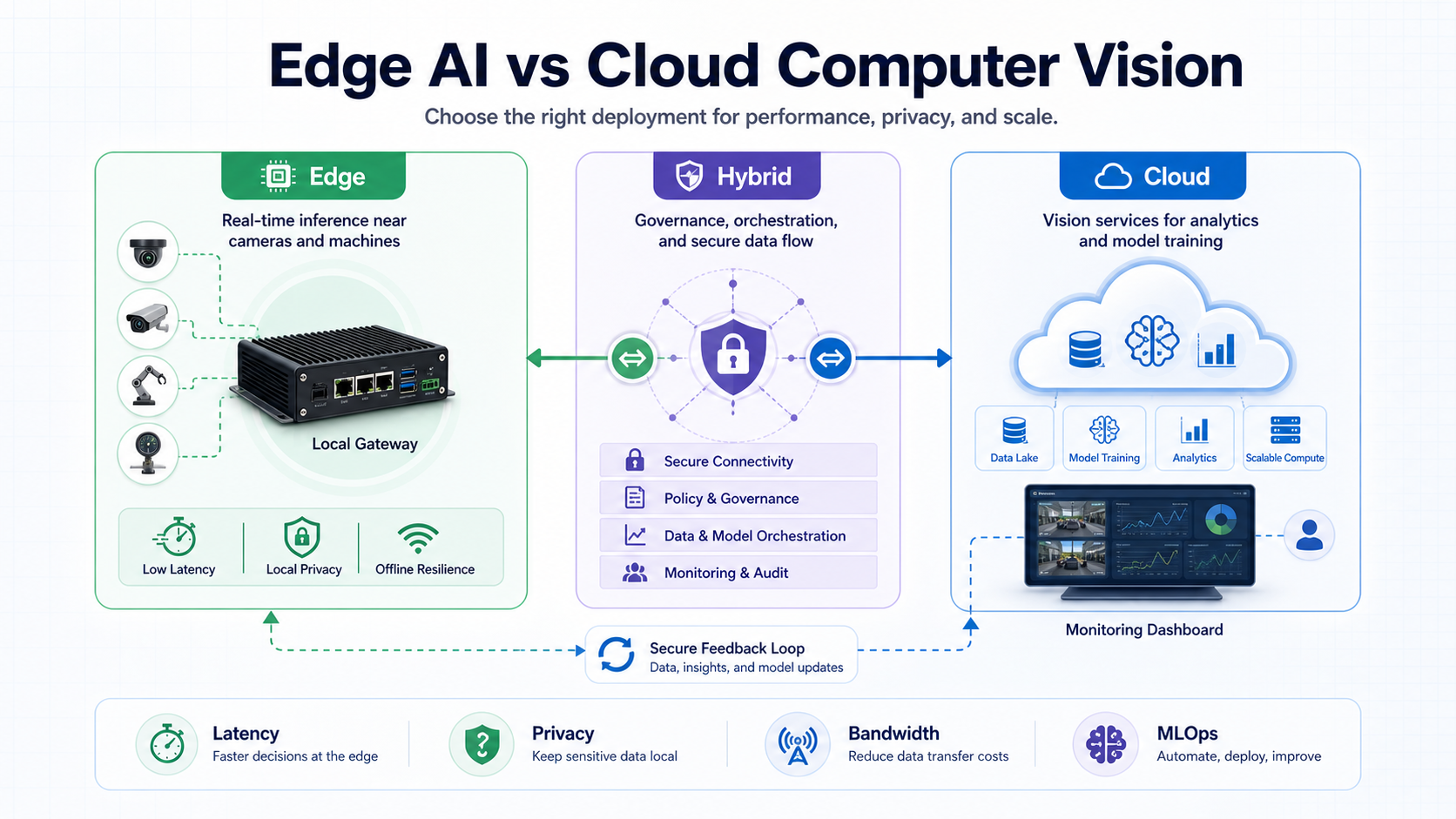
Compare edge AI, cloud computer vision, and hybrid deployment models across latency, privacy, bandwidth, cost, MLOps, failover, ROI, and rollout risk.